

 Originally developed to access mountainous areas quickly and easily, sky rides were incorporated into amusement parks and theme parks around the world. The rides were a means of transportation within parks as well as offering thrills and spectacular views from above. While sky rides were commonplace in almost every park in the 1960's and 70's, in the 80's and 90's many parks removed them as the cost of maintenance and insurance increased over time, making them increasingly rare. |
 |
||
 |
||
| At the 1964-65 New York World's Fair, the Swiss Sky Ride was a novelty being one of the tallest in North America. The ride ran high above the International area of the Fair, giving guests a bird's eye view of all the attractions below as well as a respite from walking. The fleet of colorful cars silently glided across the sky, and after dark they lit up the twilight with a pair of small futuristic lights on stalks mounted on the roofs. The Sky Ride was built by the Von Roll company of Switzerland, manufacturer of most of the sky rides installed in theme parks for decades. | ||
 |
 |
 |
 |
  |
 |
 |
 |
 |
 |
||
 |
In 1960, Freedomland U.S.A. opened in the Bronx. It was an ambitious park that tried to be the "Disneyland of the East" and like Disneyland it featured not only a sky ride but the first double sky ride in the U.S. The park struggled for several years until it finally closed in 1964 with many of the rides being sold off to other theme parks. The sky ride was sold to a buyer who wanted to move it to Canada. He also purchased the World's Fair Sky Ride. Both of the rides were held in upstate New York when problems with customs prohibited their transport across the border do to a restriction on steel. |
 |
 |
||
 |
||
Back in New Jersey, the original plans for the Great Adventure featured multiple sky rides that were supposed to connect the different areas along of the planned park along with trains, boats and monorails. One plan involved a skyride that would have linked a planned "Over The Rainbow" section (which would have been positioned out past the Great Arena and Log Flume) to the Enchanted Forest (which was planned for the area beyond Nitro). It would have been more than twice as long as the current Sky Ride. With scaled back plans for Great Adventure, the Sky Ride was scaled back as well. Utilizing the towers from the Freedomland skyride and the cars and mechanical components of the World's Fair Sky Ride, Great Adventure's Sky Ride took shape. |
||
 |
||
 |
||
 |
 |
 |
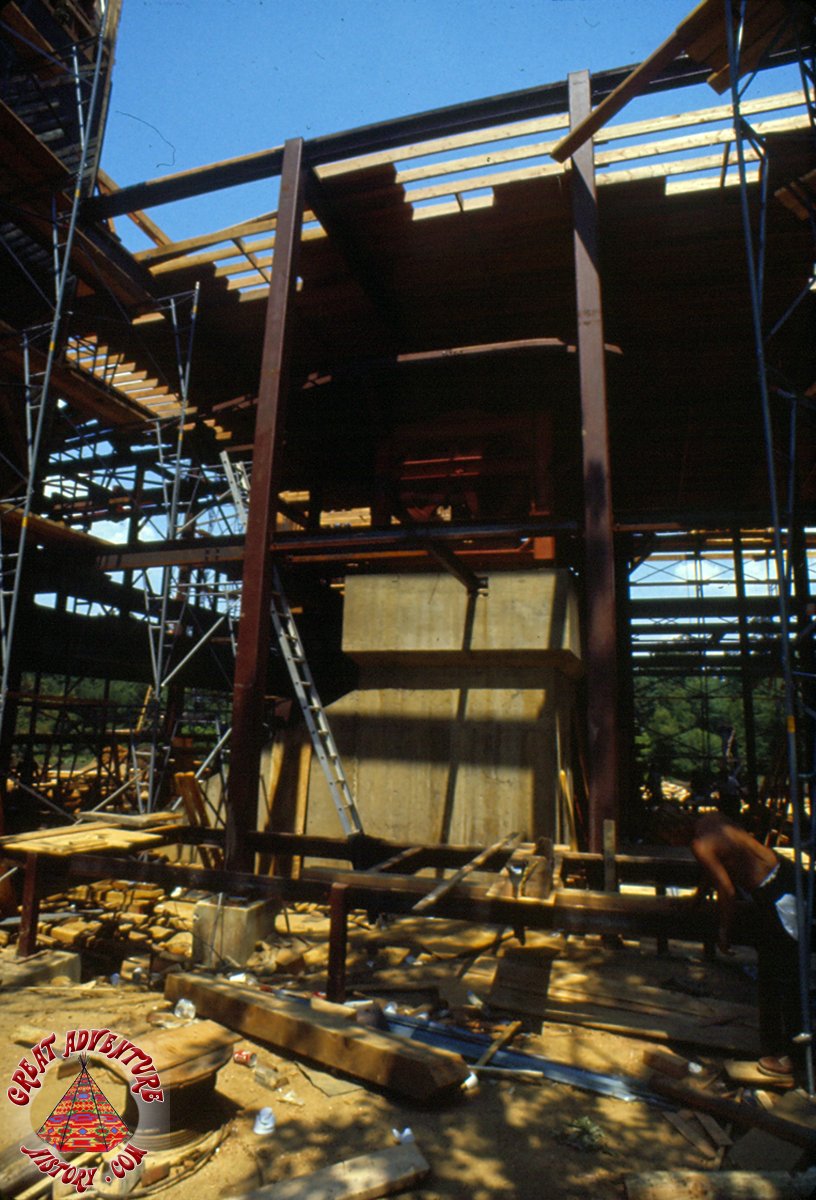 |
In 1974, the massive Great Adventure construction project took place in the span of just a few short months with workers busy all around the property, and running through the middle of it all was the Sky Ride. The towers appear to have been erected quickly while the two stations (especially the Fort) seem to have taken longer to come together. Once the towers and the drive and tension bases at each end were in place, the job of stringing the cable began. With the challenge of the ride's length and height being further complicated by its needing to traverse buildings, trees and waterways, a helicopter was used to pull ropes from end to end which would then be used to run the steel cables. |
 |
 |
||
 |
 |
 |
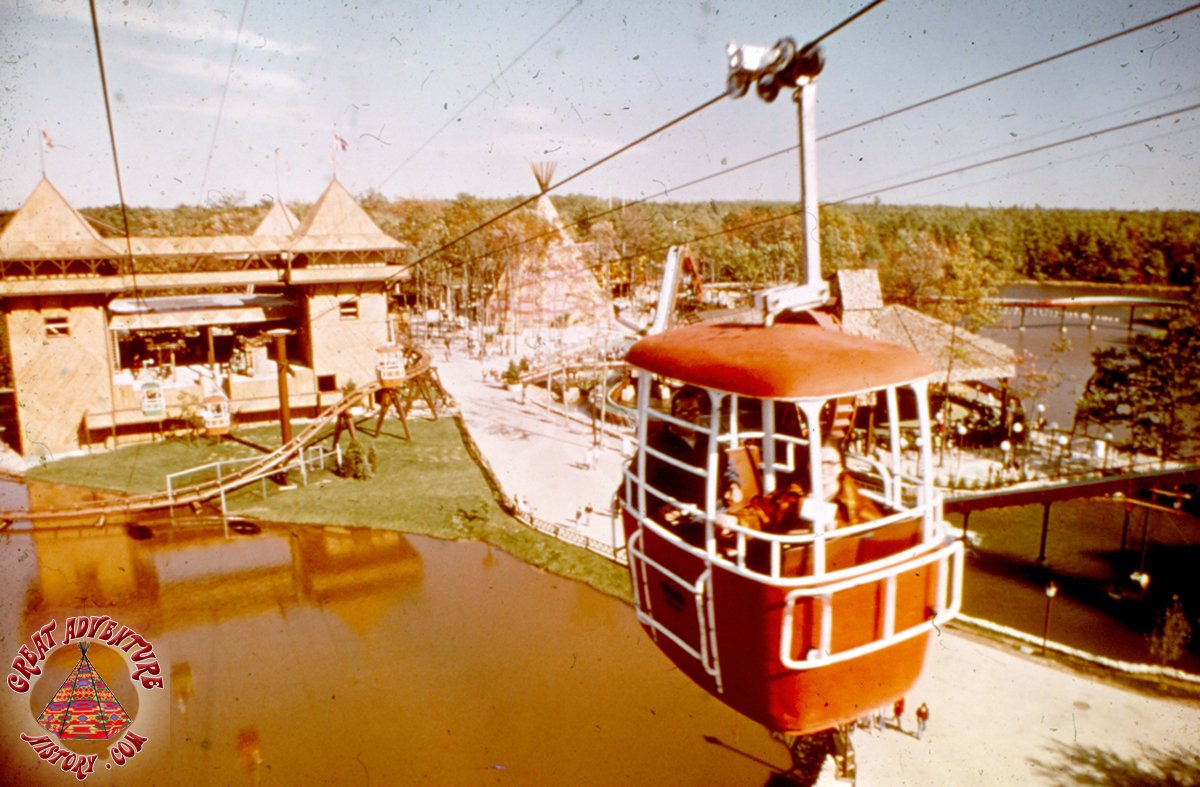 |
The Sky Ride was an immediate hit at Great Adventure when the park opened in 1974, offering spectacular views and a thrilling ride as well as an opportunity for weary guests to rest their tired feet. With the original layout of Great Adventure, the Rootin' Tootin' Rip Roarin' section of the park was set off as kind of a dead end. The Sky Ride helped move guests out of the area and down to the far end of Dream Street without having to backtrack. |
 |
 |
 |
|
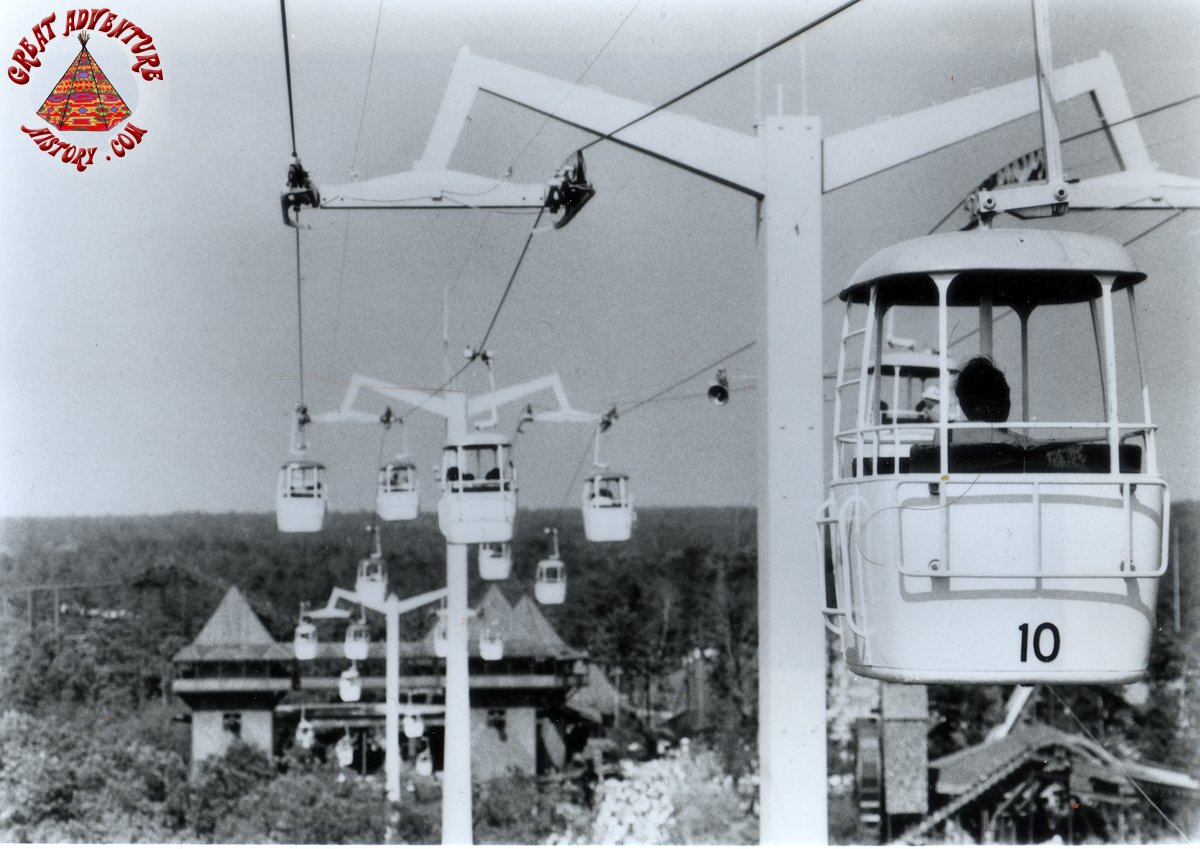 |
 |
 |
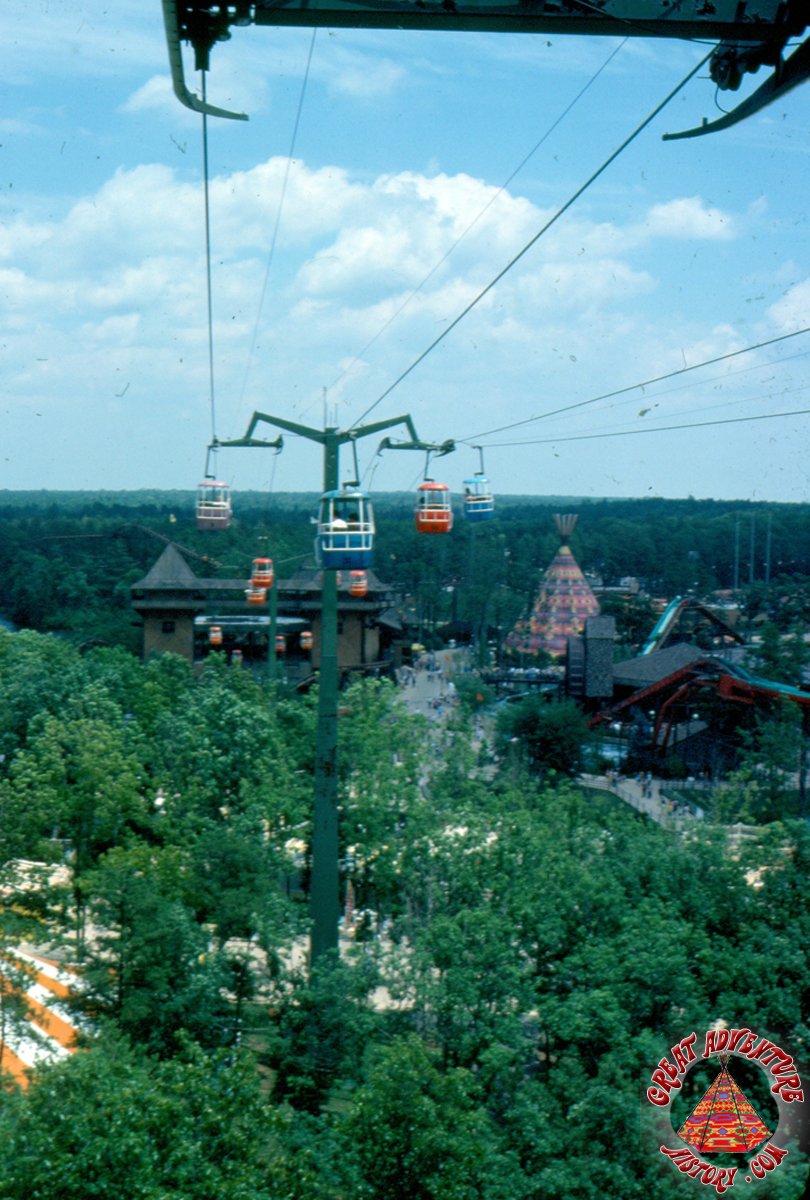 |
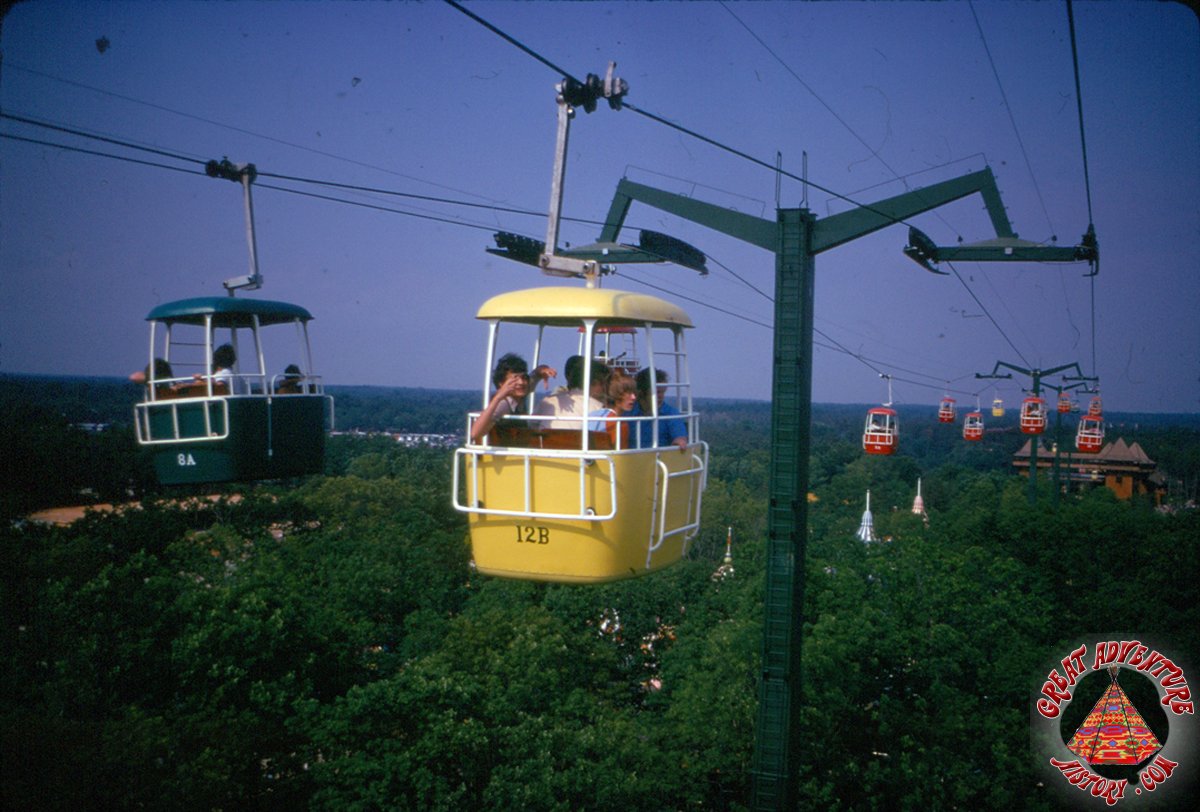
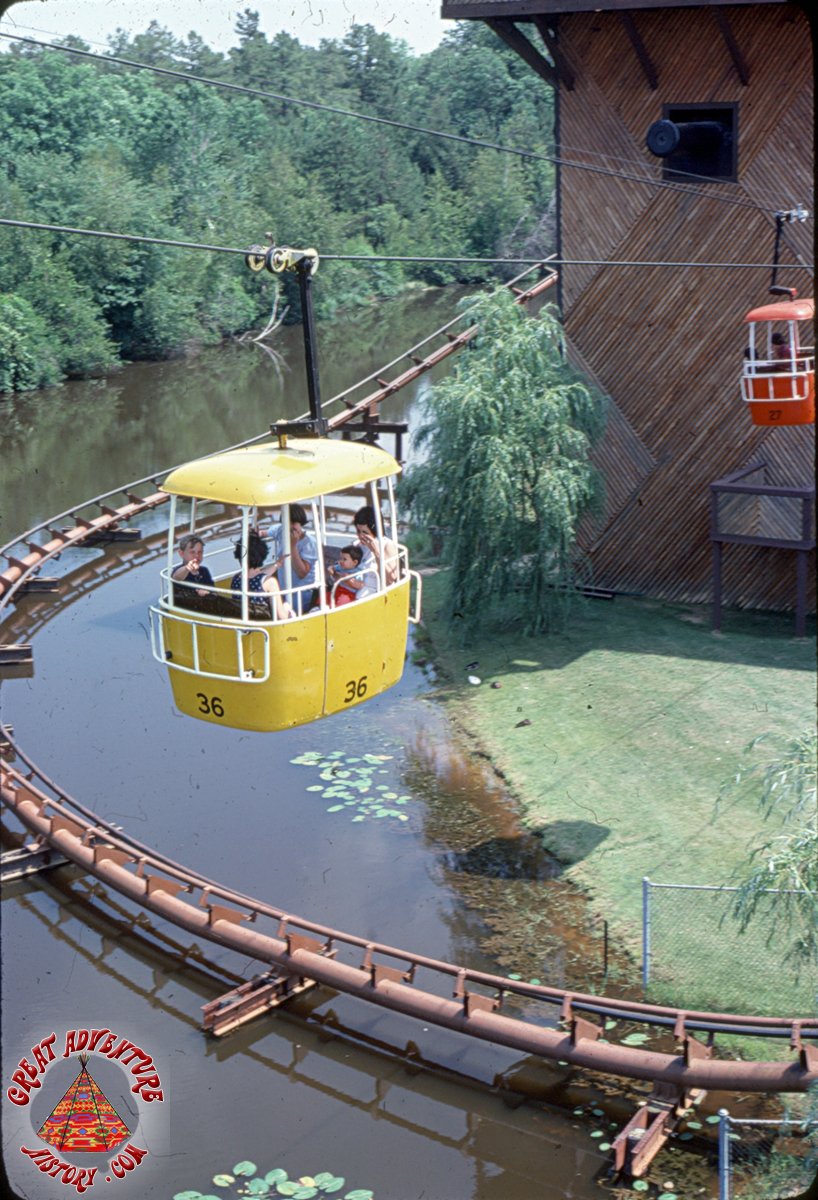
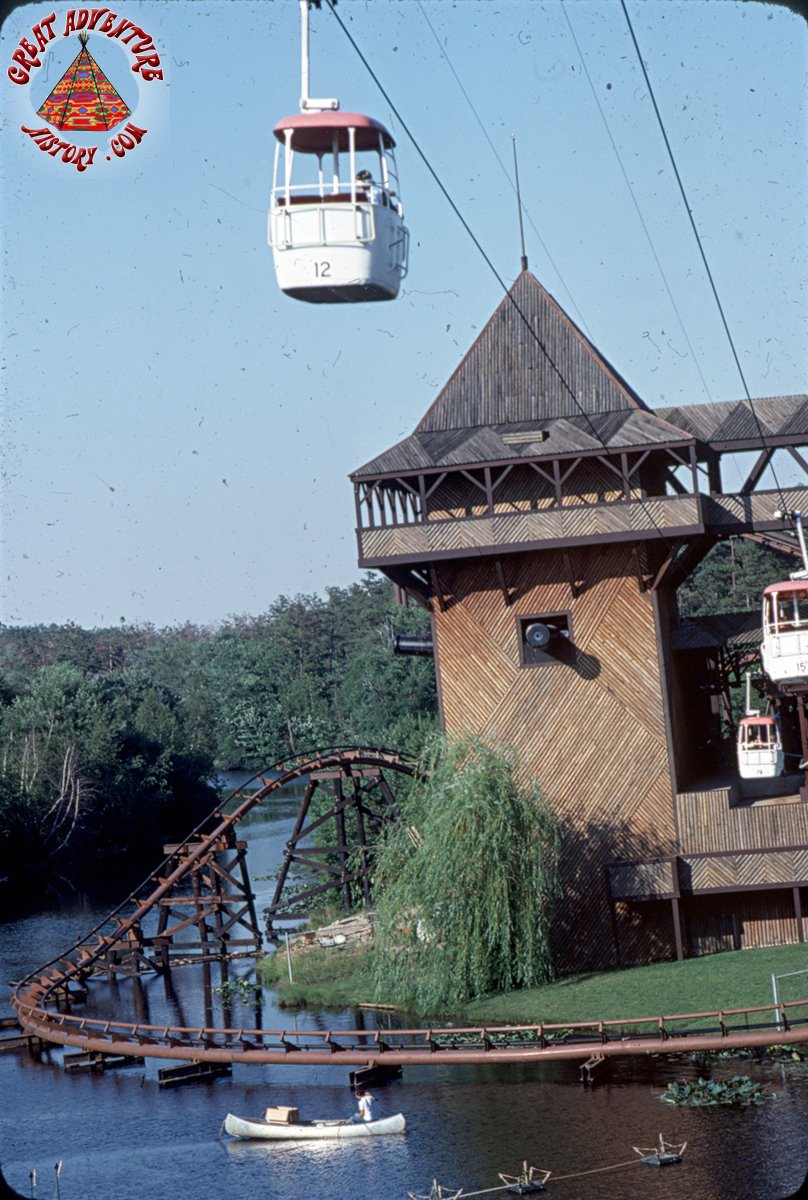
The original look of the Sky Ride featured forest green towers designed to blend in with the surrounding trees which were such a big component of the atmosphere of the Enchanted Forest theme park. In contrast, the cars were all painted in bright colors to stand out against the sky. Great Adventure's original look was very fanciful and bright, much like its creator, Warner LeRoy. The Sky Ride cars reflected this, catching the eye of the guests walking below as riders floated above the treetops. |
 |
 |
 |
 |
 |
 |
 |
 |
 |
 |
 |
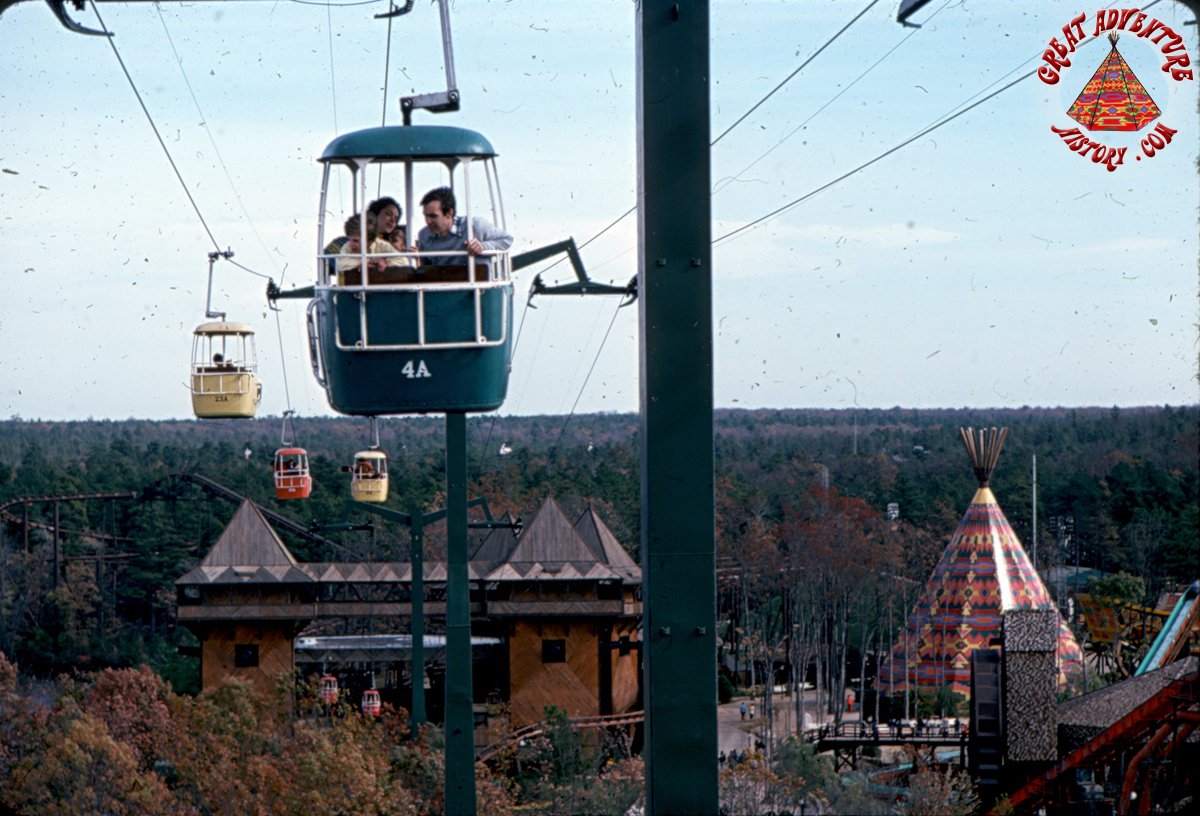
For the first few seasons, the Sky Ride was truly one of Great Adventure's biggest thrills as the second tallest ride in the park, just a little shorter than the Giant Wheel. The Sky Ride offered not only a way to save some steps and magnificent views, but also a great way to catch a cooling breeze on a hot summer day. It also became a popular spot for young romantics to have a little privacy for a little smooch or something more depending how daring they were. |
 |
 |
||
 |
 |
 |
 |
||
 |
 |
 |
%20copy.jpg) |
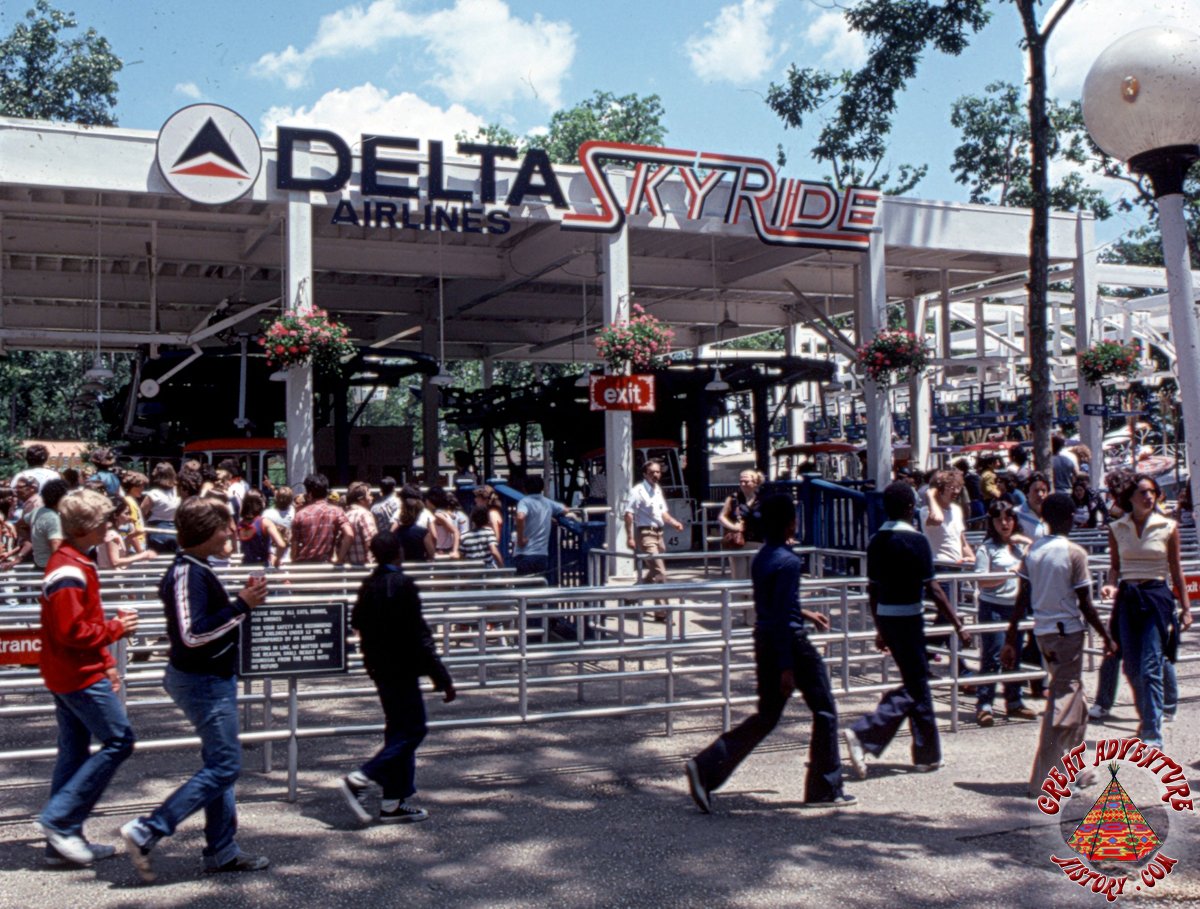
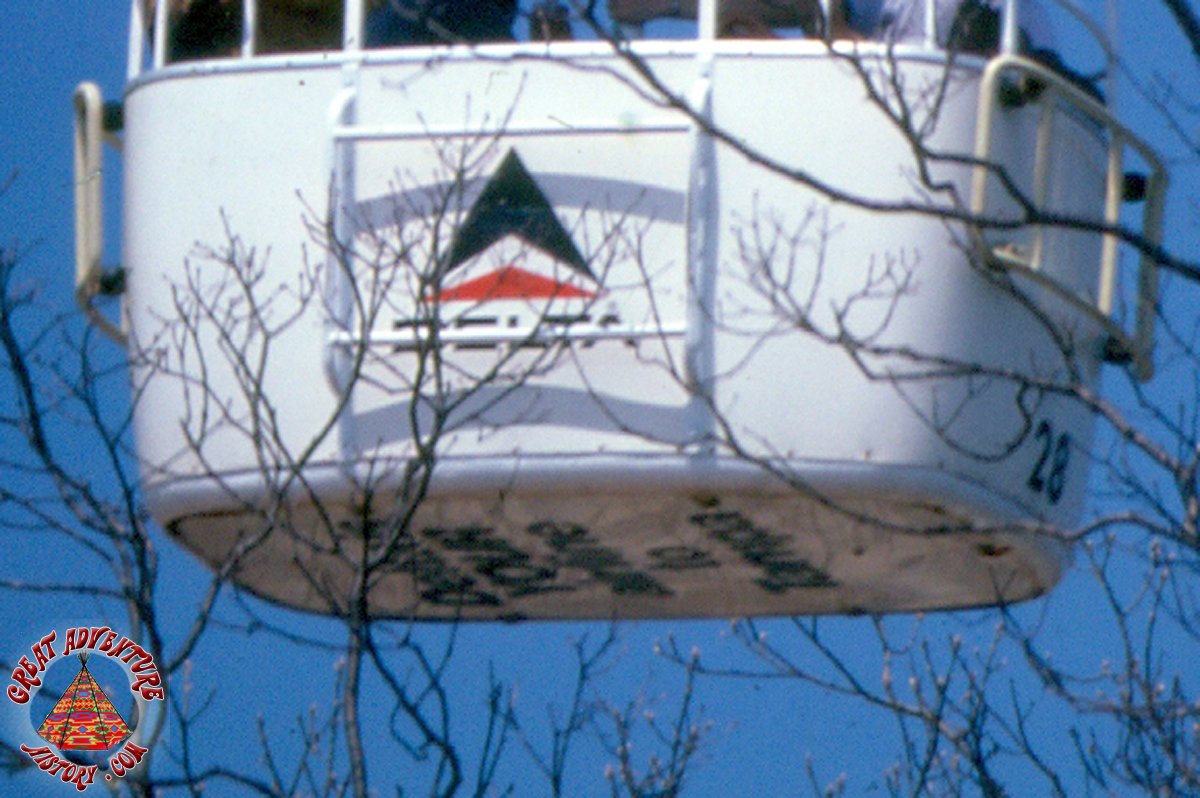
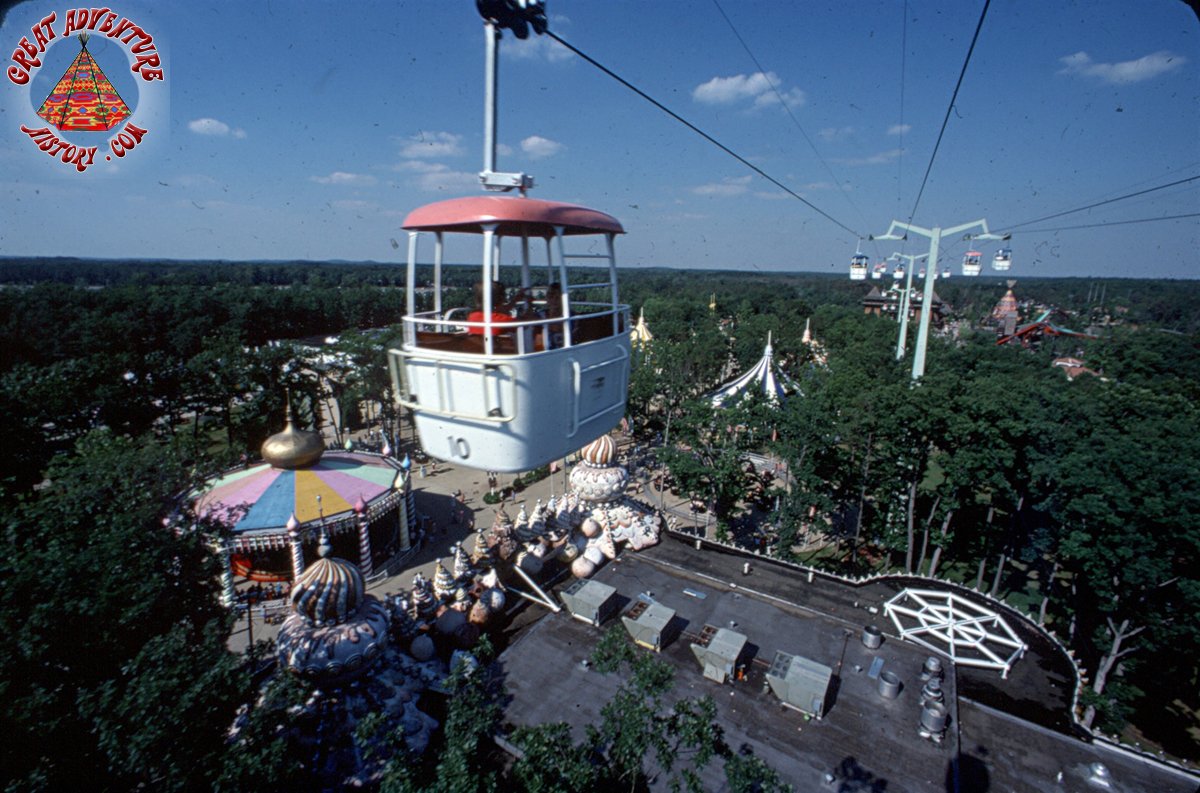
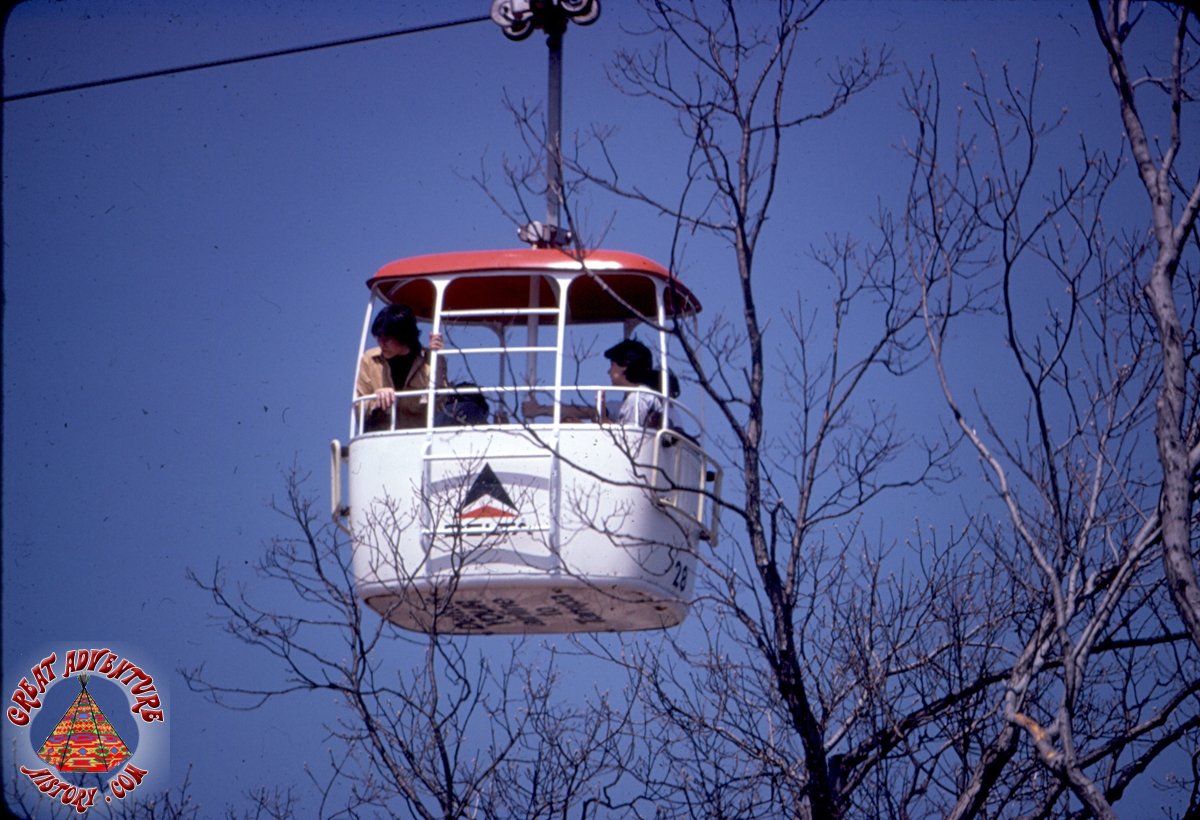
In the late 1970's and early 1980's when Six Flags assumed ownership of Great Adventure, Delta Airlines became a sponsor of the Sky Ride. All of the cars were repainted in white with some getting blue roofs and some getting red roofs to match the airline's logo color scheme. The doors of the cars were fitted with decals of the Delta logo, and the bottoms of some of the cars were fitted with plates which advertised the destinations that the airline served. |
%20copy.jpg) |
 |
 |
 |
 |
 |
 |
 |
 |
 |
 |
 |
 |
 |
Delta Airline's sponsorship of the Sky Ride was a good and natural fit, and the advertising on the undersides of the cars was a clever way of getting a message out in a subtle yet effective way. While the Sky Ride cars weren't quite as colorful as they had been originally, they were still quite attractive, though the white tended to show dirt and scrapes very easily. |
 |
 |
 |
|
 |
 |
 |
 |
 |
 |
 |
 |
 |
 |
 |
 |
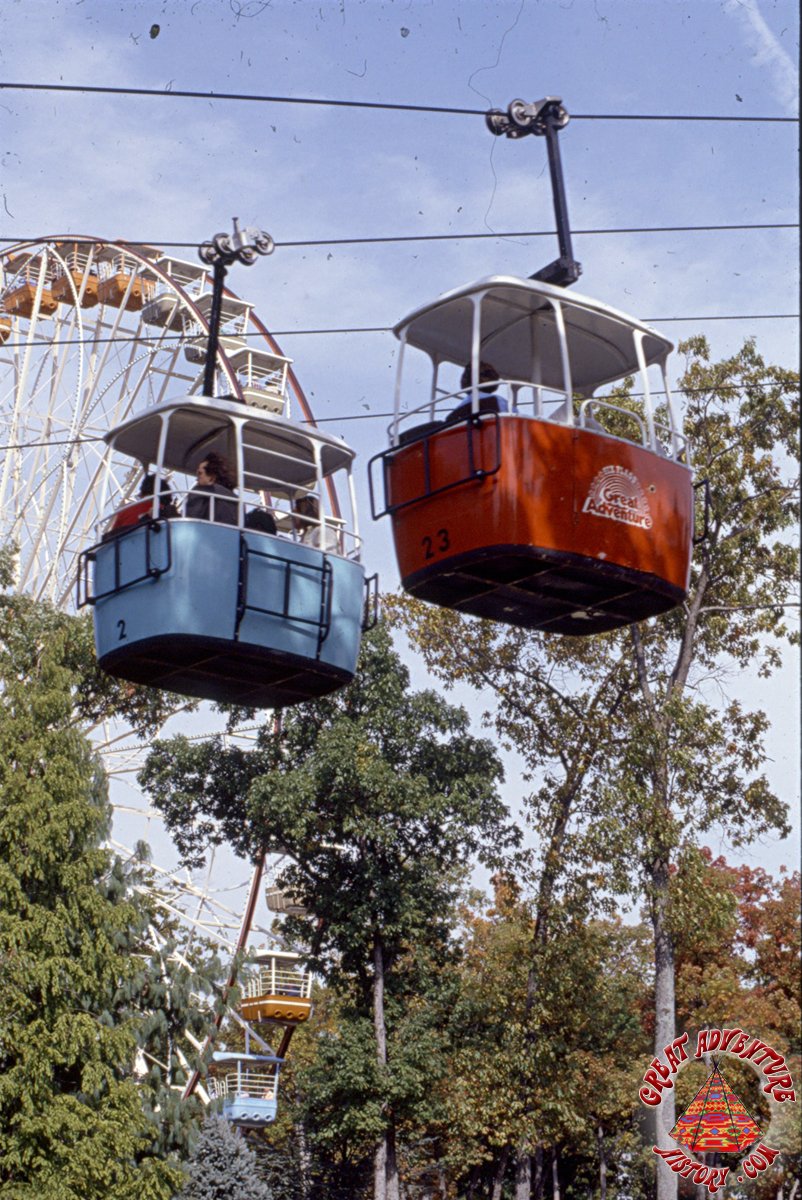
| The Delta sponsorship of the Sky Ride ended in the early 1980's, and the cars were repainted in orange or blue with white roofs and upper halves. The buffers on the ends and sides were painted in a contrasting black, with white Six Flags Great Adventure rainbow logos on the doors. The updated look was short lived though with the arrival of a newer fleet of gondolas. | ||
 |
 |
 |
 |
 |
 |
 |
||
 |
 |
 |
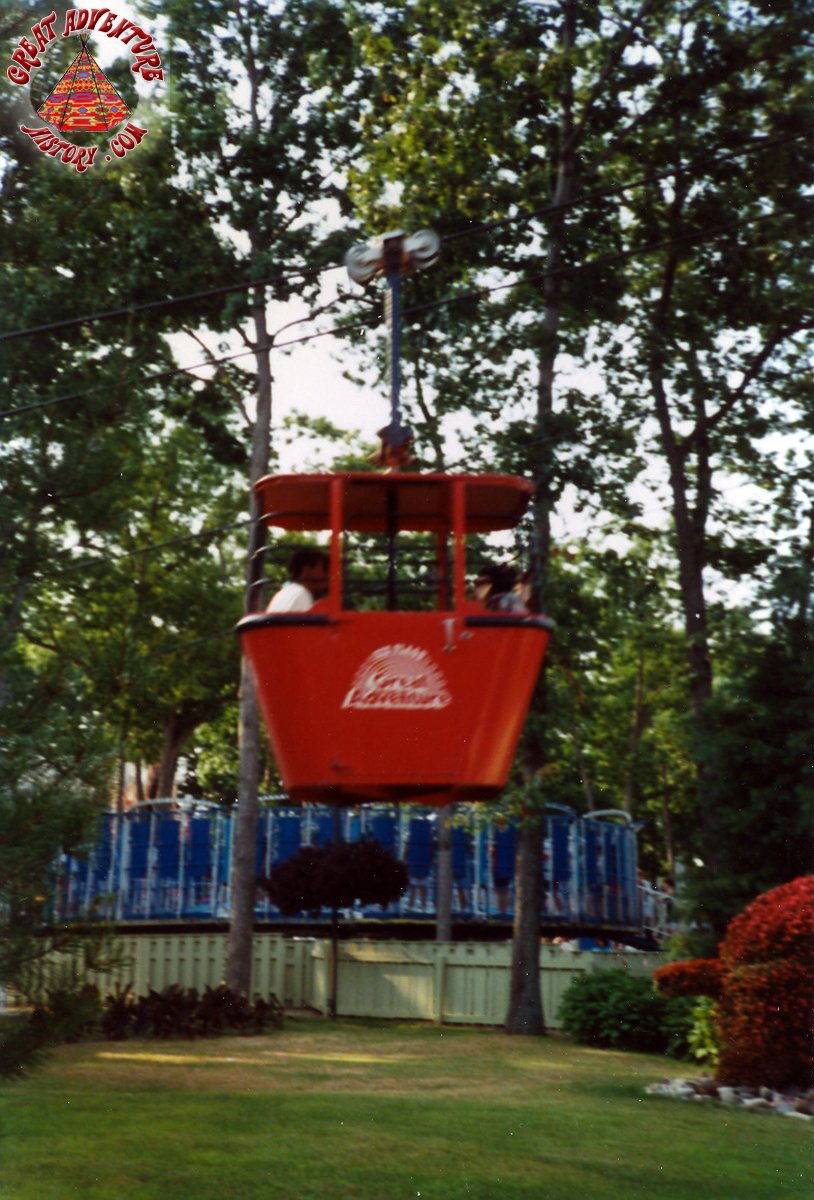 |
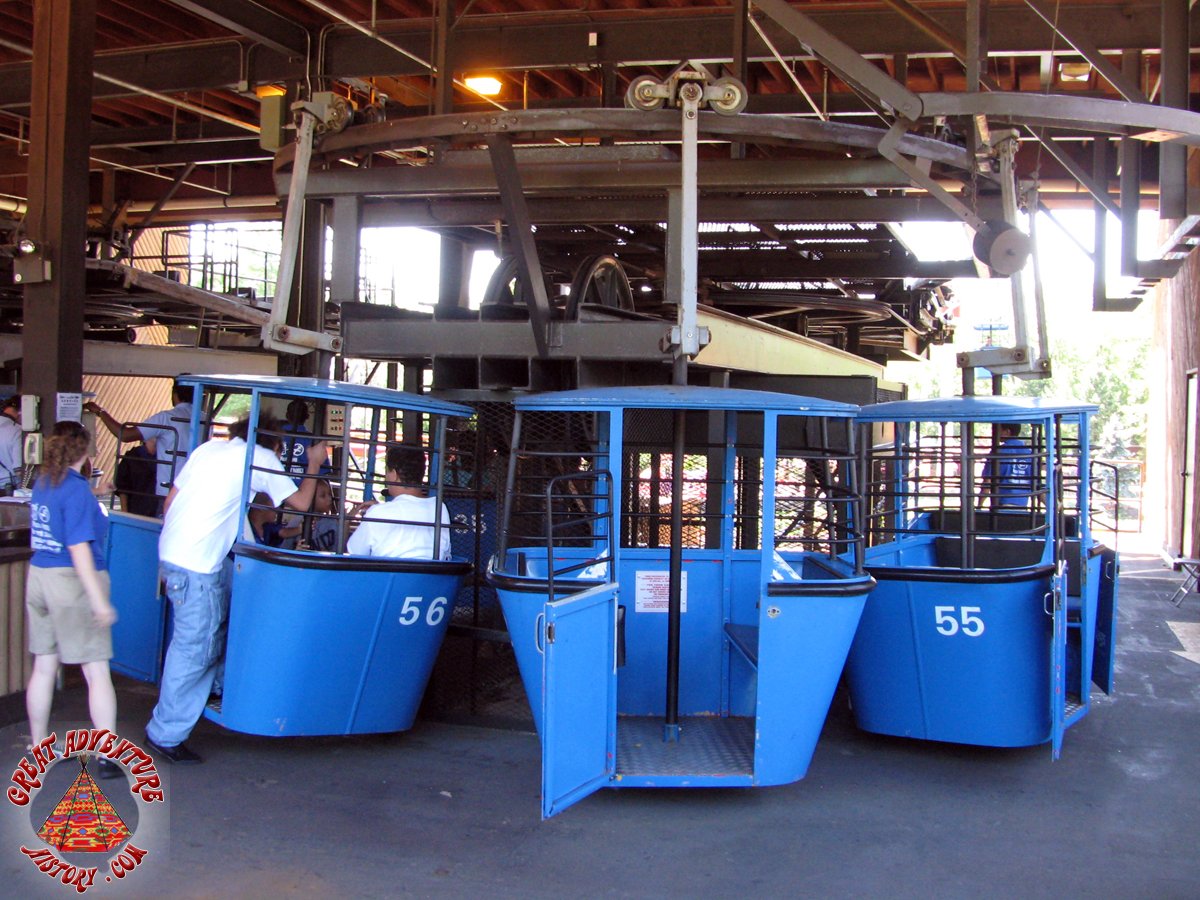
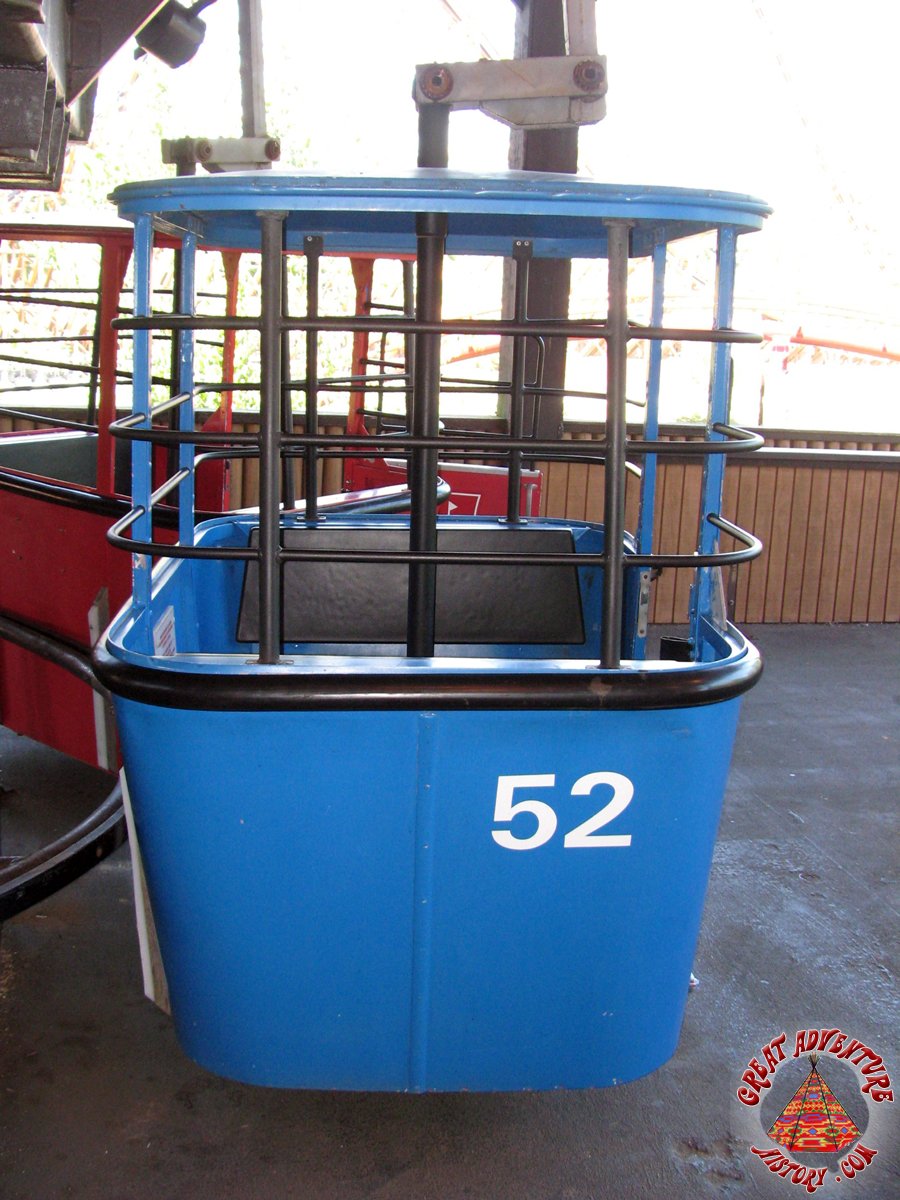
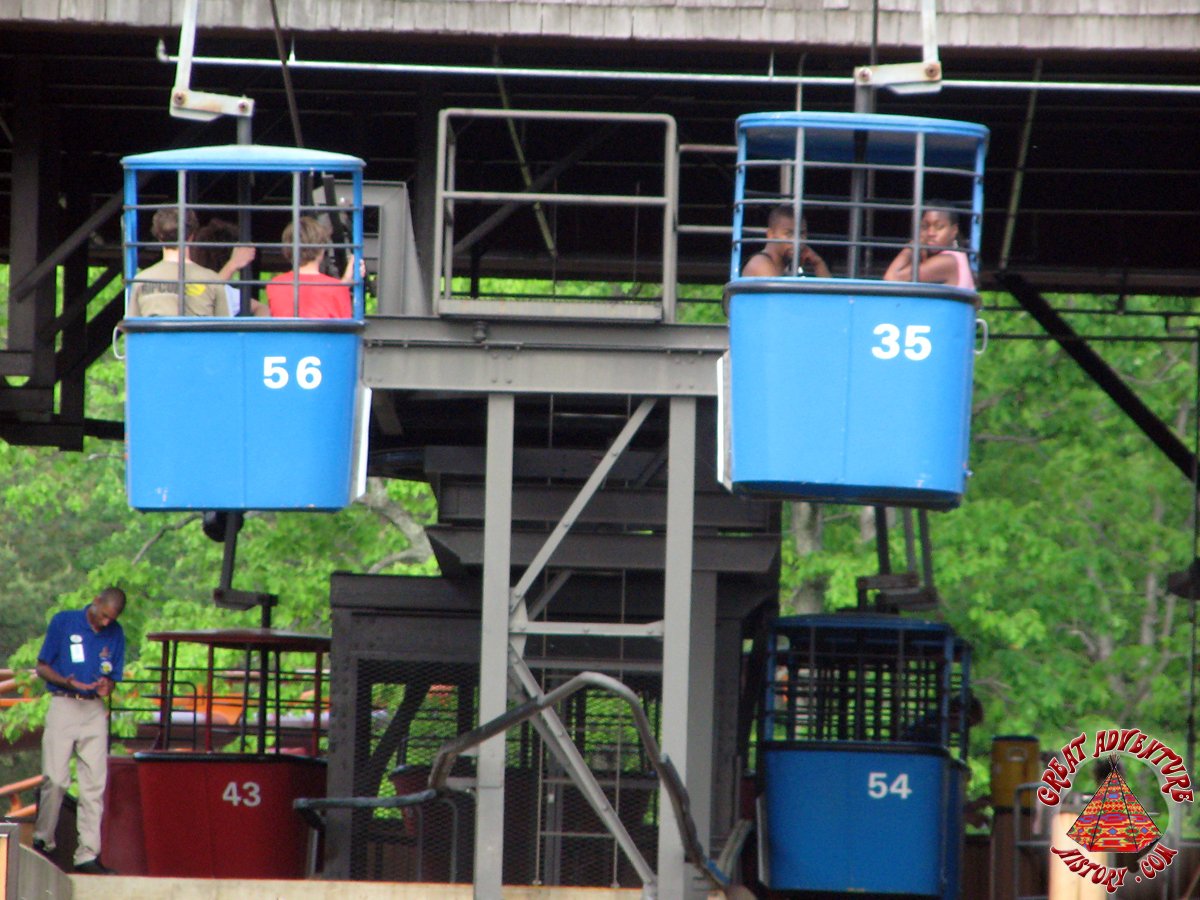
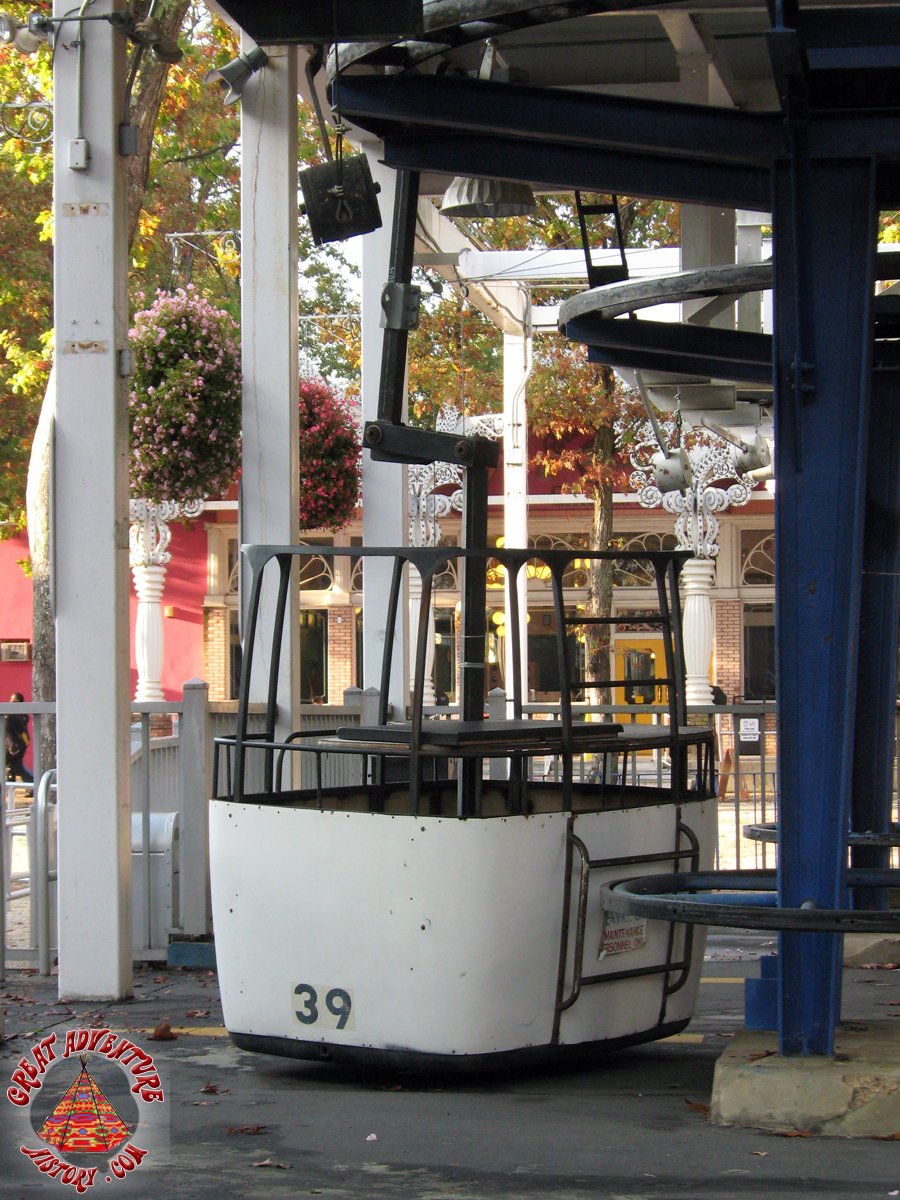
Six Flags Great America in Gurnee, Illinois was home to two skyrides, both of which were removed by 1984. Between the two rides, there were 84 gondolas, most of which were sent to Great Adventure (with the rest going to Six Flags Over Georgia to replace their aging fleet). The new cars were lighter and their more squared off shape allowed easier modification with additional safety bars creating a "cage" to prevent guests from doing anything stupid. This came after high profile incidents on other park's skyrides where guests had climbed out of the cars. |
 |
 |
 |
 |
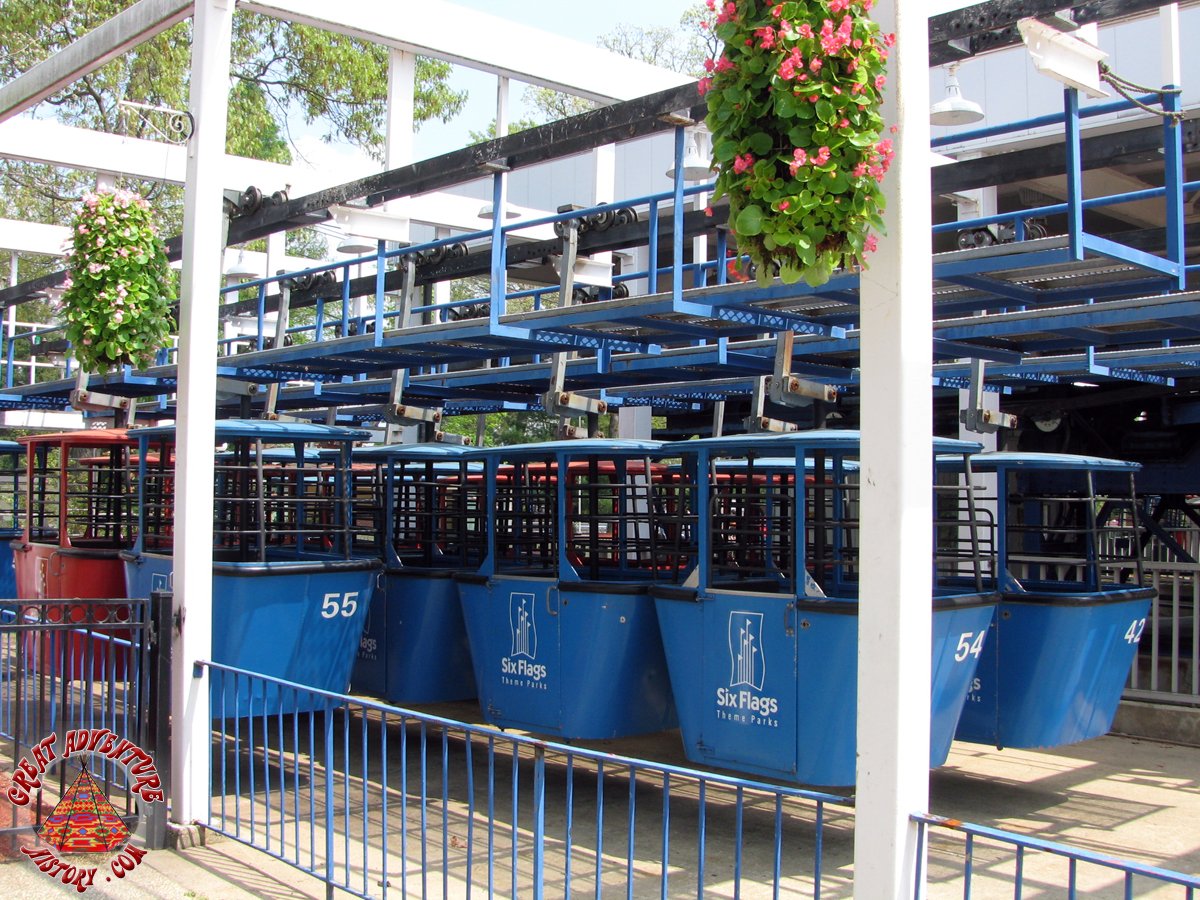 |
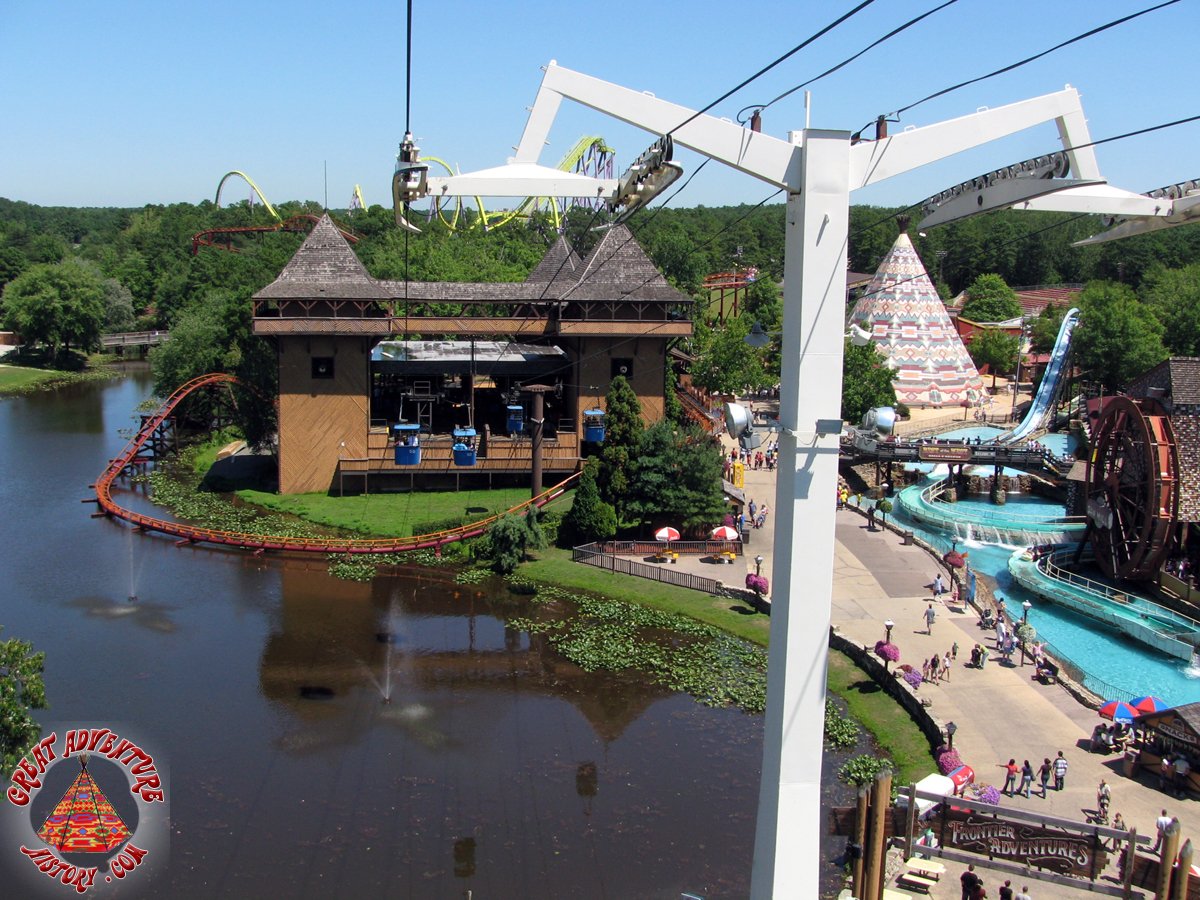
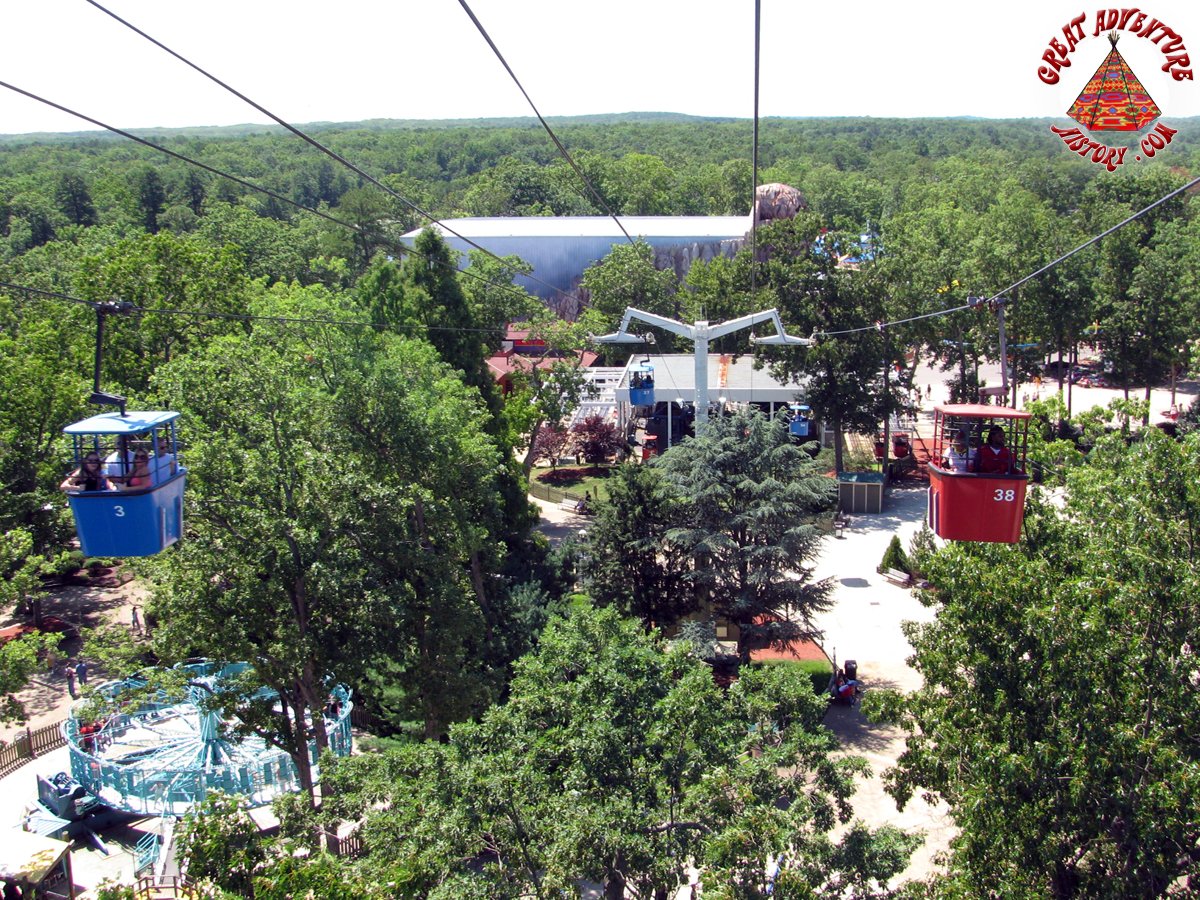
Aside from the additional safety bars, the "new" gondolas were largely unchanged when they went into service at Great Adventure, even retaining their original red and blue colors from Great America. The cars also had their original Great America logo decals when they arrived. Those were replaced with Great Adventure logos- first with the rainbow logo of the 1980's, then the updated flags logo of the 1990's. |
 |
 |
 |
|
 |
 |
 |
 |
 |
 |
 |
While not as colorful or stylish as the original fleet of New York World's Fair gondolas, the new updated cars allowed Great Adventure to keep operating their Sky Ride for many years after most parks had removed their similar rides given the rising costs of maintenance and insurance as well as the diminishing "thrill factor" of skyrides as bigger, more thrilling attractions were introduced. |
 |
 |
 |
 |
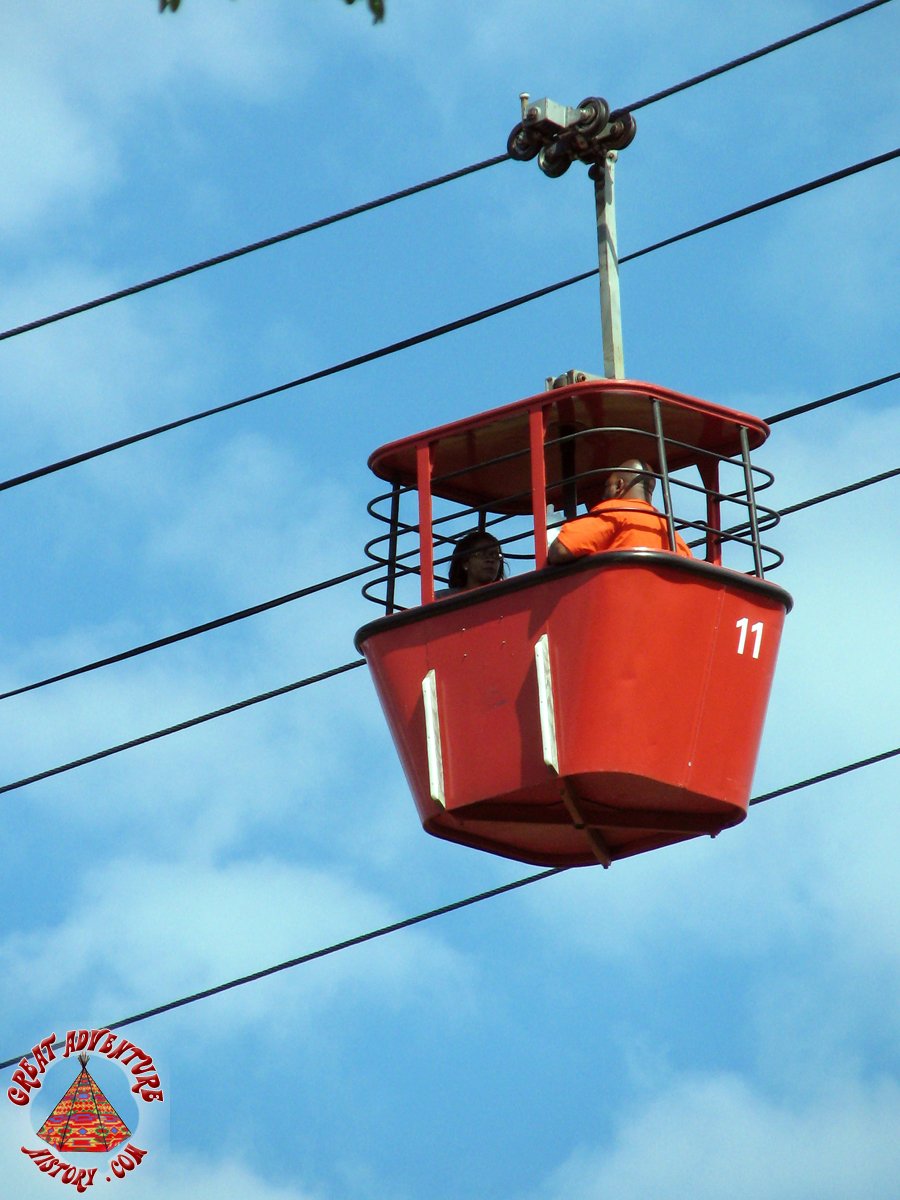 |
Over the years, Great Adventure has reduced the number of cars and their spacing over the seasons to help extend the life of the cable as well as with the loss of cars over time. Even so, the ride weighs heavily into the park's overall ride capacity given its dual operating capabilities. |
 |
 |
 |
 |
 |
||
 |
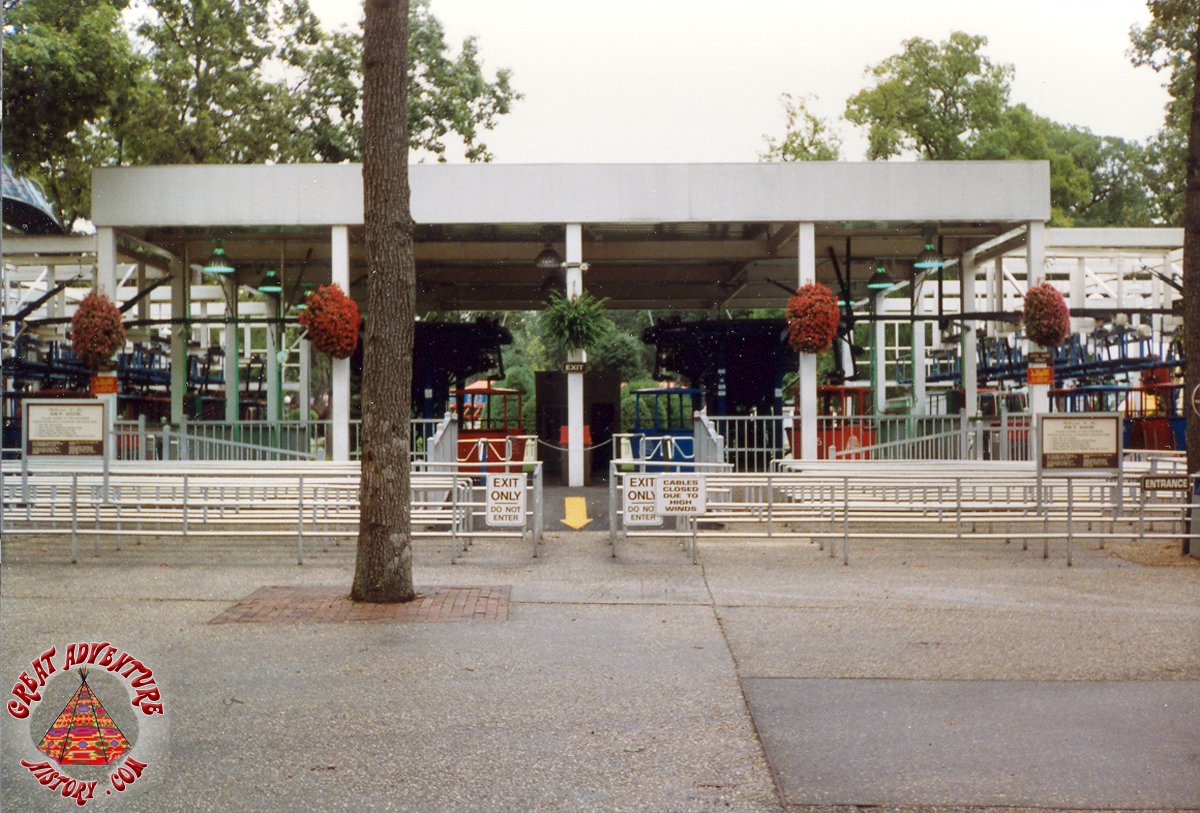 |
 |
 |
 |
 |
 |
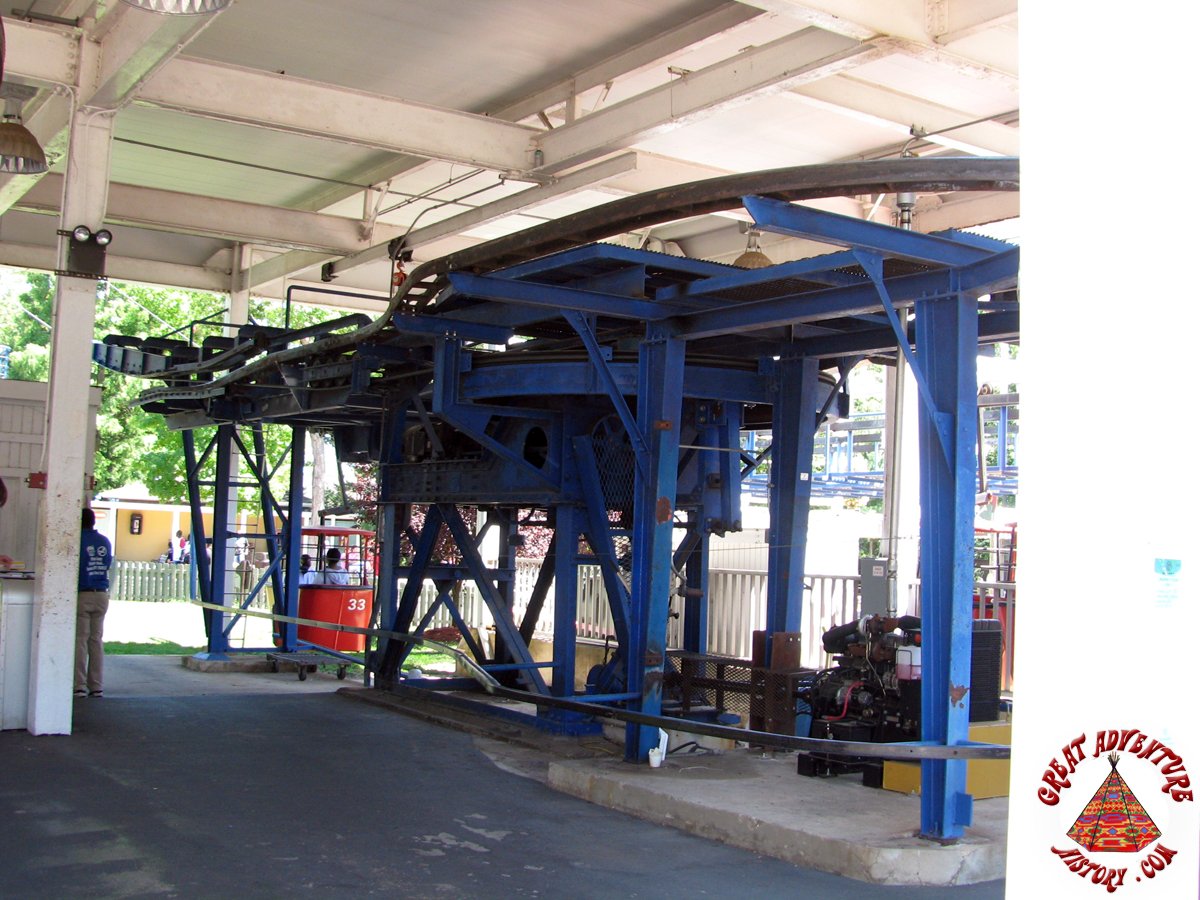
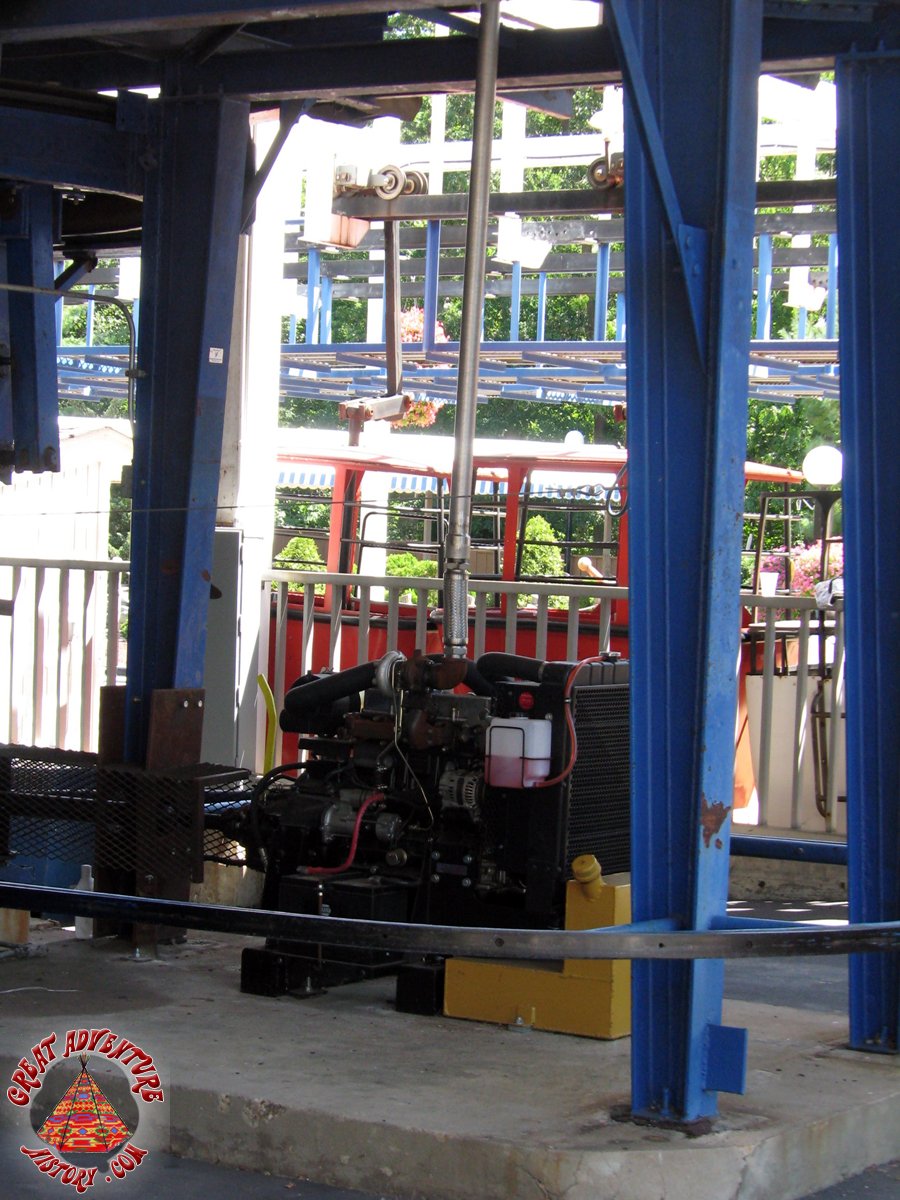
The Dream Street Station of the Sky Ride is the end of the line that
provides the power, with twin electric drive motors turning the "bull
wheels" which the cable turns on. At the Dream Street end of the line,
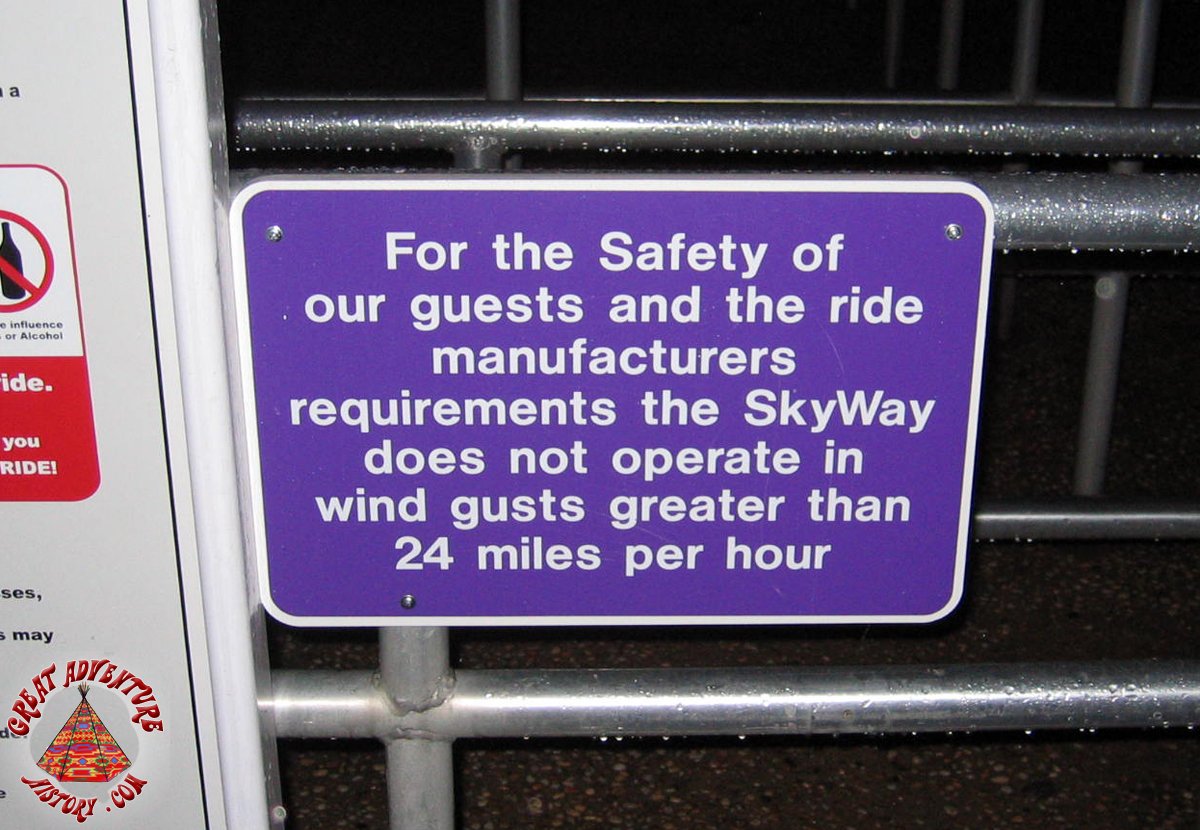
the name of the ride is the "Skyway" versus the "Sky Ride" name at the
Western end and on maps. The structure of the anchor and drive are the original equipment from the New York World's Fair, and each is fitted with a backup motor that can be used to advance the cable in the event the electric power goes out. Originally these were fitted with Volkswagen engines which had the advantage of simplicity. The fact that they were air cooled meant that there was no need for a radiator making them ideal for use in a climate where they were exposed to freezing temperatures each winter. Those Volkswagen motors were replaced in the 2000's with more conventional diesel engines which have radiators. |
 |
 |
 |
|
 |
||
 |
 |
 |
 |
 |
 |
 |
 |
|
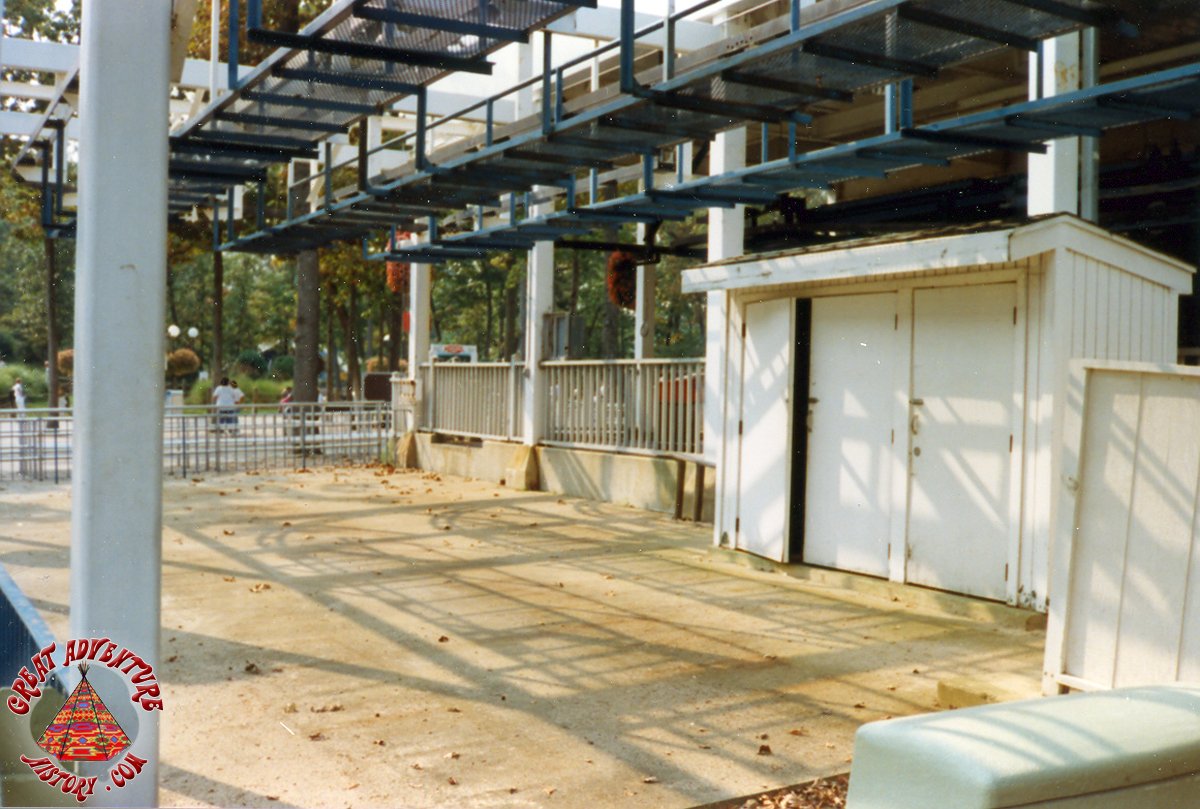 |
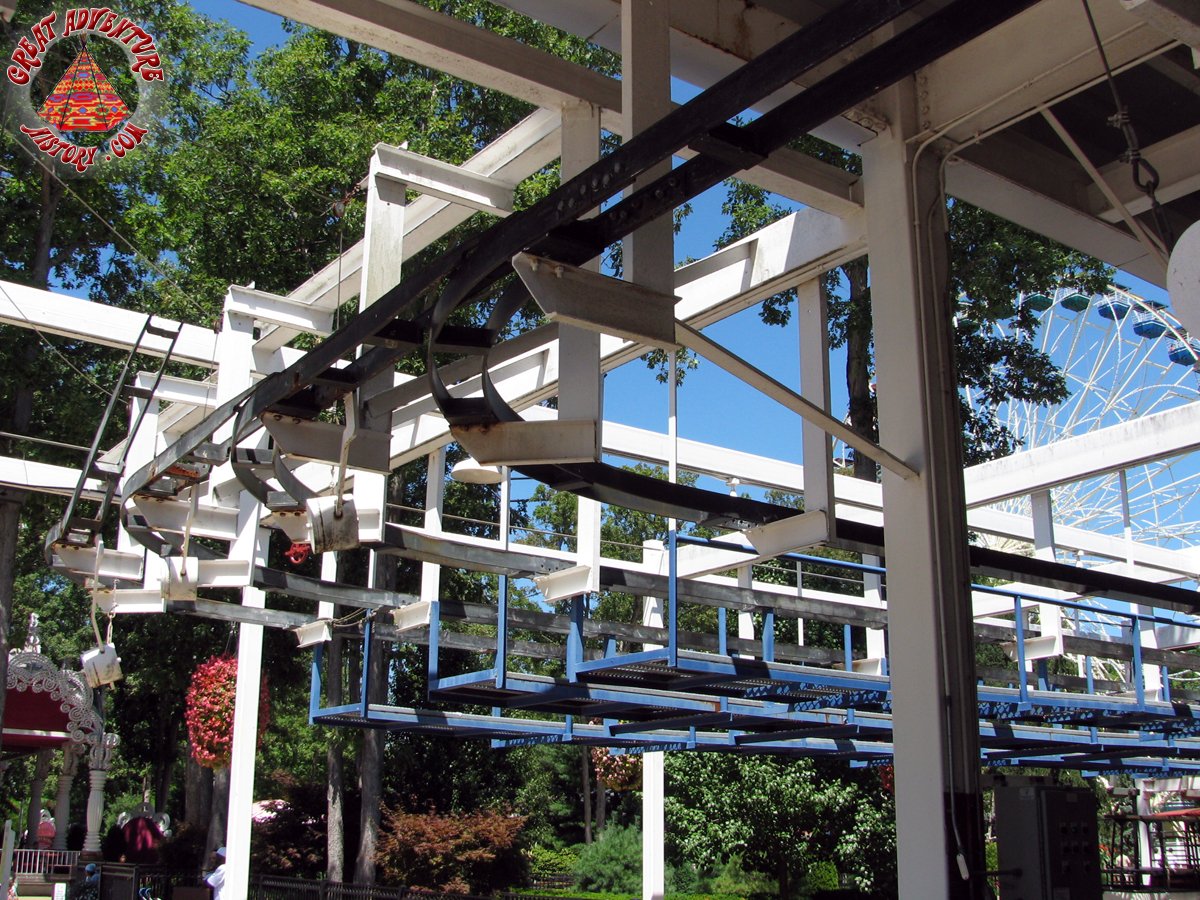
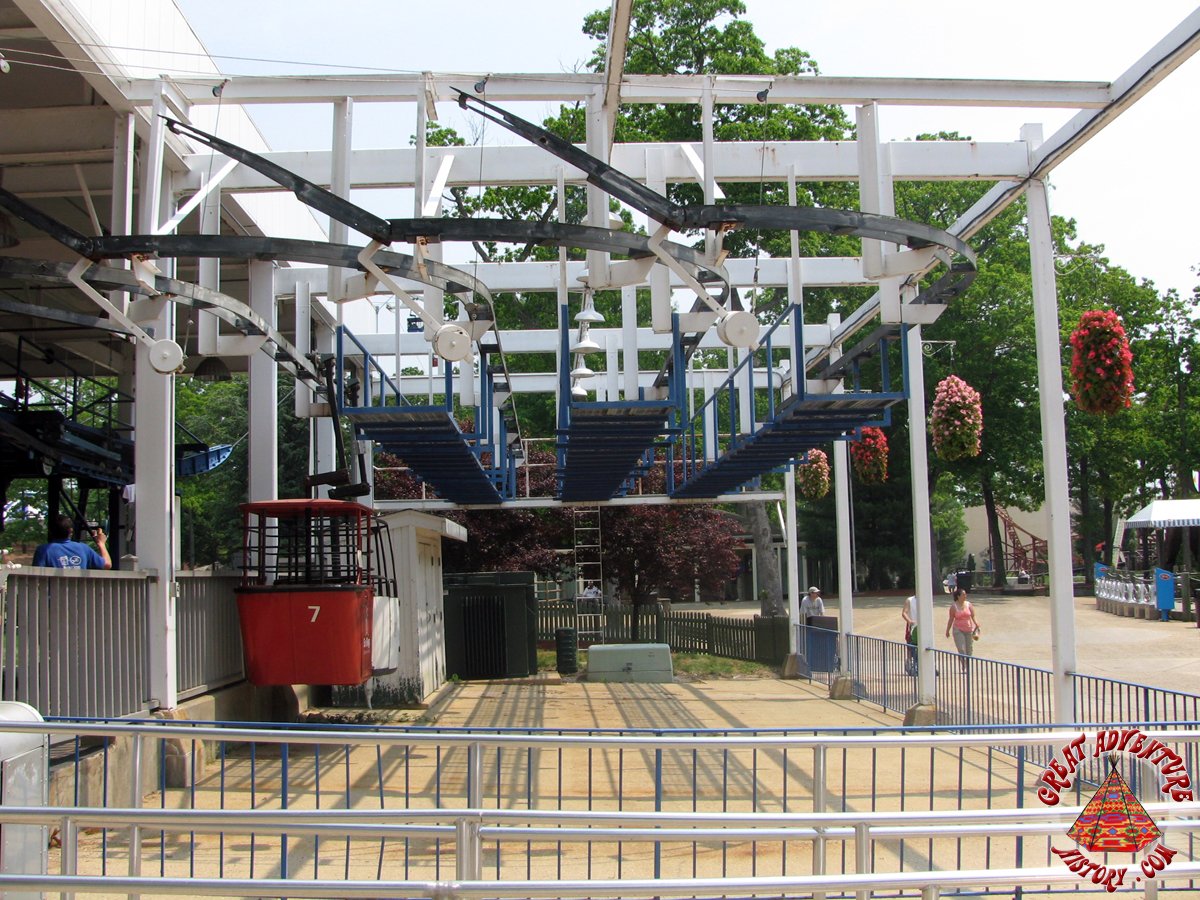
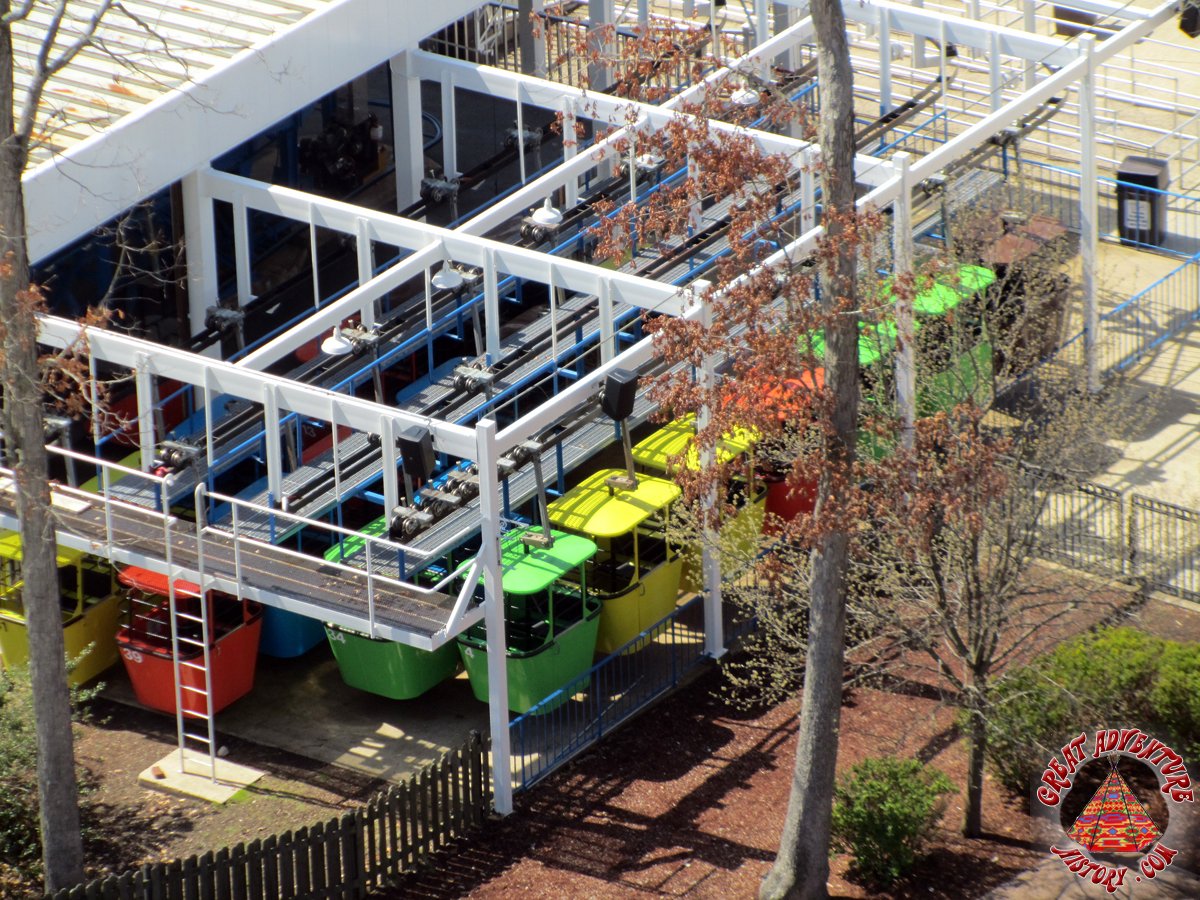
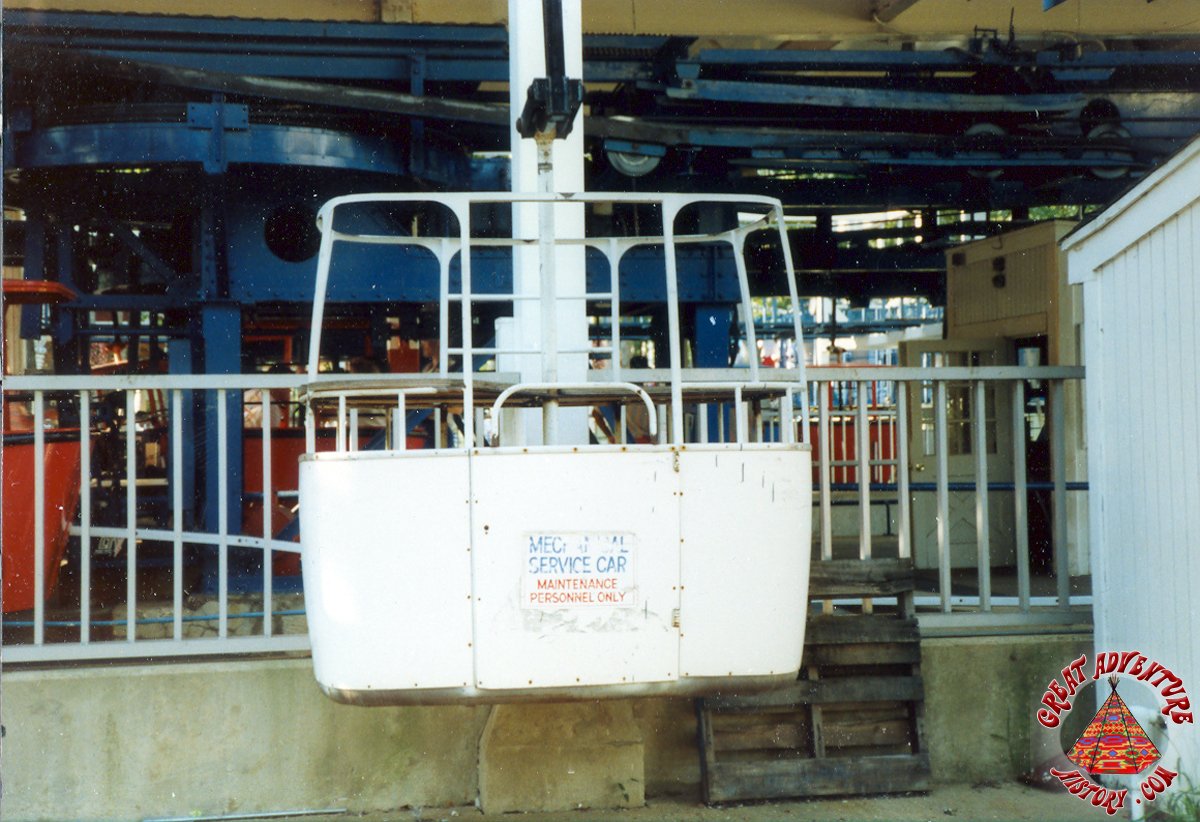
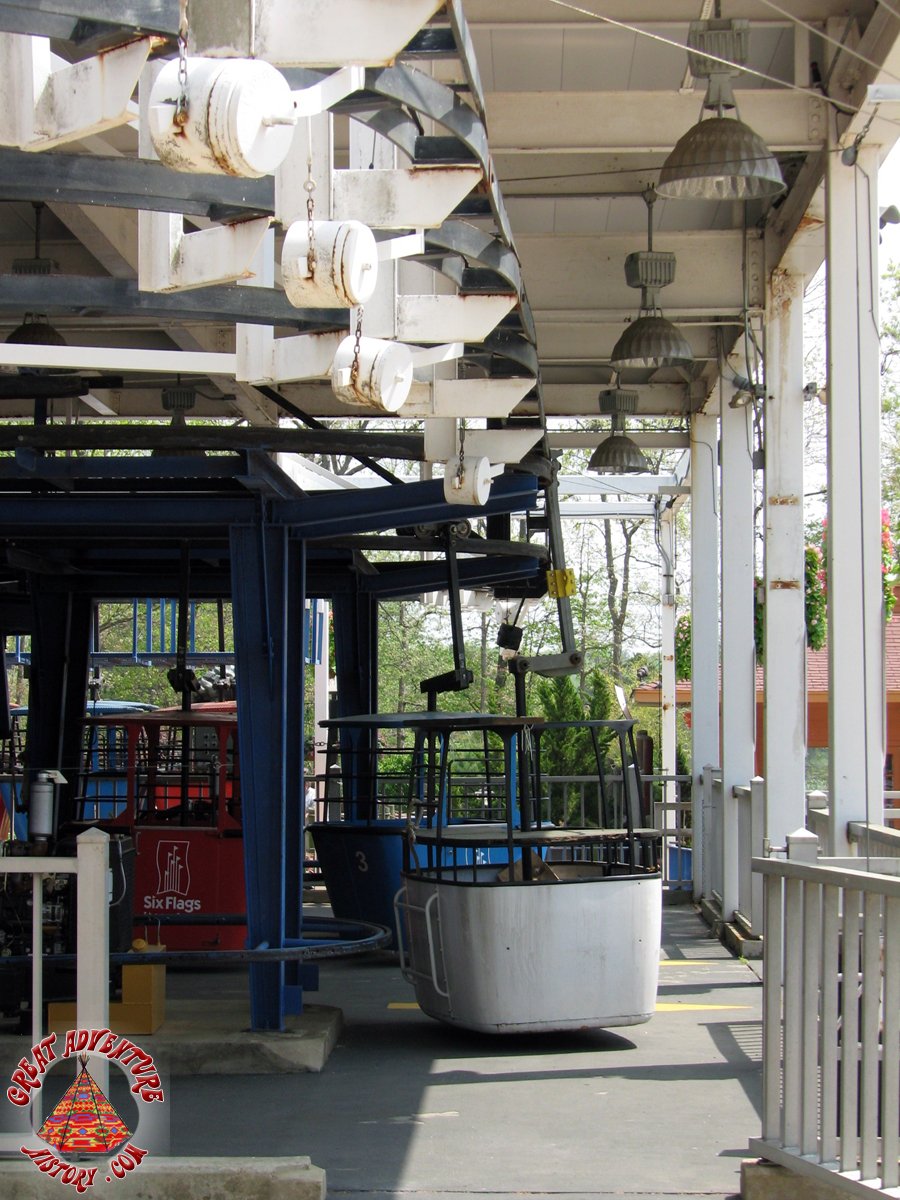
In addition to being the power end of the Sky Ride, the Dream Street Station is also home to the primary storage tracks for the gondolas. Each side has a four sidings where the cars can be sent for storage at the end of the day, with a series of switches that tilt into place to choose where the cars go. This is also where the park's maintenance staff does work on the gondolas as needed. The maintenance also has a special maintenance car on each side of the ride which is stored on the siding closest to the station. |
 |
 |
 |
|
|
|
 |
|
 |
||
  |
||
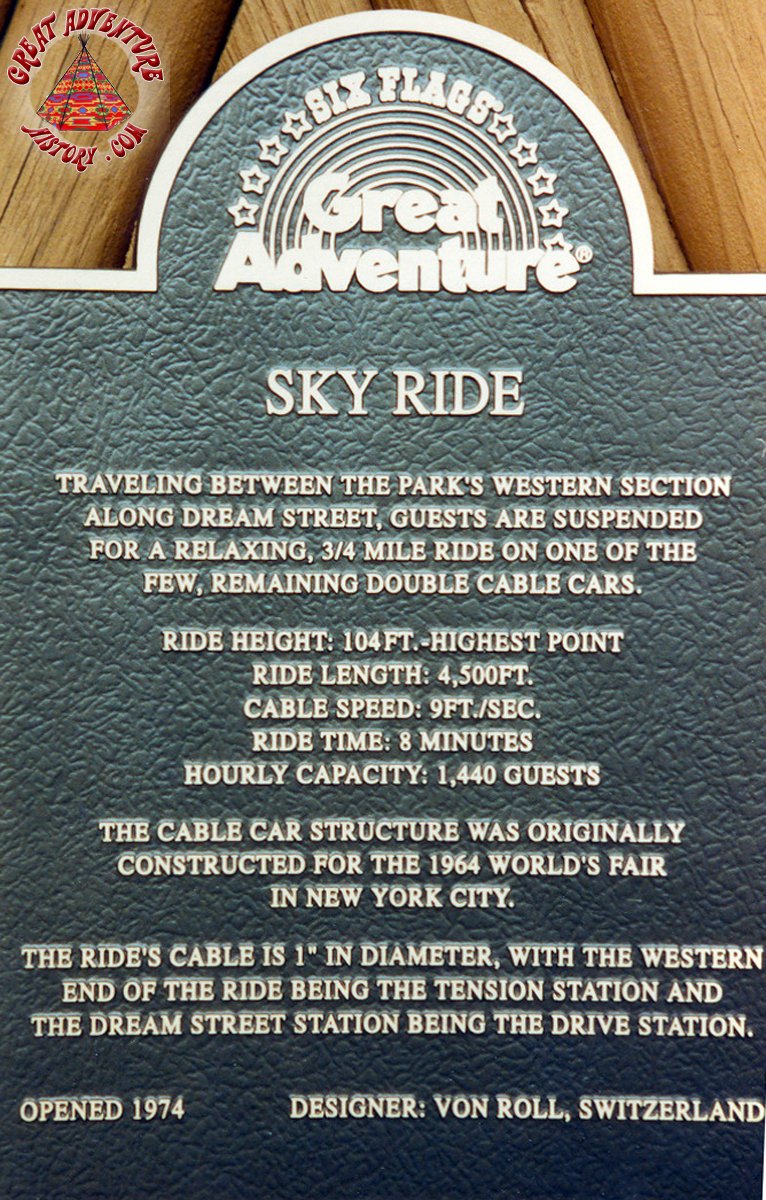
| Manufacturer: | Von Roll, Switzerland | |
| Ride Model: | Double Circuit Skyride | |
| Original Location: | 1964/65 New York Worlds Fair | |
| Opening Date: | July 4, 1974 | |
| Number of Cables: | 2 | |
| Cable Length: | 4500 feet each | |
| Cable Width: | 1 inch | |
| Cable Speed: | 9 feet per second | |
| Drive Station: | Dream Street Cables | |
| Tension Station: | Western Cables | |
| "A" Side Cable: | Side of Big Wheel | |
| "B" Side Cable: | Side of Lake | |
| Number of Towers: | 6 Towers on the A (Big Wheel) Side | |
| 7 Towers on the B (Lake) Side | ||
| Highest Point: | 104 feet | |
| Main Power: | 2 German Make Motors | |
| Auxiliary Power: | 2 Volkswagen Engines (updated in 2007) | |
| Number of Cars (in 1974): | 112 (formerly at the NY Worlds Fair) | |
| Number of Cars (current): | 56 (formerly at Six Flags Great America, IL) | |
| Car Capacity: | 4 people | |
| Seat Capacity: | 224 | |
| Weight Capacity: | 680 lbs (308 kg) | |
| Riding Time: | 8 minutes | |
| Loading Time: | 30 seconds | |
| Unloading Time: | 15 seconds | |
| Cycle Time: | 10 minutes | |
| Hourly Capacity: | 1440 Guests | |
| Height Restriction: | 42" unless accompanied by an adult | |
 |
||
 |
 |
 |
 |
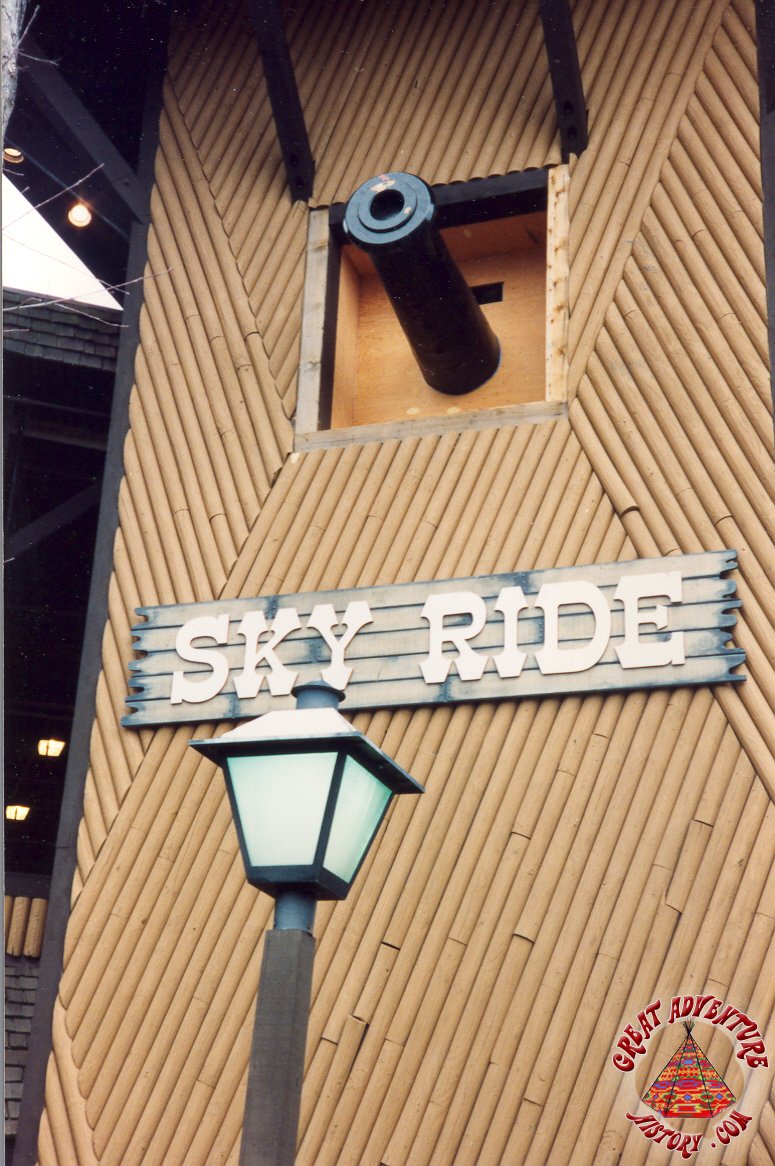
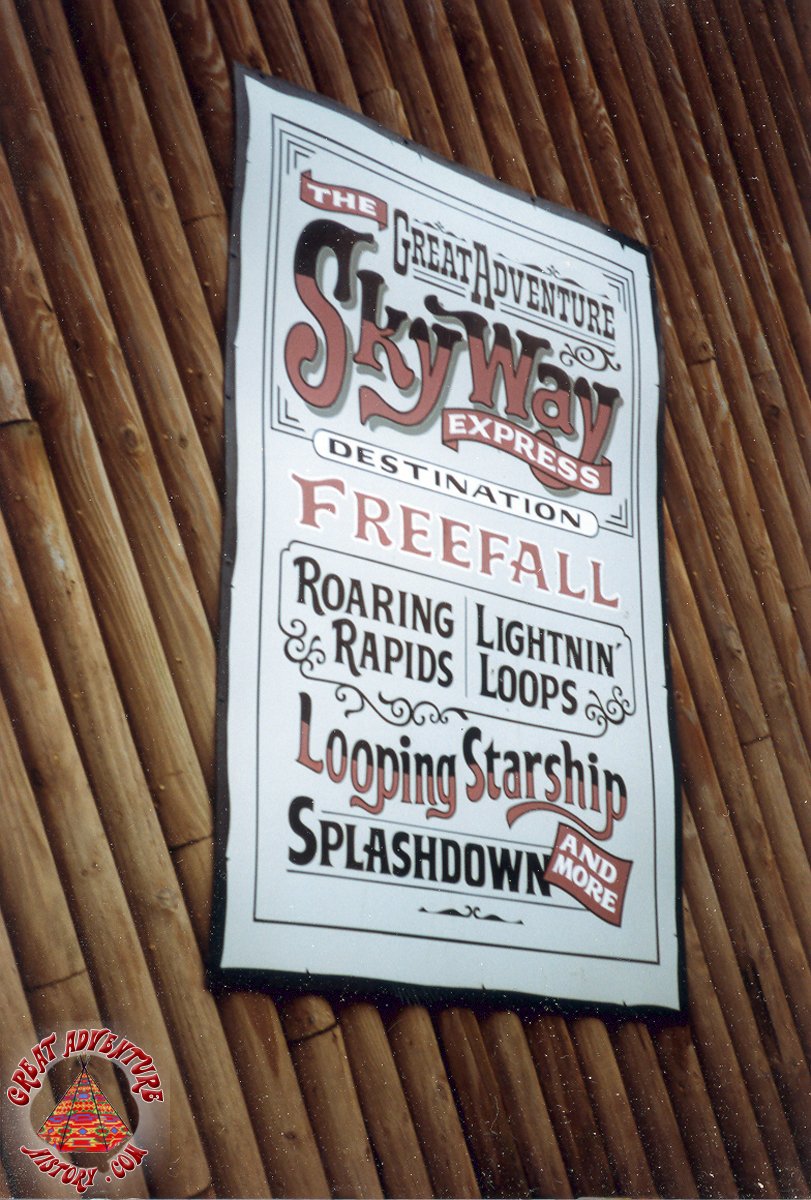
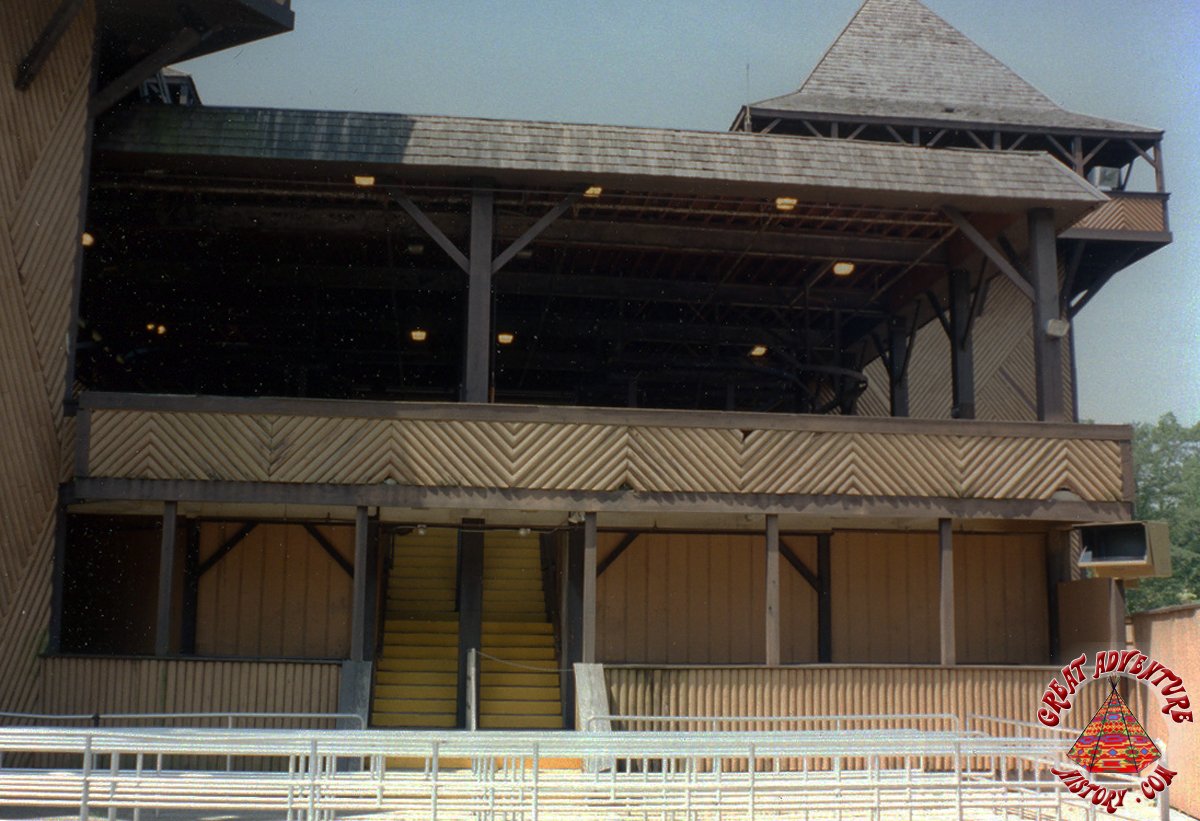
The Sky Ride station at the "western" end of the line is perhaps the most impressive station of any ride at Great Adventure, with guests entering the spectacular larger-than-life Fort structure. The elevated station is located almost 20 feet above the surrounding ground level. |
 |
 |
 |
 |
 |
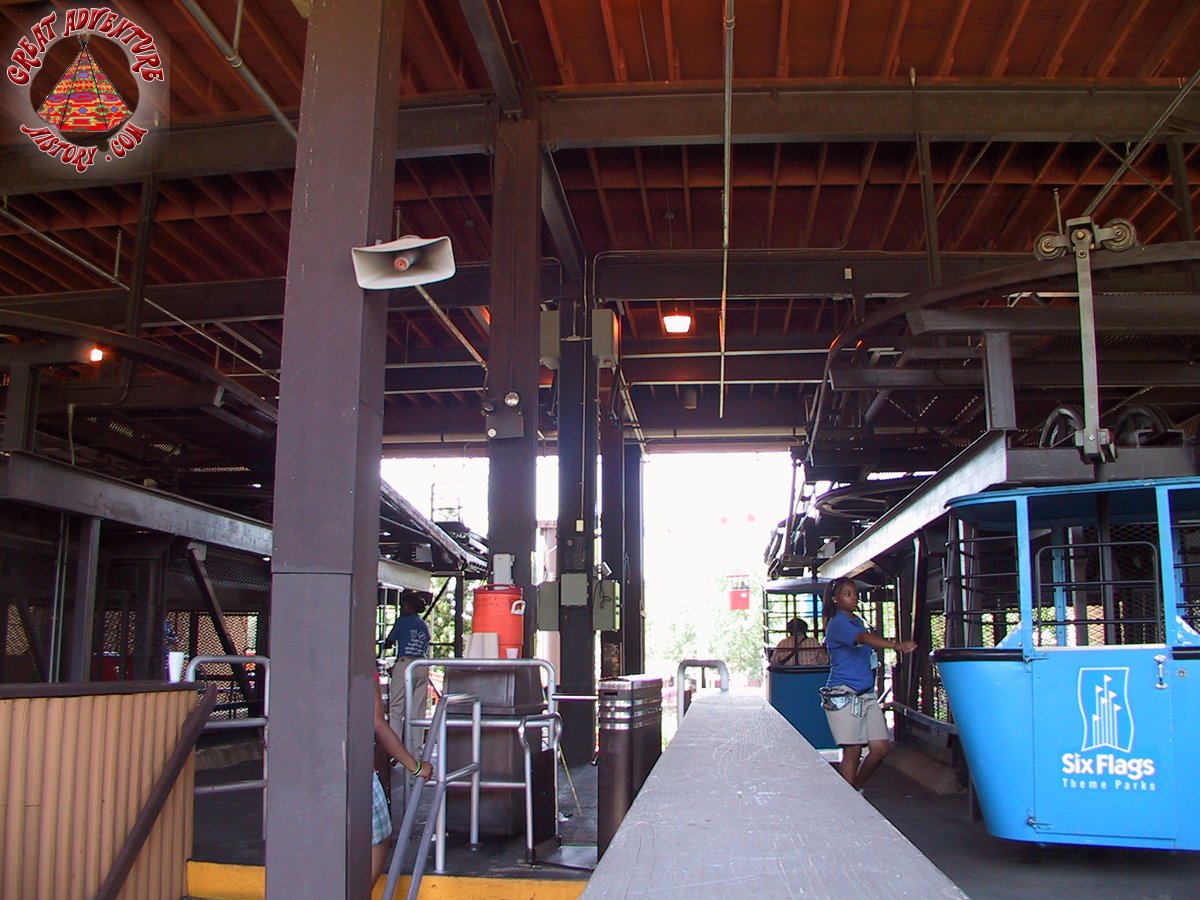
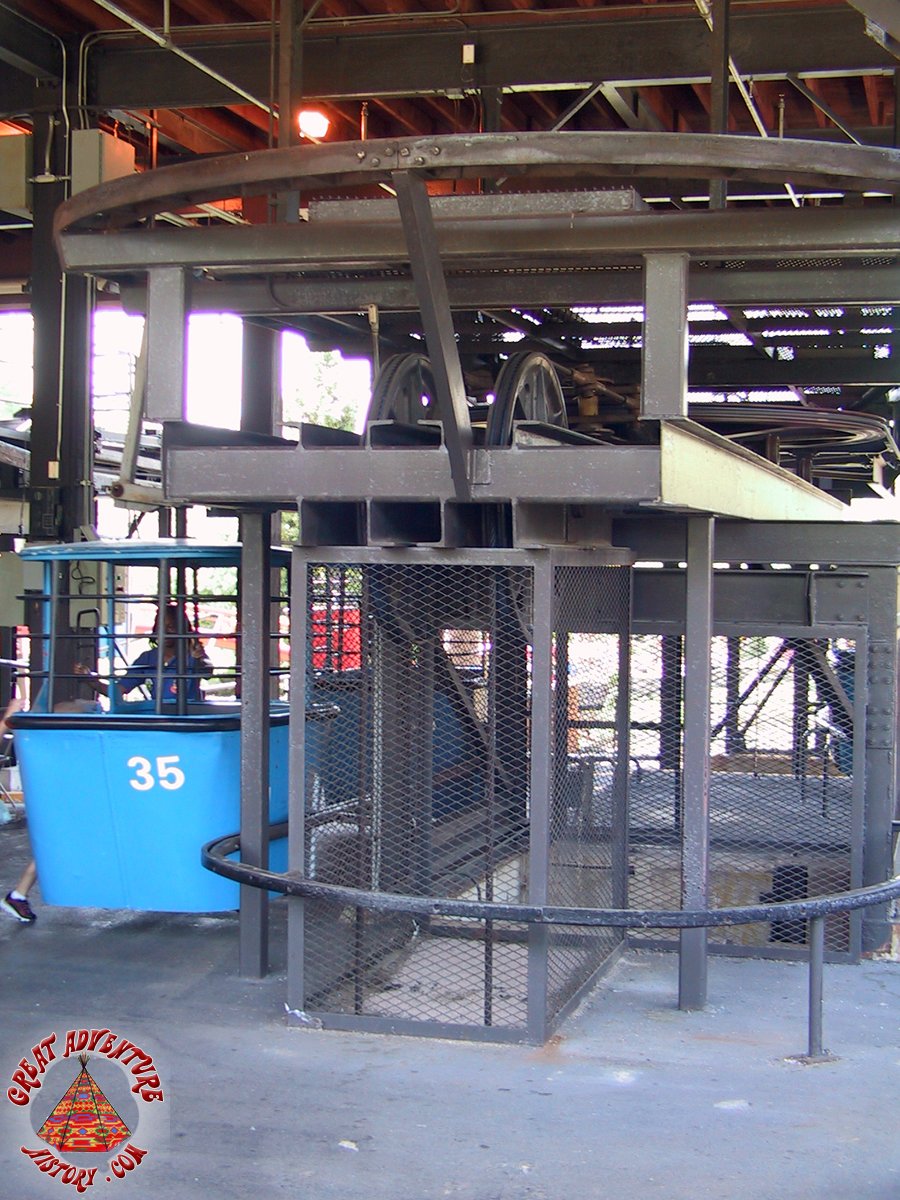
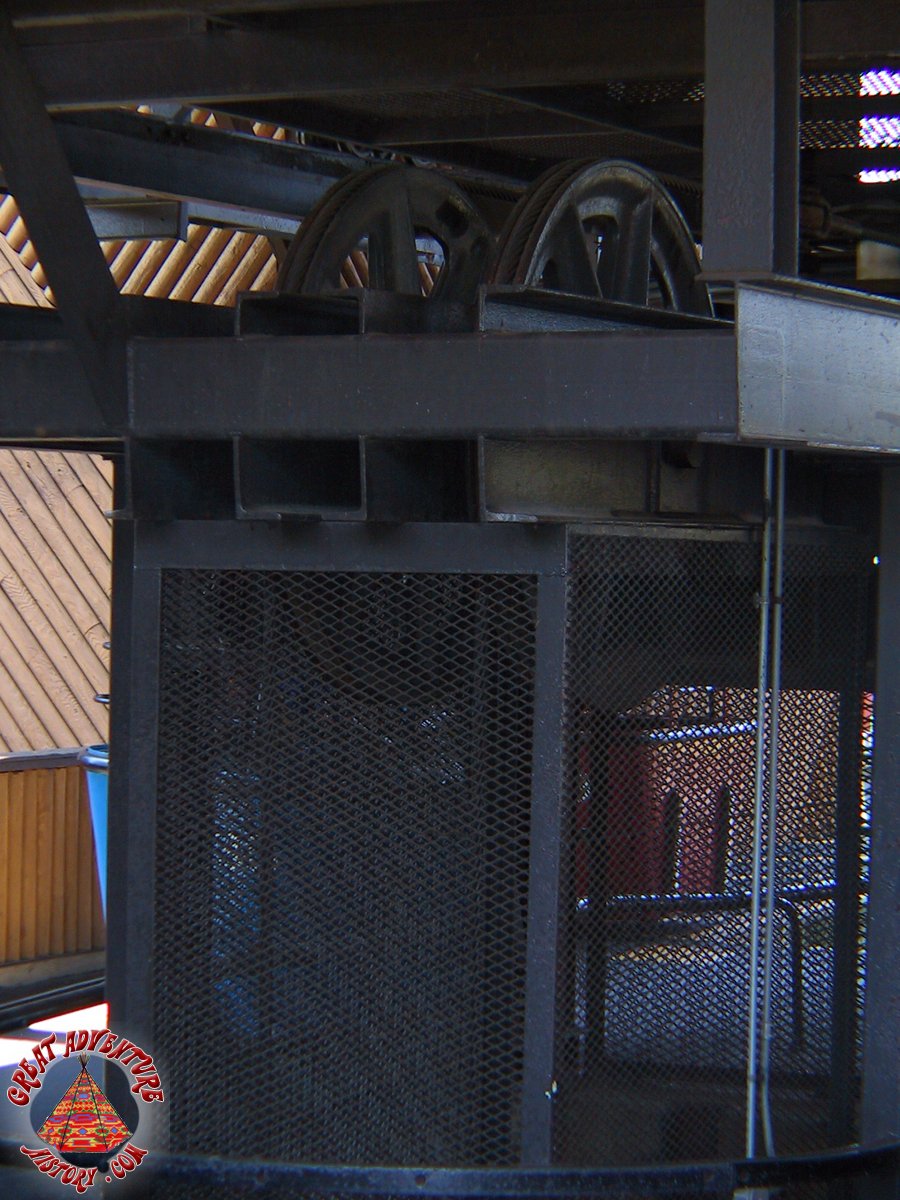
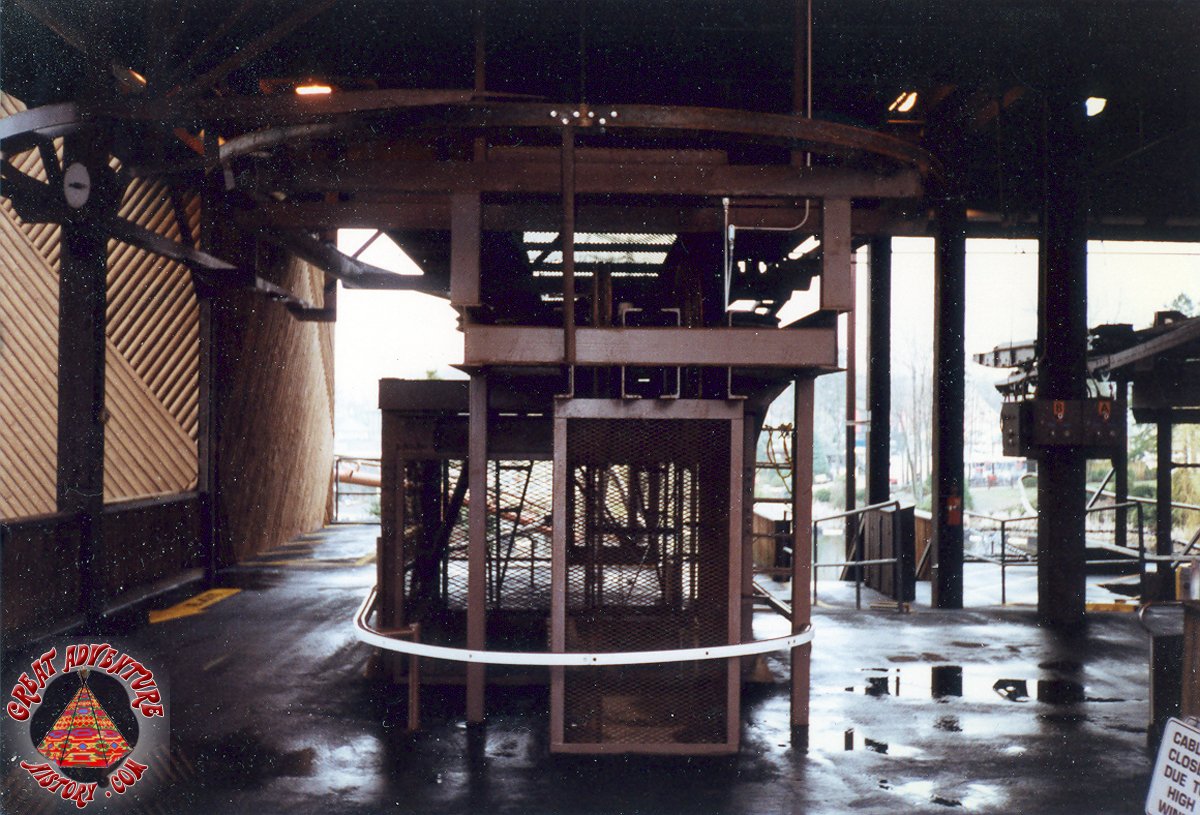
The Western station is home to the tensioning mechanism which keeps the cable from sagging when there is a large amount of weight on it. The structure, which was part of the original World's Fair ride, is set above a pit where cables drop from pulleys to a large counterweight that hangs below the floor. The cables in turn pull a bracket holding the bull wheels which the Sky Ride cables wraps around. The Western Station has a single siding track, allowing the removal of individual cars when necessary for maintenance or cleanliness issues without having to send them back to Dream Street. |
 |
 |
 |
|
 |
 |
 |
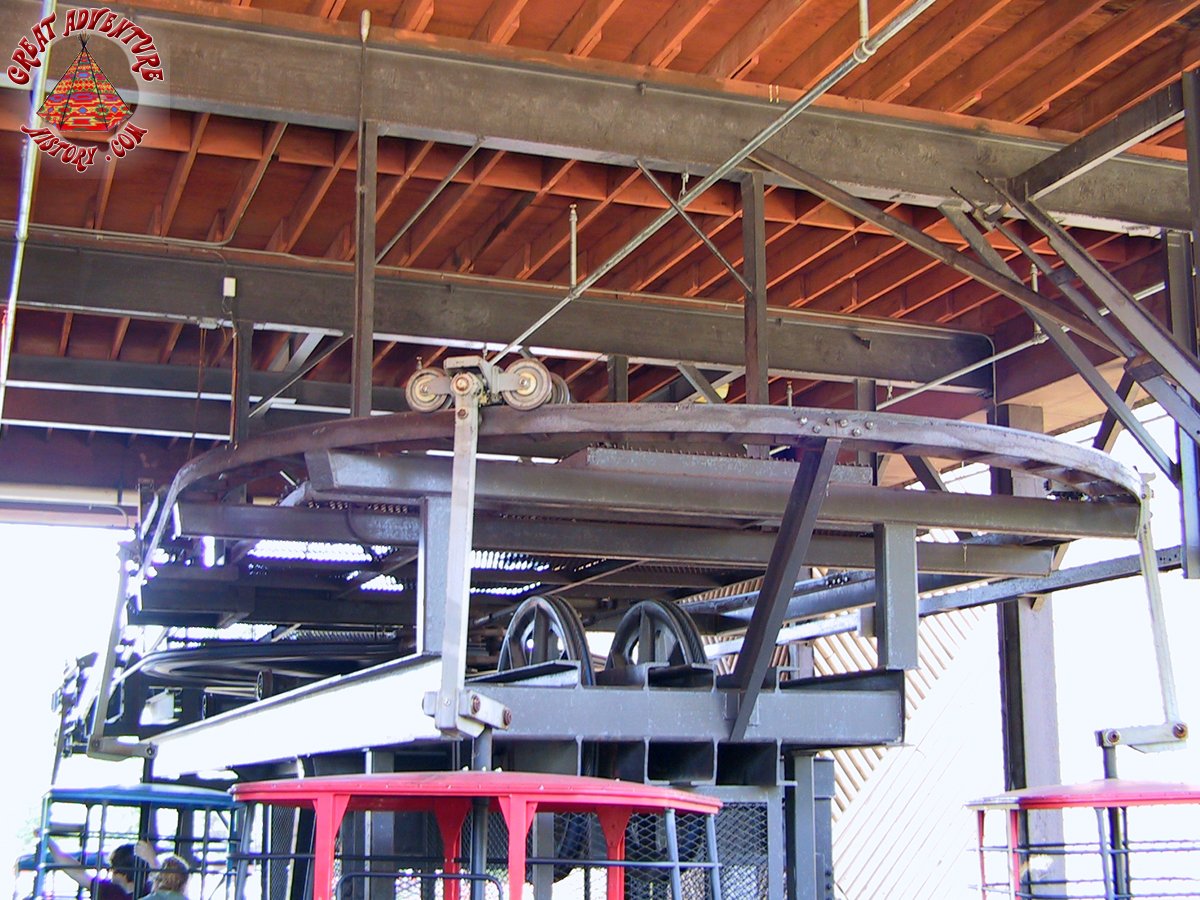 |
Just like in the Dream Street station, when gondolas arrive at the station the wheels engage the tracks as the clamp disengages from the cable, allowing them to freely roll into the station for unloading. The car is unloaded then loaded and then sent to the hold point were it releases to roll down the track until it engages with the cable, clamp locked onto the cable, and set for its trip across the park. |  |
 |
 |
|
 |
 |
 |
 |
 |
 |
 |
||
 |
 |
 |
 |
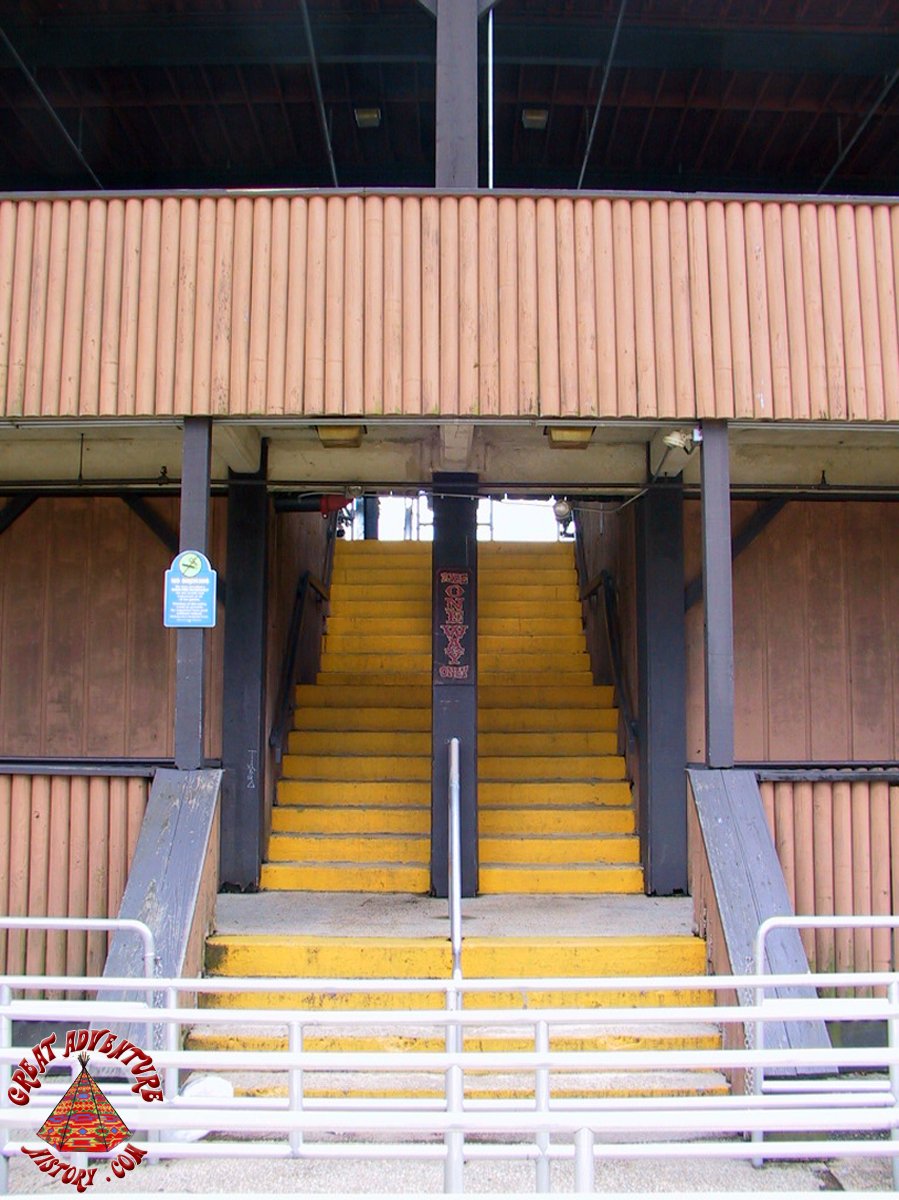
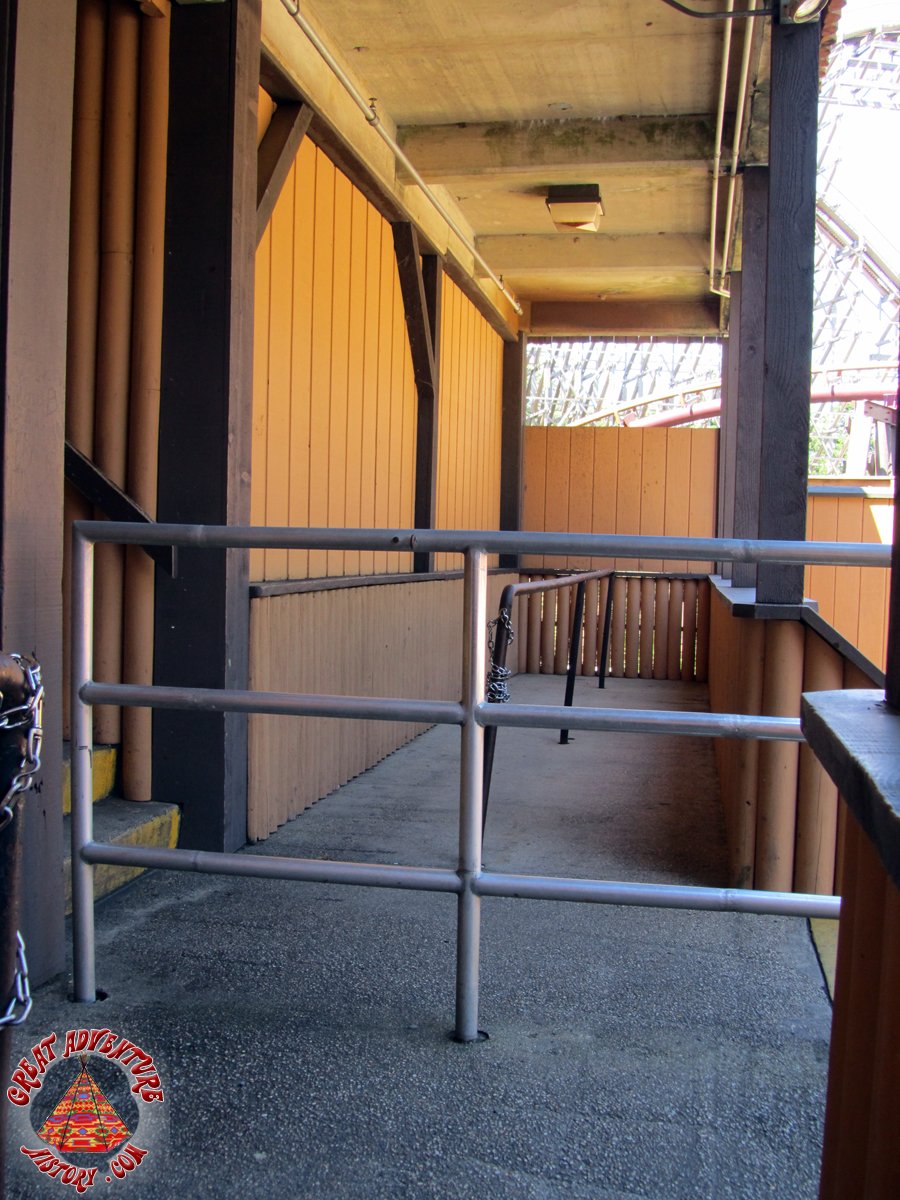
Over time the Western Sky Ride station queue has been reconfigured several times to try and improve guest flow. Originally the queue ran through the Fort and the majority of queue bars were located upstairs on the second level. The tight corners of the area and the close proximity of the cars influenced changing the queue to a common line of aluminum queue bars at the base of the stairs at ground level. |
 |
 |
 |
 |
 |
||
 |
 |
 |
 |
 |
 |
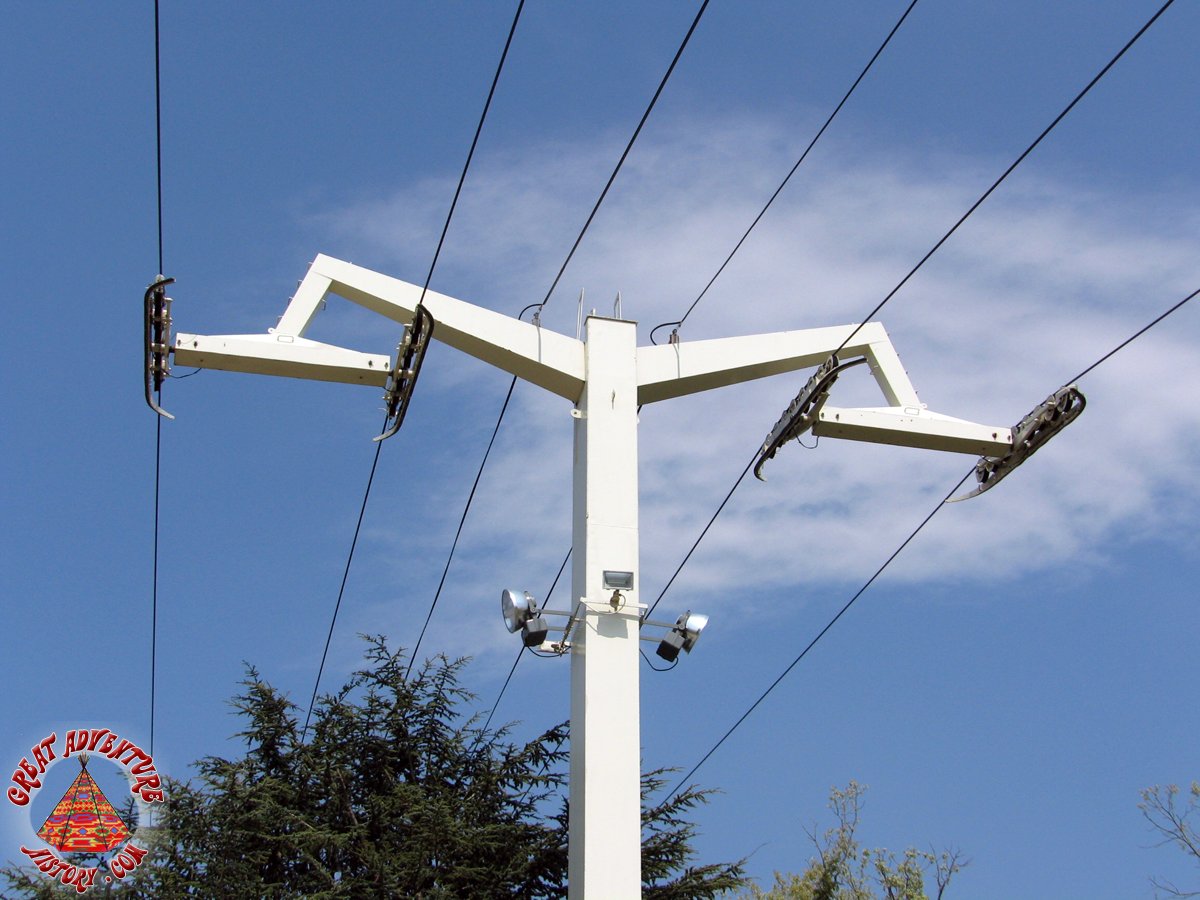 |
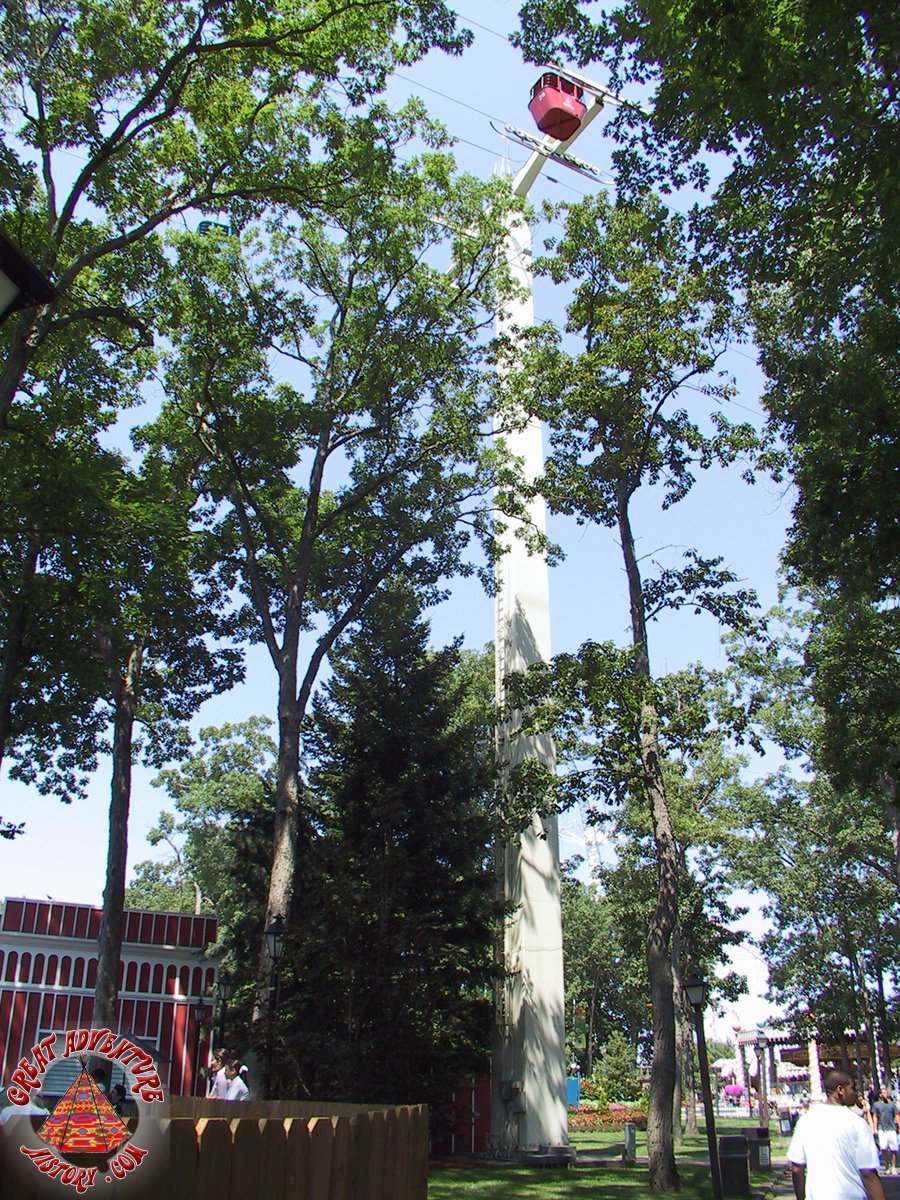
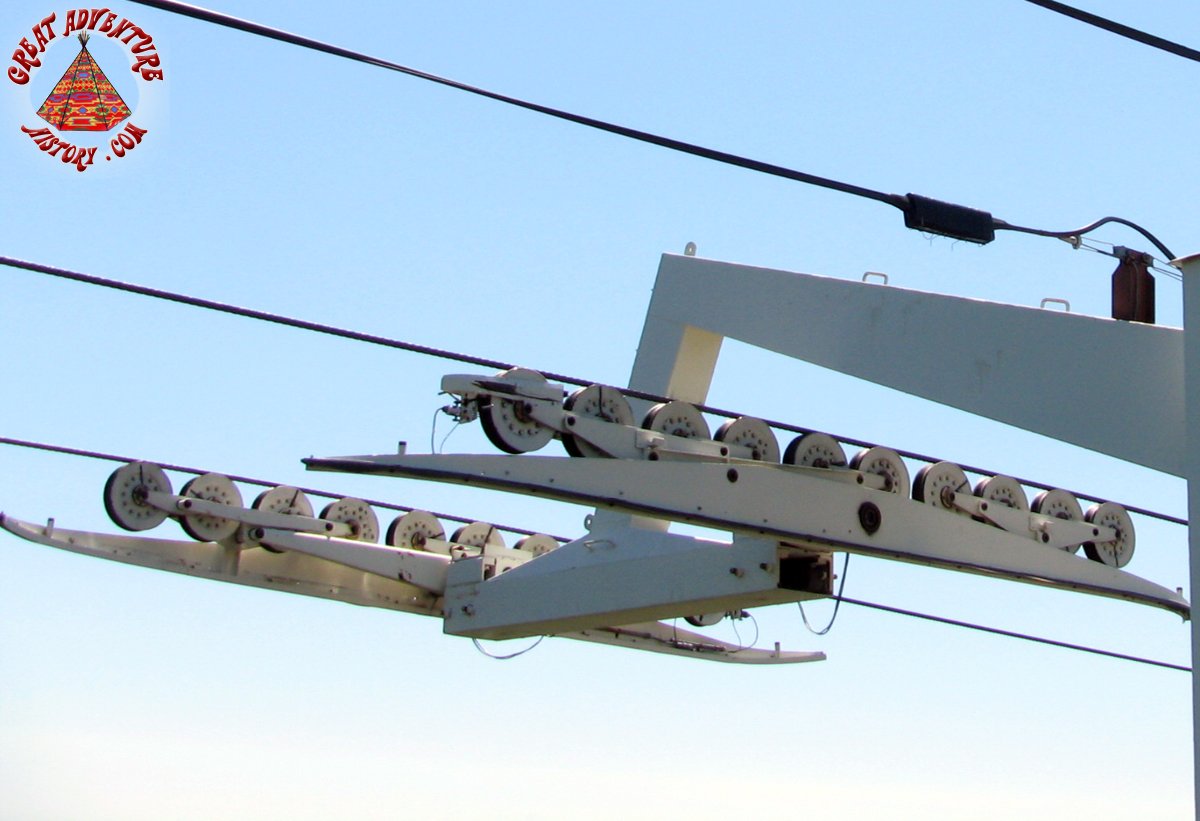
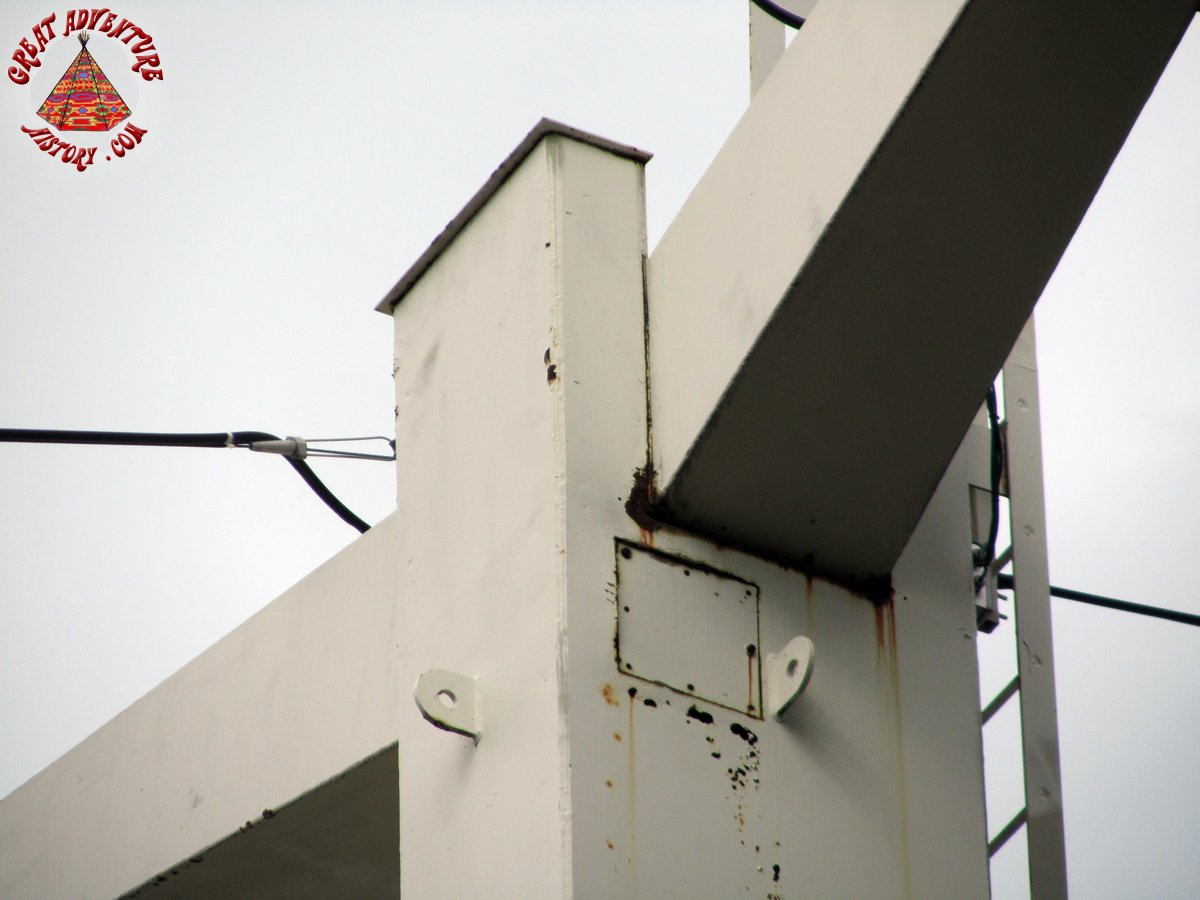
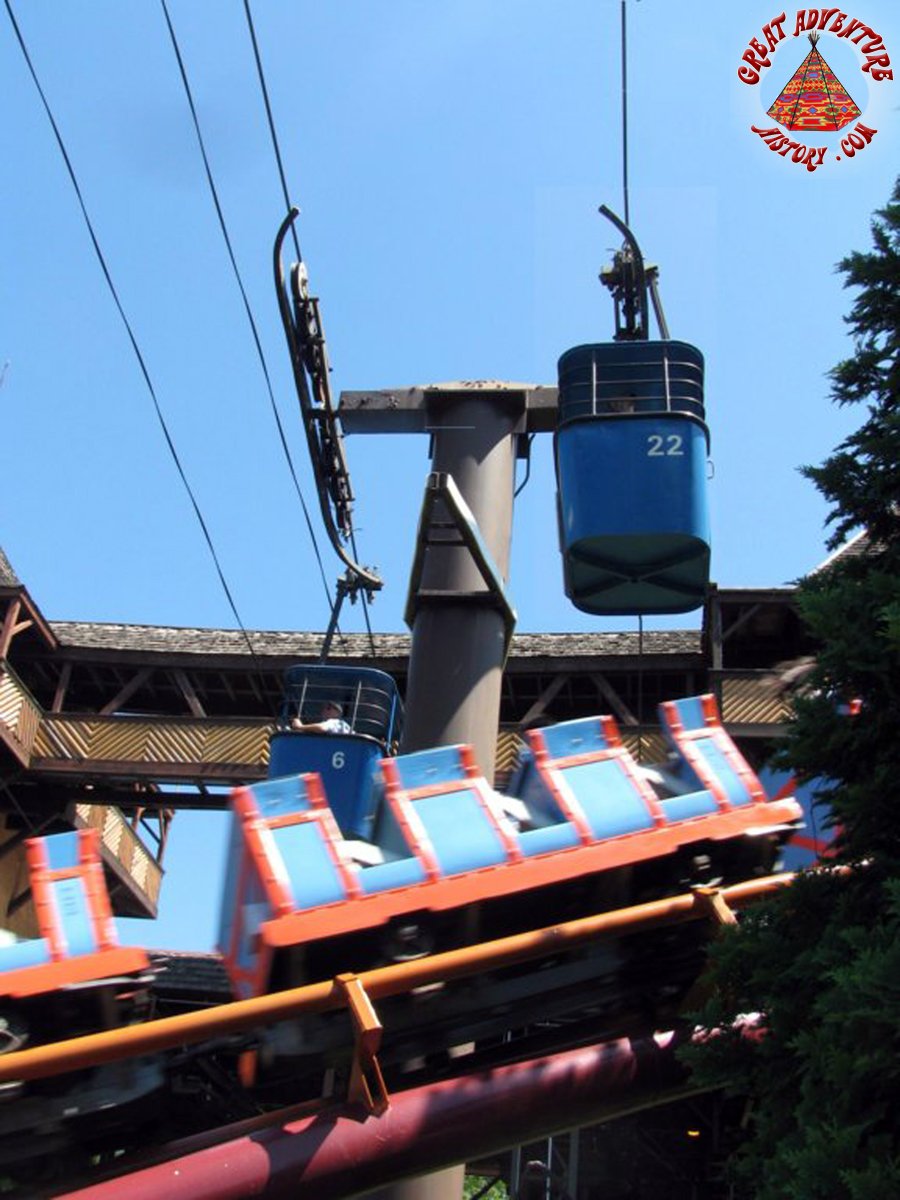
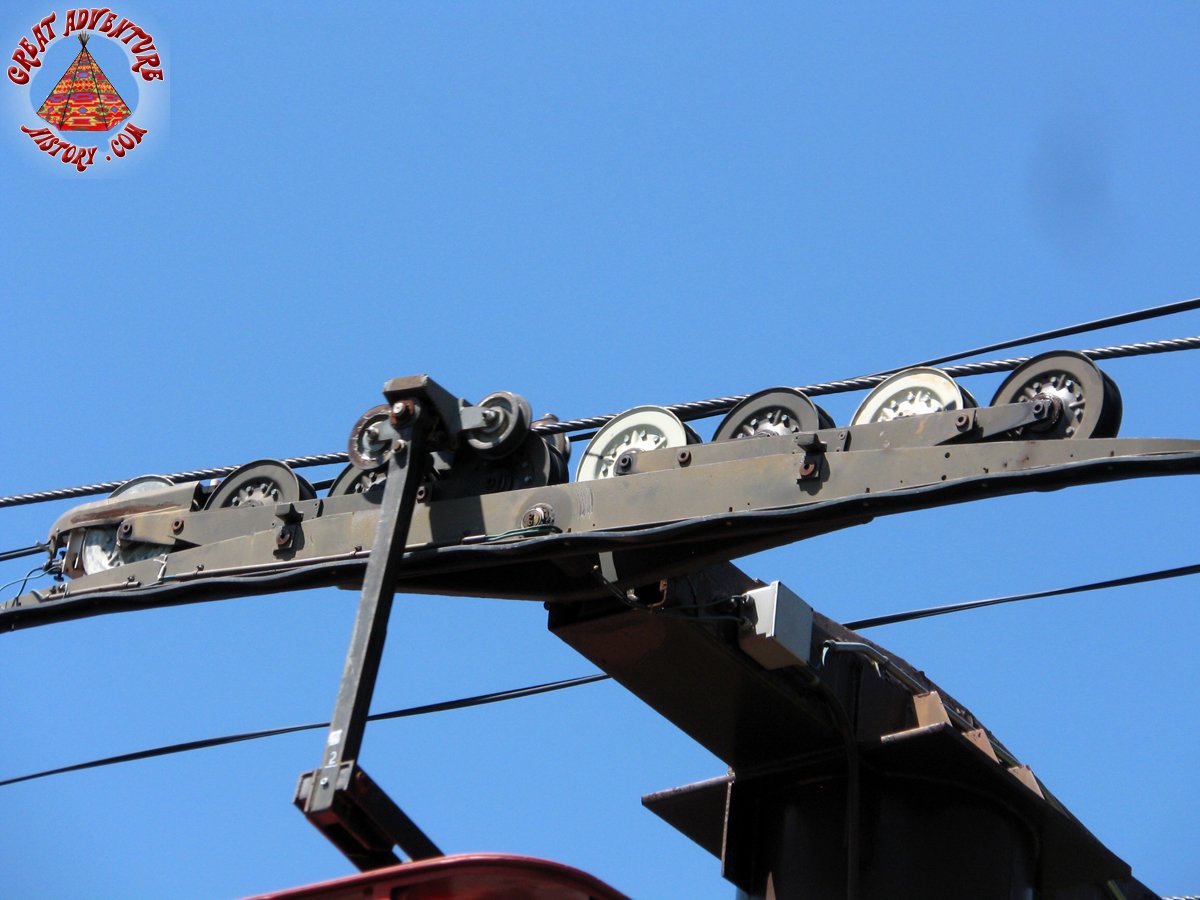
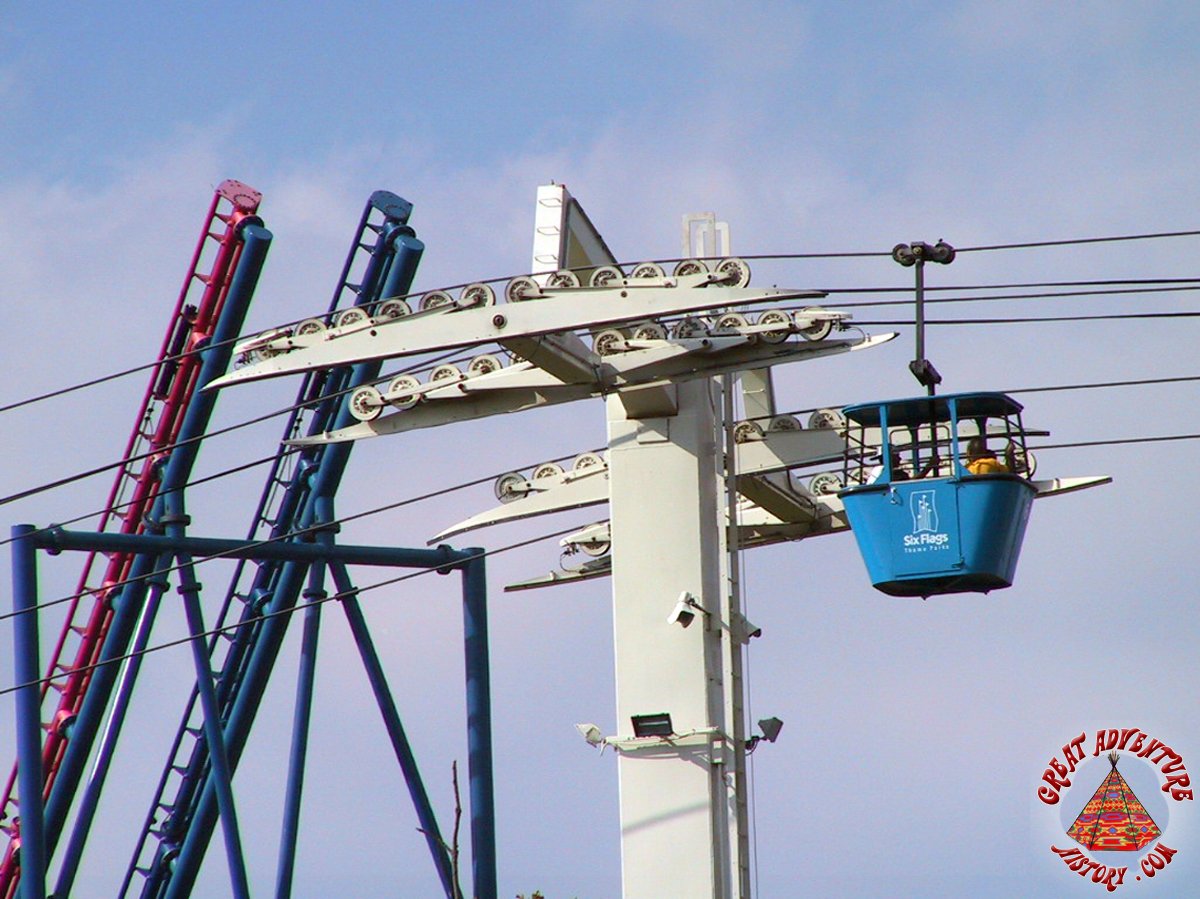
The Sky Ride was originally built with six towers spanning the park from the Fort Station to the Dream Street Station. The highest point of the ride is 104 feet, which lets guests get an amazing view high above the treetops. Each tower supports the double arms which in turn supports the batteries of rollers that the cable runs across as the gondolas travel from one end to the other. Originally painted forest green, the towers took on their current lighter green color in the 1970's and have been the same color ever since. |  |
 |
 |
|
 |
 |
 |
 |
 |
 |
 |
Not long after Great Adventure opened, a slight modification was made
adding an additional tower to the "B" side of the ride (the
side closest to the lake) to give the
gondolas more clearance as they passed over the Runaway Mine Train in
front of the Fort. Unlike all the other towers, this one single tower is
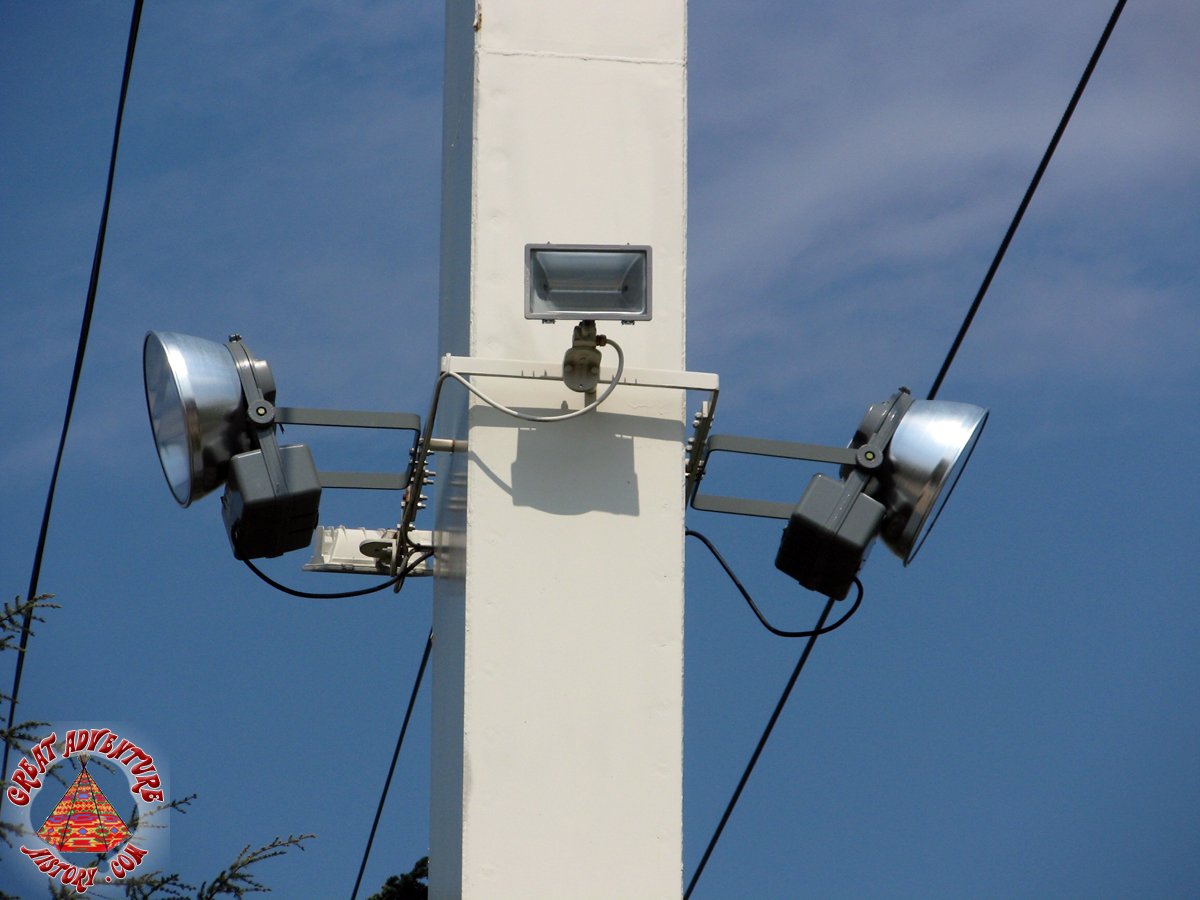
painted brown to make it blend into the Fort. Over time other changes to the Sky Ride's towers have been subtle. Some of the changes have included a central communications cable being strung from one station to the other paralleling the cables. At the top of one tower is an anemometer which monitors the wind speed and will automatically stop the ride in the event of a sudden wind gust as well as alerting the staff with a warning buzzer when winds come close to the threshold that would require the ride's closure. Other things that have been mounted to the Sky Ride's towers include a repeater antenna for the park's walkie-talkie systems used to communicate with the roving employees in the park. A series of flood lights were also attached to the support columns which are designed to come on in the event the power goes out in the park. |
 |
 |
 |
|
 |
 |
 |
 |
 |
 |
   |
||
  |
||
 |
||
 |
 |
 |
 |
 |
 |
 |
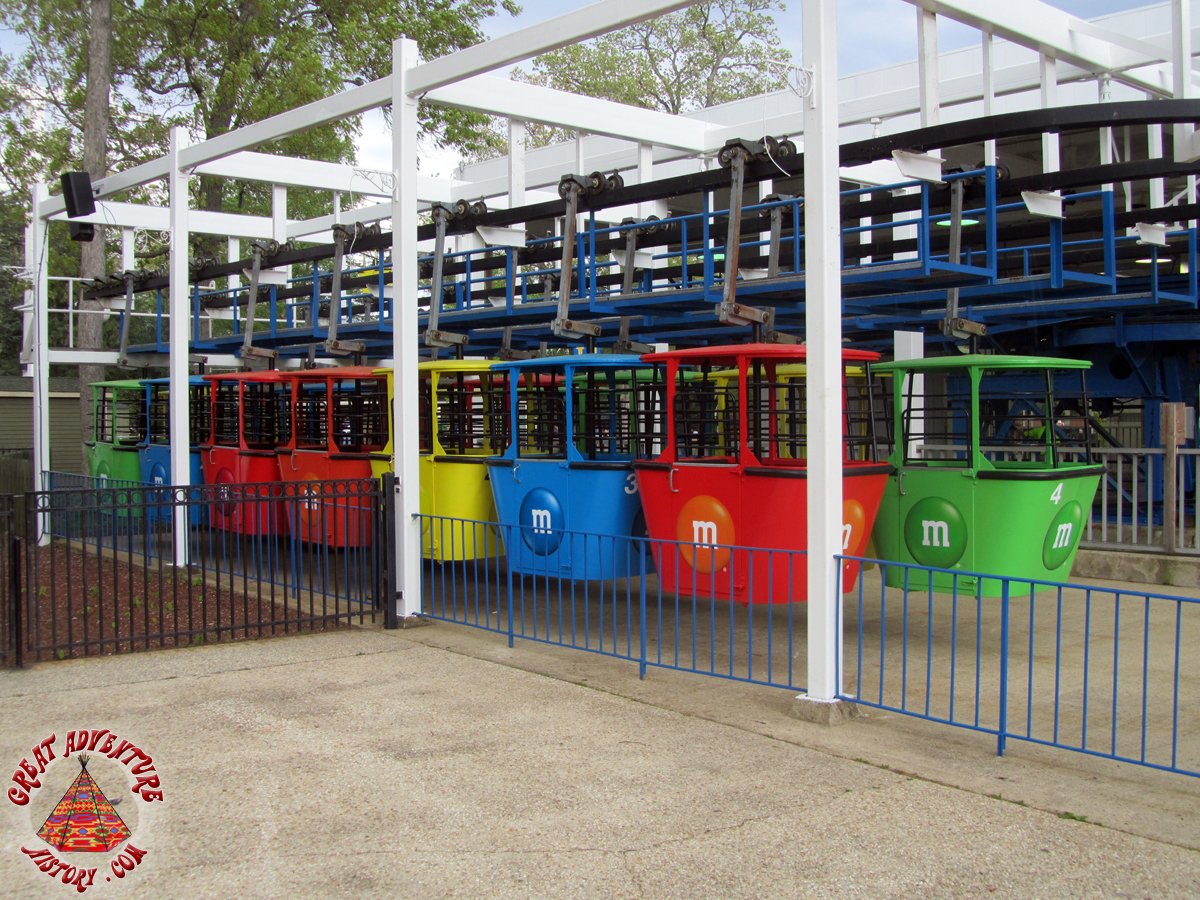
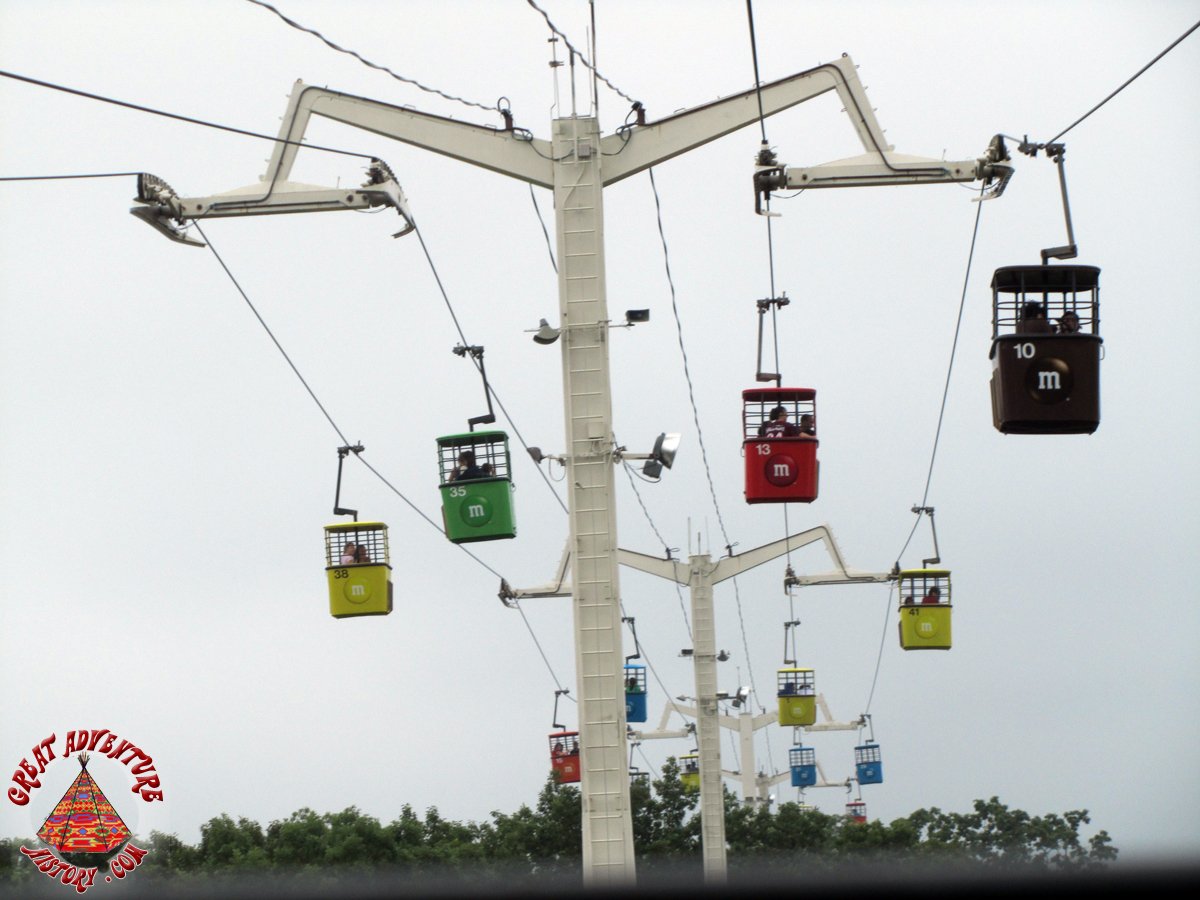
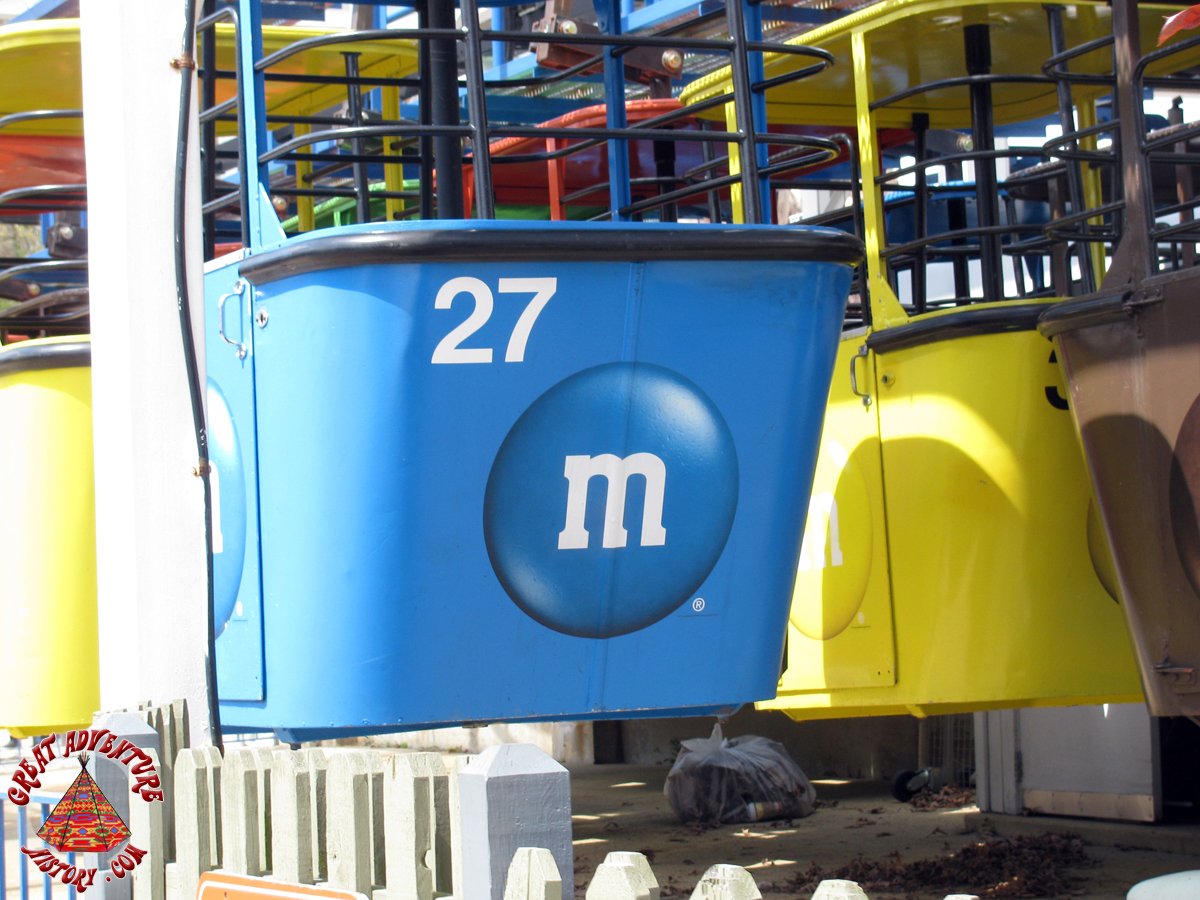
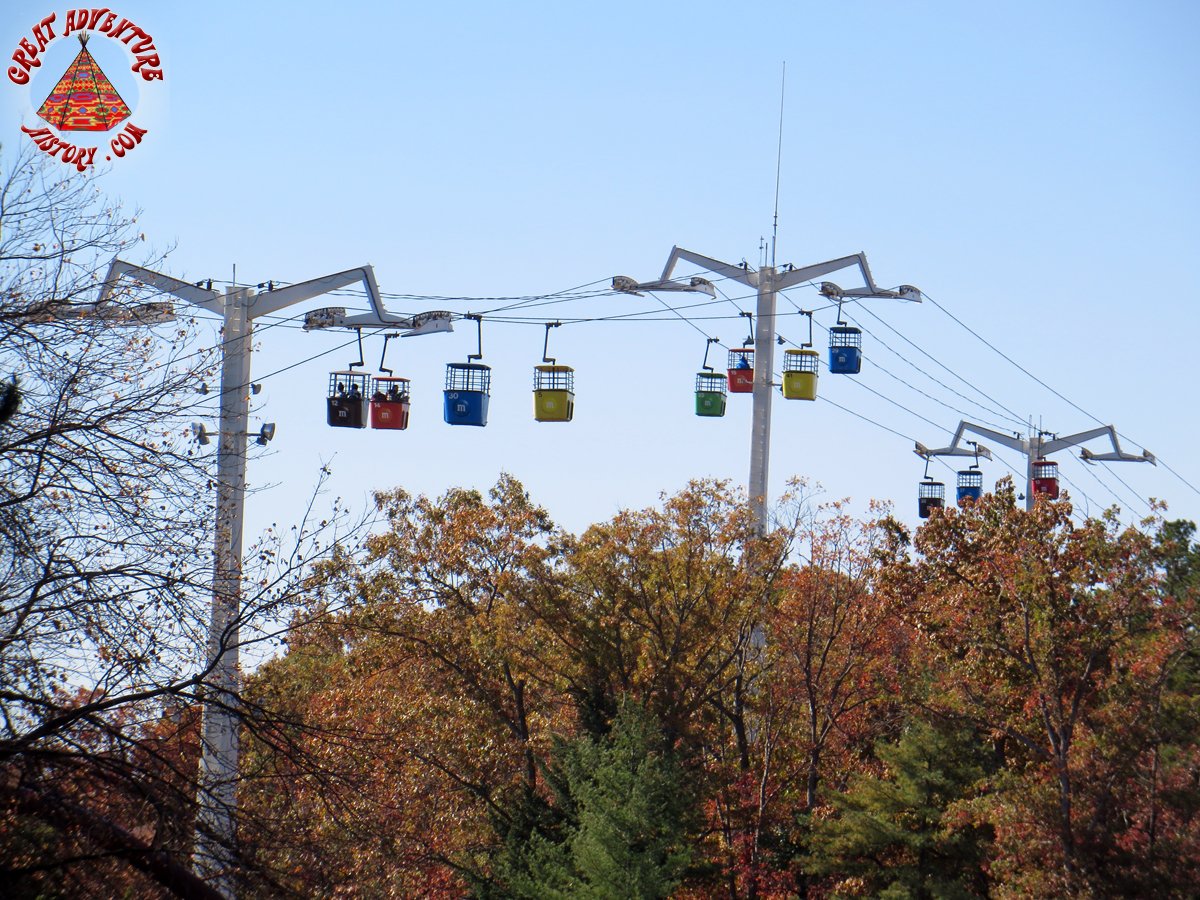
For the 2011 season, the Sky Ride received a new sponsorship contract
with M&M's candies. The cars were painted in bright M&M's colors
and decals of the iconic candies were placed on the doors of the gondolas. The freshly painted cars in bright
colors harkened back to the original look of the Sky Ride, with the
vibrant gondolas standing out against the blue sky. Just like with Delta,
the sponsorship was a good fit for the attraction, with the sponsor
receiving a visually interesting means of advertising as well as a sharp
and fresh look for the ride. It is hoped with attractive and sensible branding like this the ride will continue to operate for decades to come. |
 |
 |
 |
|
 |
 |
 |
 |
 |
 |
 |
 |
 |
 |
||
 |
 |
 |
 |
 |
 |
 |
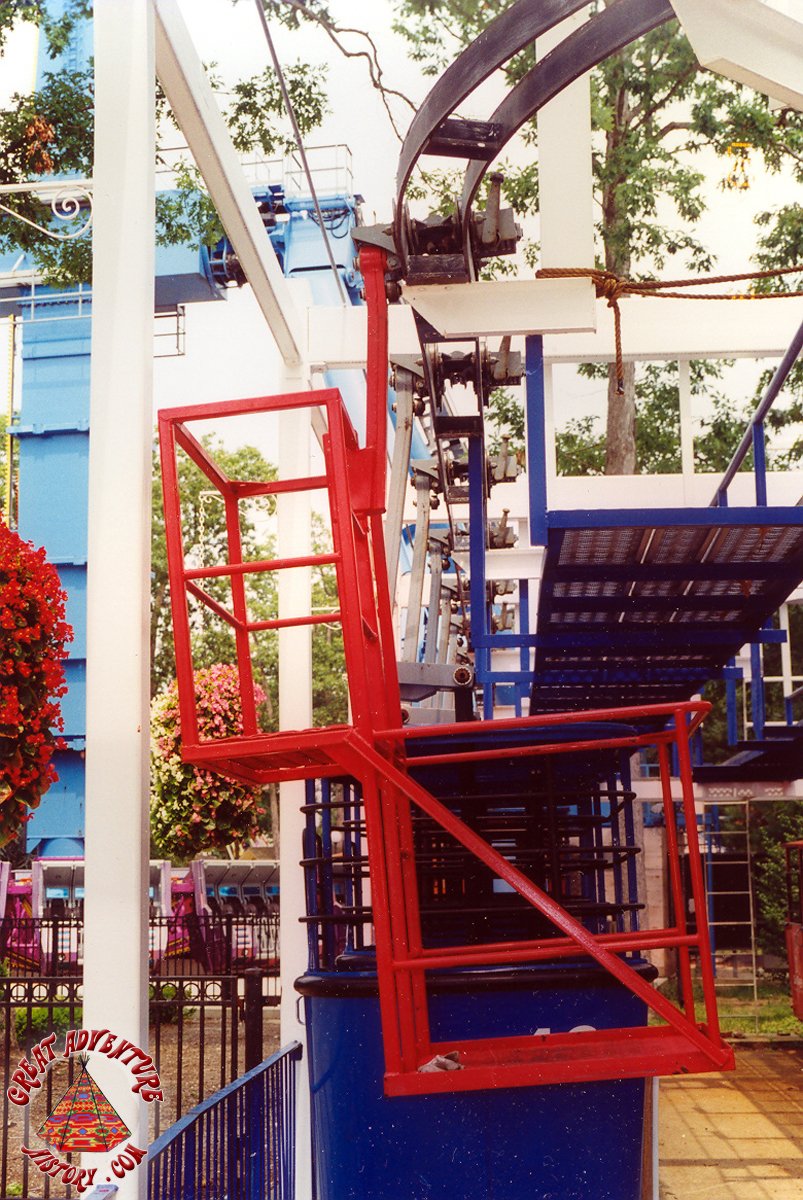
Over time the Sky Ride has replaced the cables periodically after years of service. In addition, the batteries of rollers on the towers also have been replaced as bearings wear out. The maintenance team performs periodic inspections and other essential maintenance on the rollers. This is done with the special maintenance cars which have open tops, allowing the workers to safely climb up and get a look at the rollers. The workers have anchors built into the maintenance cars so the can clip their safety harnesses in securely. The maintenance cars are the last of the original NYWF cars. |
 |
 |
 |
 |
 |
 |
 |
 |
||
 |
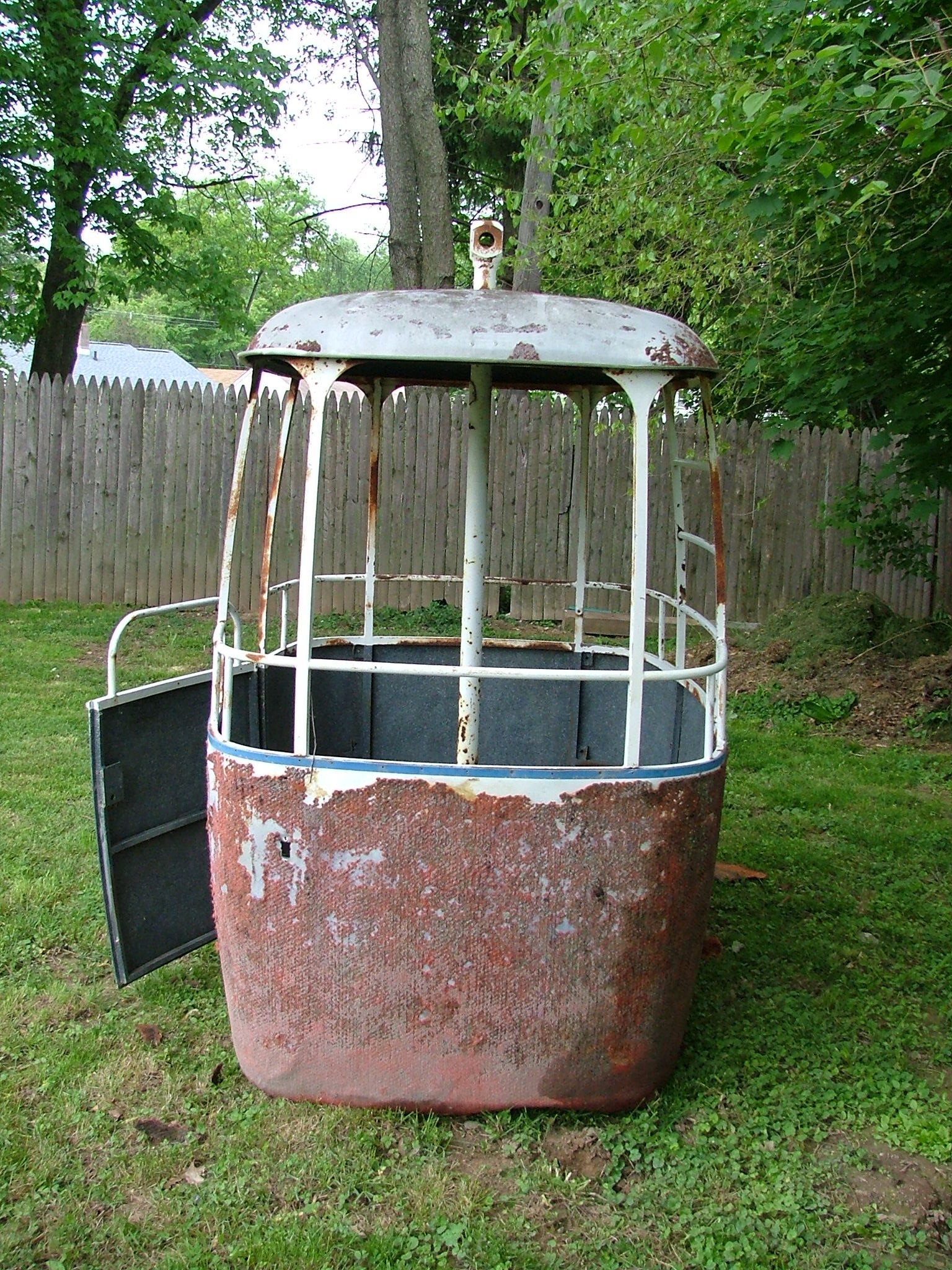
The
Sky Ride was prominently featured on many of the souvenirs created for
the park including mugs, plates and pennants. Other more unique
souvenirs of the Sky Ride include one of the original plaques for
the ride featuring the retired rainbow logo from the 1980's and one of the
original Sky Ride cars that was retired from service. |
 |
 |
 |
 |
 |
 |
 |
 |
 |
 |
   |