

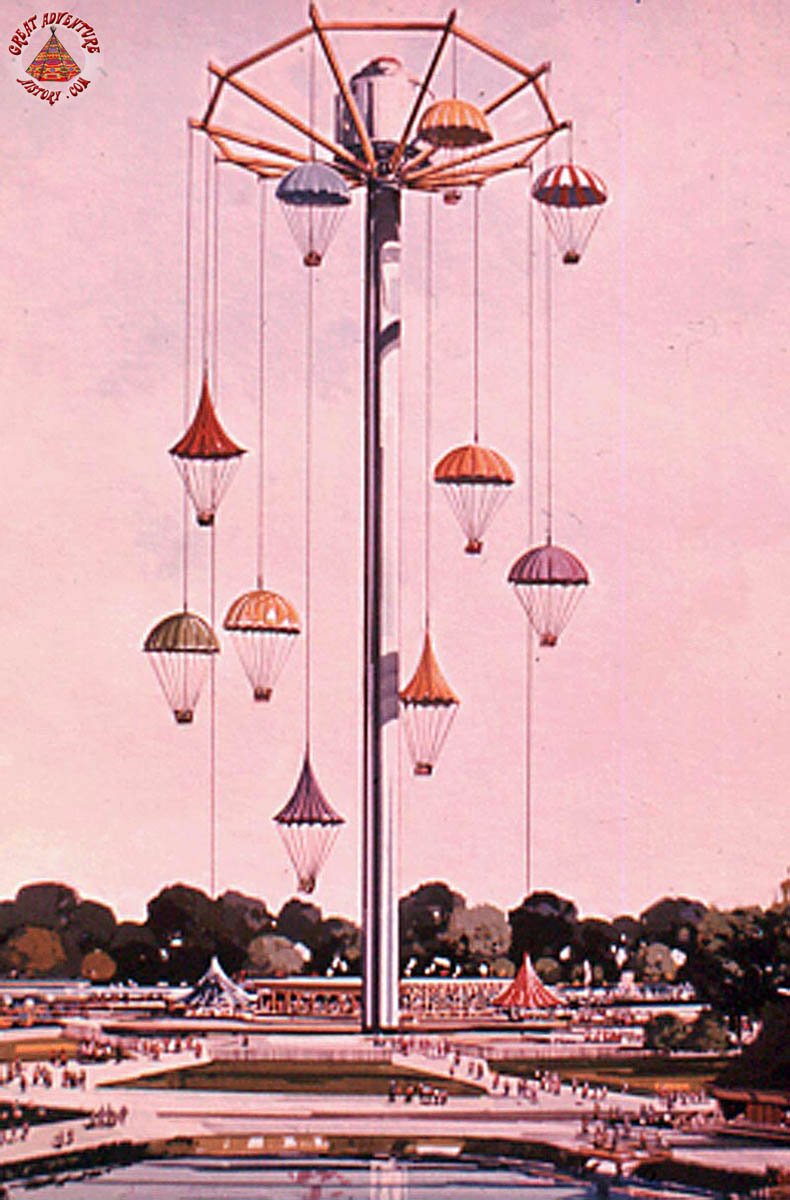
 The parachute tower as an amusement ride dates back to the 1930’s when an observation tower at Chicago’s Riverview Park was converted into a parachute ride and wowed the crowds. For the 1939-1940 New York World's Fair a 262 foot tall tower debuted to huge crowds of people. After the close of the World’s Fair in 1940, the popular ride was removed from Flushing Meadows and rebuilt on the boardwalk at Coney Island where it operated until 1968 and still stands today. The ride was an adaptation of the towers used by the U.S. military for actual parachute testing and training, and the rider’s descent was actually controlled by the parachute attached to the seats. In the 1970’s the INTAMIN company worked with Six Flags to develop a modern version of the parachute ride which utilized the standard tower structure they had developed for use with sky cabin observation towers. Installed at each of the original Six Flags parks in the 1970’s, the tallest of the rides was 250 feet, rivaling the Coney Island ride. |
||
 |
||
 |
||
 |
 |
 |
 |
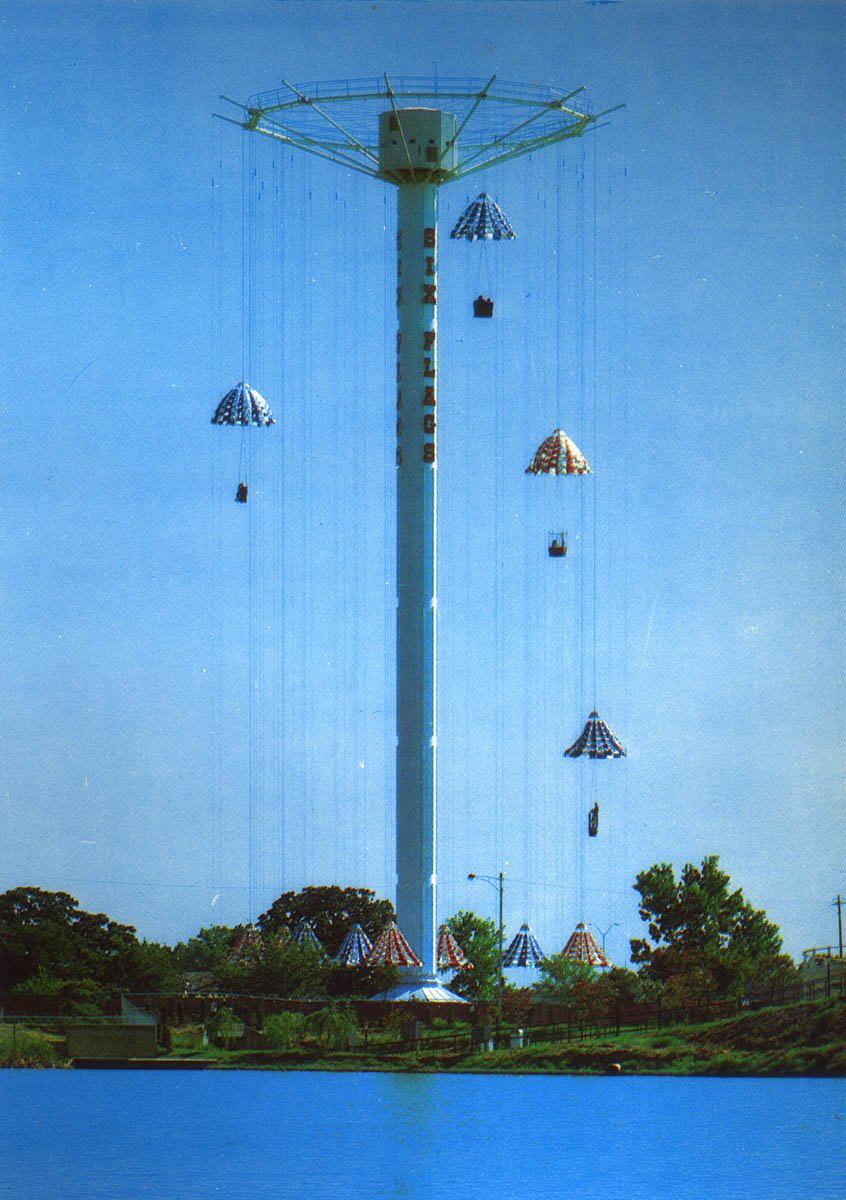
Six Flags constructed three parachute tower rides in the 1970's.
In 1976, both the Texas Chute Out at Six Flags Over Texas and the Great
Gasp at Six Flags Over Georgia opened each standing at a height of 200
feet. The new rides were instant successes which received high
praise from guests. In 1978, a third parachute tower was constructed at Six Flags Over Mid-America in St. Louis named the Sky Chuter. When it made its debut it was the world’s tallest thrill ride and held that title for many years to come. At 250 feet, fifty feet higher than it sister towers, the ride was a marquis attraction and considered extremely thrilling. |
 |
 |
||
 |
||
 |
In 1985,
a Great Adventure television special aired on cable television and
offered an historical overview of parachute rides in the amusement
industry and how Six Flags led the design and introduction of the next
generation of this type of classic ride. CLICK THE IMAGE ON THE LEFT TO VIEW THE VIDEO |
|
 |
||
 |
Sky Chuter opened at Six Flags Over Mid-America in the spring 1978. The ride consisted of nine tubular steel sections, one more section taller than the two previous versions installed at the other Six Flags parks. The steel sections and support arms each weighed from 20,000 to 80,000 pounds with the total ride coming in at 230 tons. The ride was located in the Britannia Square section of the park and was installed in a concrete foundation that measured 58 feet in diameter by 16 feet deep filled with 1450 cubic yards of concrete and 51,000 pounds of iron reinforcing rods. Unlike the Texas Chute Out and Great Gasp, Sky Chuter featured only eight parachutes versus the other rides which had twelve. The reduction in the number of parachutes was a design improvement which increased the efficiency of operations of the ride. By reducing the number of parachutes, the amount of vibration of the counterweights within the steel column was lessened reducing the number of false readings by the rides safety sensor system causing fewer shutdowns. |
 |
 |
||
 |
 |
 |
 |
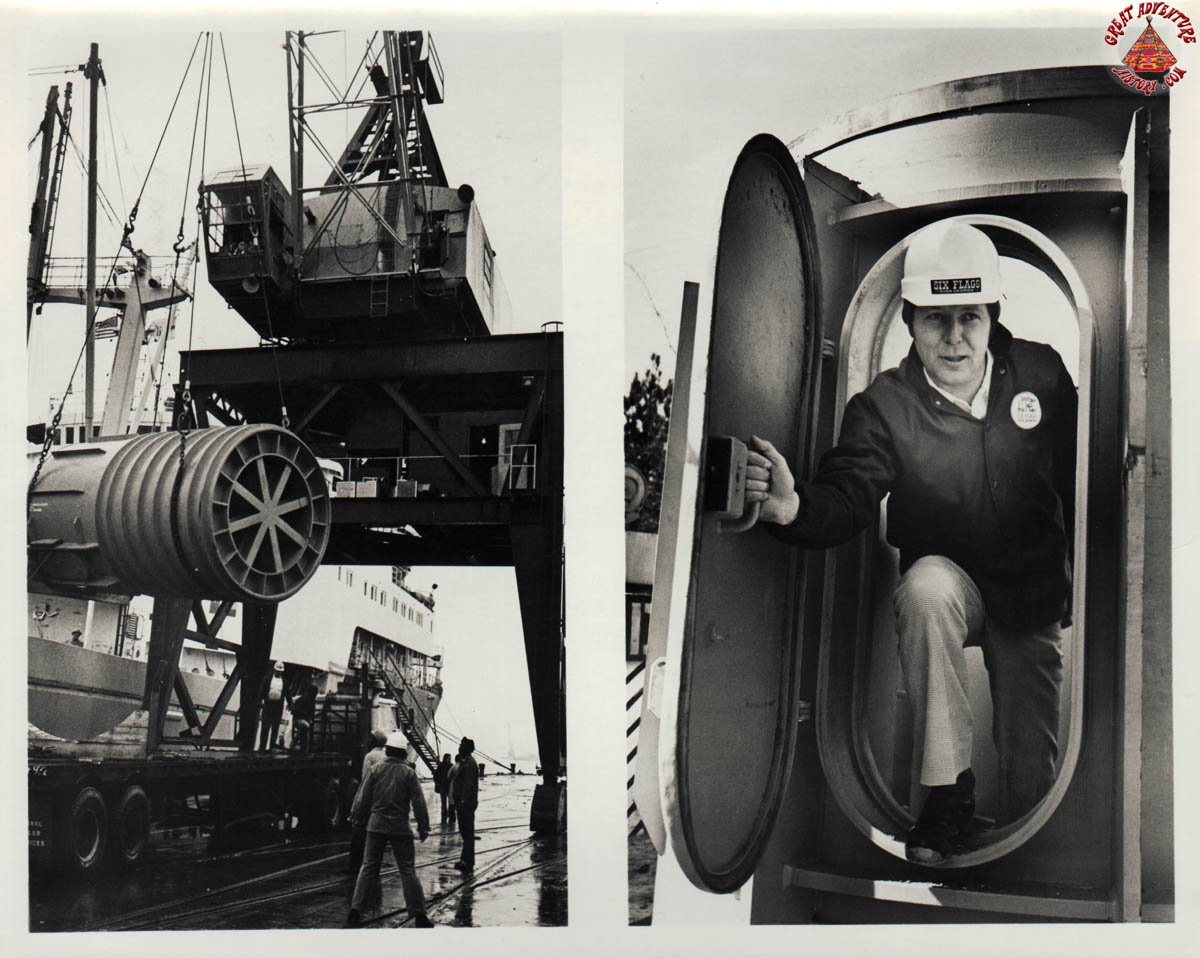
Sky Chuter remained at Six Flags Over Mid-America through the 1982
season when it was dismantled piece by piece and sent east to Six Flags
Great Adventure. The move of such a major attraction was the first
of many ride relocations for Six Flags which made swapping out rides a
major component of their new capital strategy in the late 1980's and
early 1990's. Six Flags Over Mid-America was under the leadership of park general manager David Paltzik when Sky Chuter was installed in 1978. Paltzik relocated to New Jersey to become general manager of Six Flags Great Adventure in 1983 where he oversaw the same parachute ride reassembled and reopened for a second time. The site of Sky Chuter in St. Louis would be used for a Thunder Rivers rapid ride which opened in 1983. |
 |
 |
||
 |
 |
 |
 |
||
| CLICK BELOW TO VIEW SIX FLAGS OVER
MID-AMERICA'S 1978 SKY CHUTER PRESS KIT |
||
 |
 |
 |
 |
||
 |
 |
 |
 |
The early 1980’s were a time of rapid growth for Six Flags Great Adventure, with each
year’s attendance increasing as the park expanded and improved. In
response Six Flags poured additional resources into the park to keep
making it bigger and better.
It only made sense that as the company’s
largest and most attended park that it would get the biggest and best
rides, and being the world’s tallest thrill ride, the parachutes were a great fit for
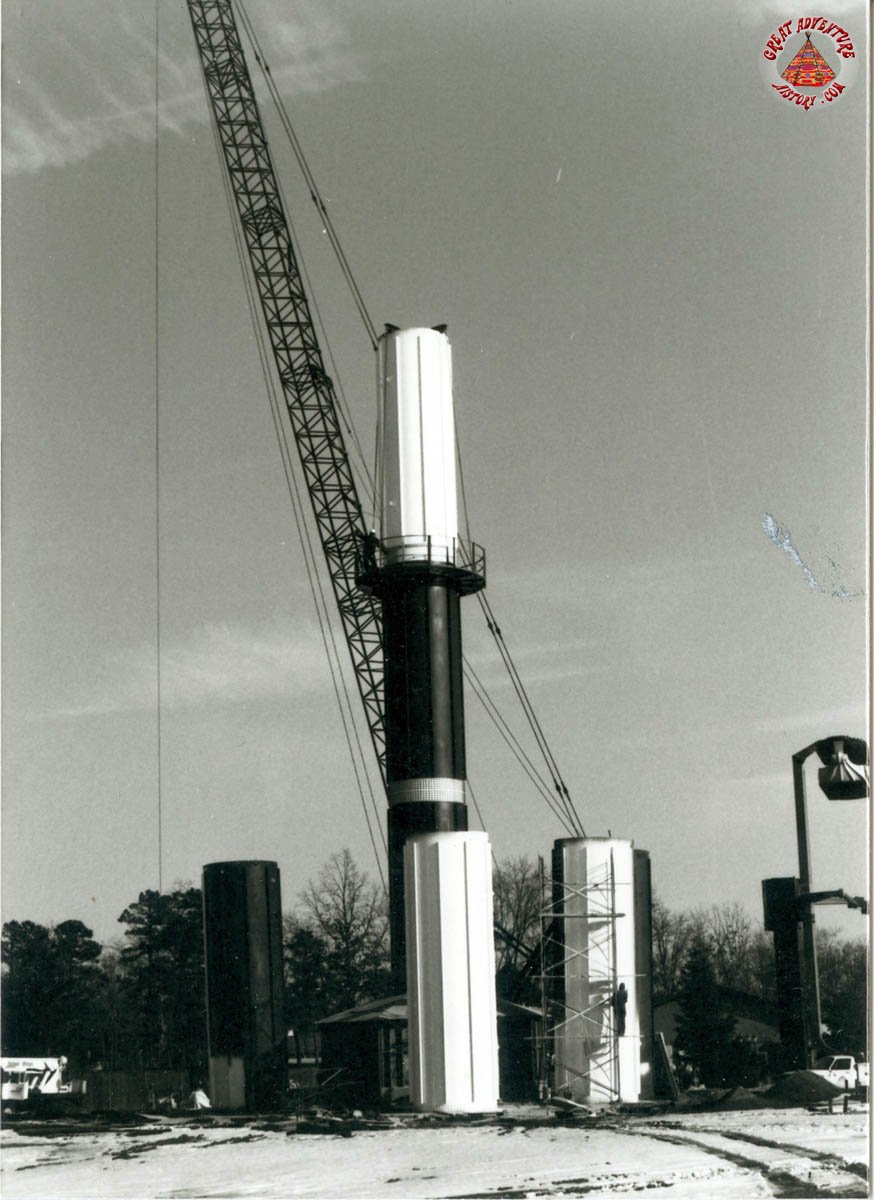
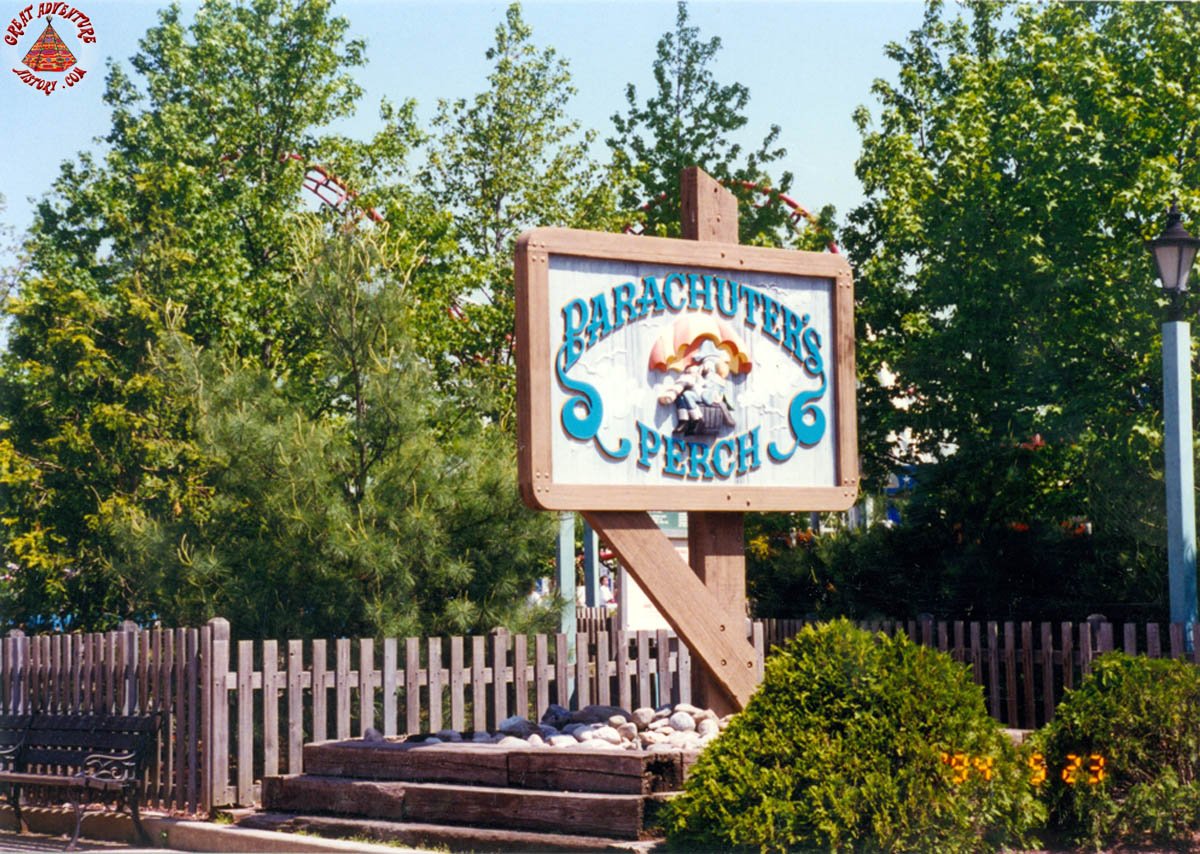
the ever expanding park. Renamed Parachuter’s Perch, the towering ride was added to the park’s updated games area, which had been rebuilt a year earlier after a fire had destroyed the original Fortune Festival area. Being very profitable, every effort was made to draw guests into the games area, and the addition of a highly visible and thrilling ride at the far end of the section would make a huge impact. The site for Parachuter’s Perch was originally a small drainage pond in a backstage area of the park. Site preparations began in 1982 with water being drained and the tower’s massive foundation taking shape in preparation for the arrival of the structure over the off-season. The first tubular steel section was anchored in the ride's concrete foundation and one after another the other eight sections were stacked. In St. Louis the sections were welded together but at Great Adventure they would be joined by massive steel rings each consisting of hundreds of bolts. The ride was still under construction at the start of the 1983 season on March 31st, with the tower in place, but the crown still being assembled. Construction would continue through to the end of May when finishing touches were being placed on the ride. |
 |
 |
 |
|
 |
 |
 |
 |
||
 |
 |
 |
 |
||
 |
CLICK IMAGE
ON LEFT TO VIEW Original Television Advertisement Parachuter's Perch 0:30 min August 1983 |
|
 |
||
 |
 |
 |
 |
Great Adventure's Parachuter's Perch started
sending riders skyward shortly after Memorial Day 1983 during select
preview times, however the ride officially opened on June 9, 1983. The opening ceremony was attended by eight couples who "found their true love" riding the Coney Island Parachute Jump back when it operated in Coney Island or even before that when it was part of the 1939 New York World's Fair. One of the couples, Hans and Gladys Boeckmann, had the honor of cutting the ribbon on the new attraction and soon found themselves taking multiple rides for the press and media crews. Other photo opportunities of the day included Great Adventure's new park general manager David Paltzik riding the chutes along with Bogey the Orangutan. Bogey was one of the many costumed characters from the Shirt Tales children's television show which called Great Adventure home and could be found throughout the park in 1983. |
 |
 |
 |
|
 |
||
 |
 |
 |
 |
During the first several months
of operation the color and style the parachutes themselves were
constantly changing as operations determined the best configuration for
smooth drops and the perfect amount of wind resistance. The
opening day parachutes were all a combination of orange and yellow and
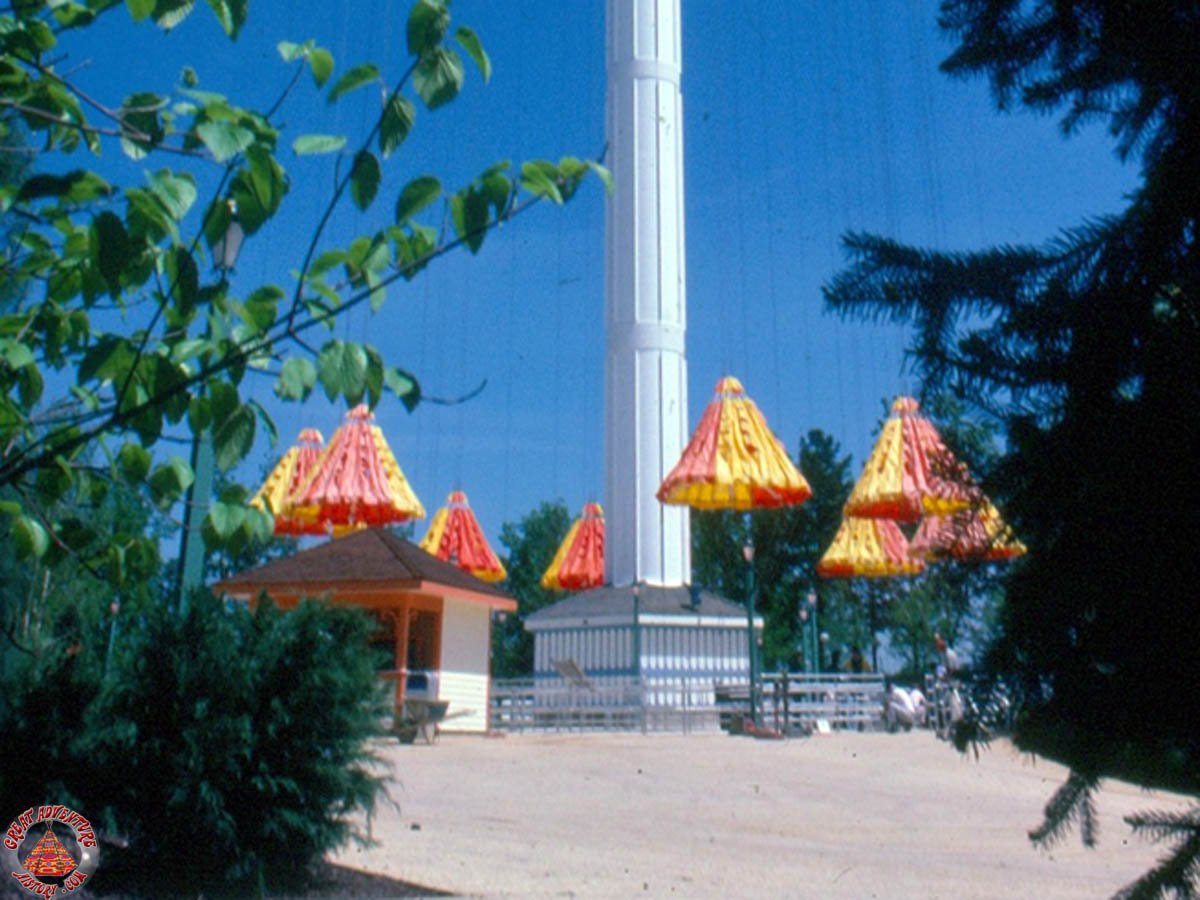
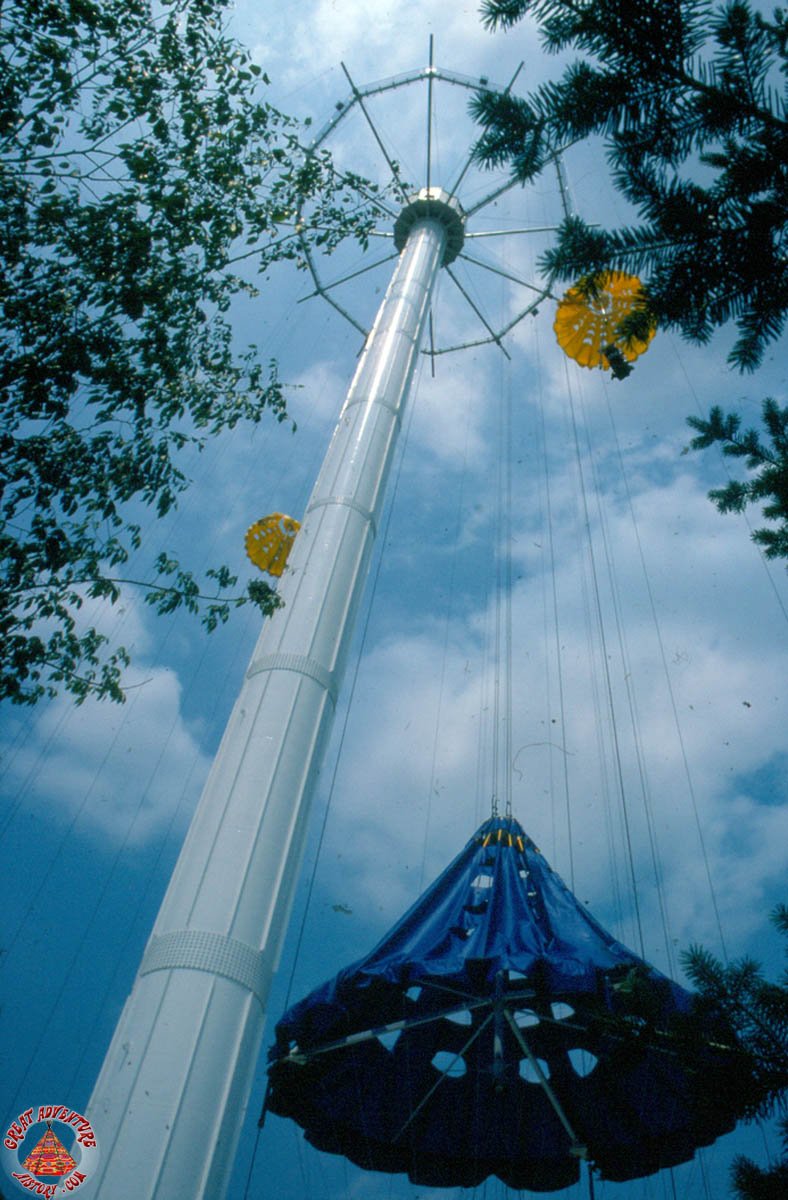
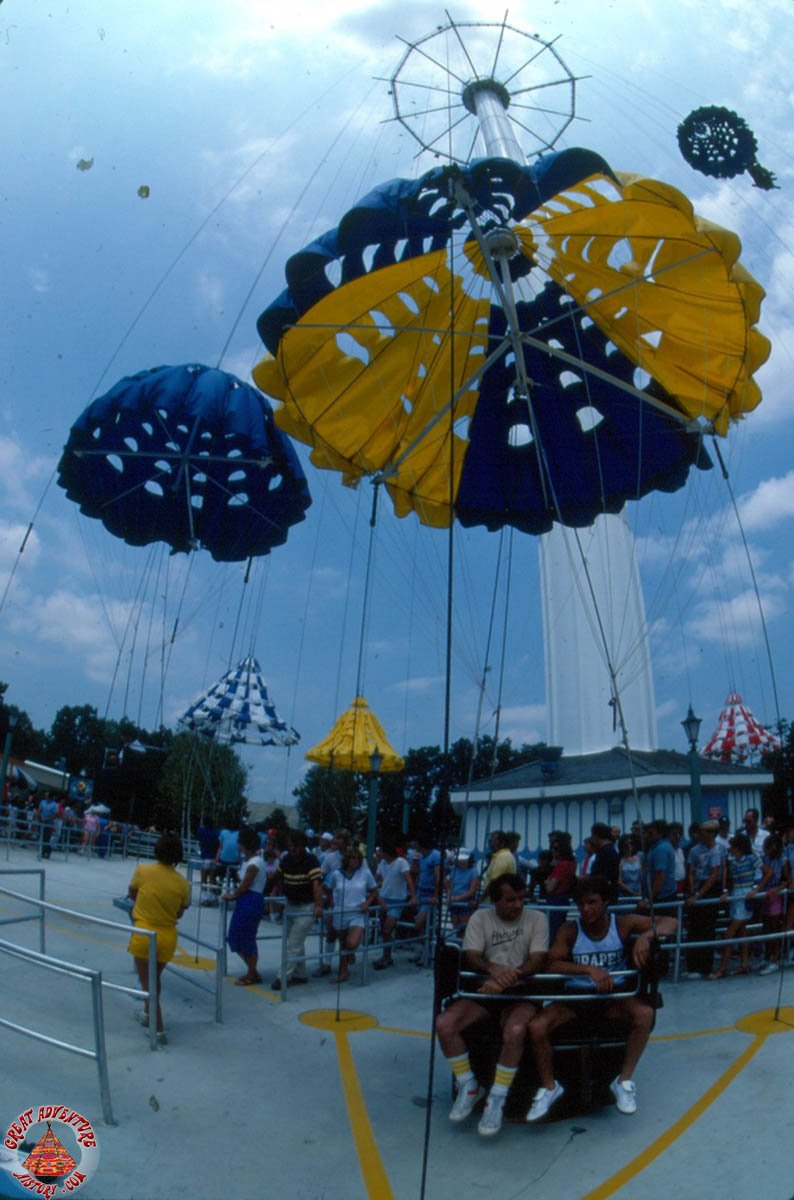
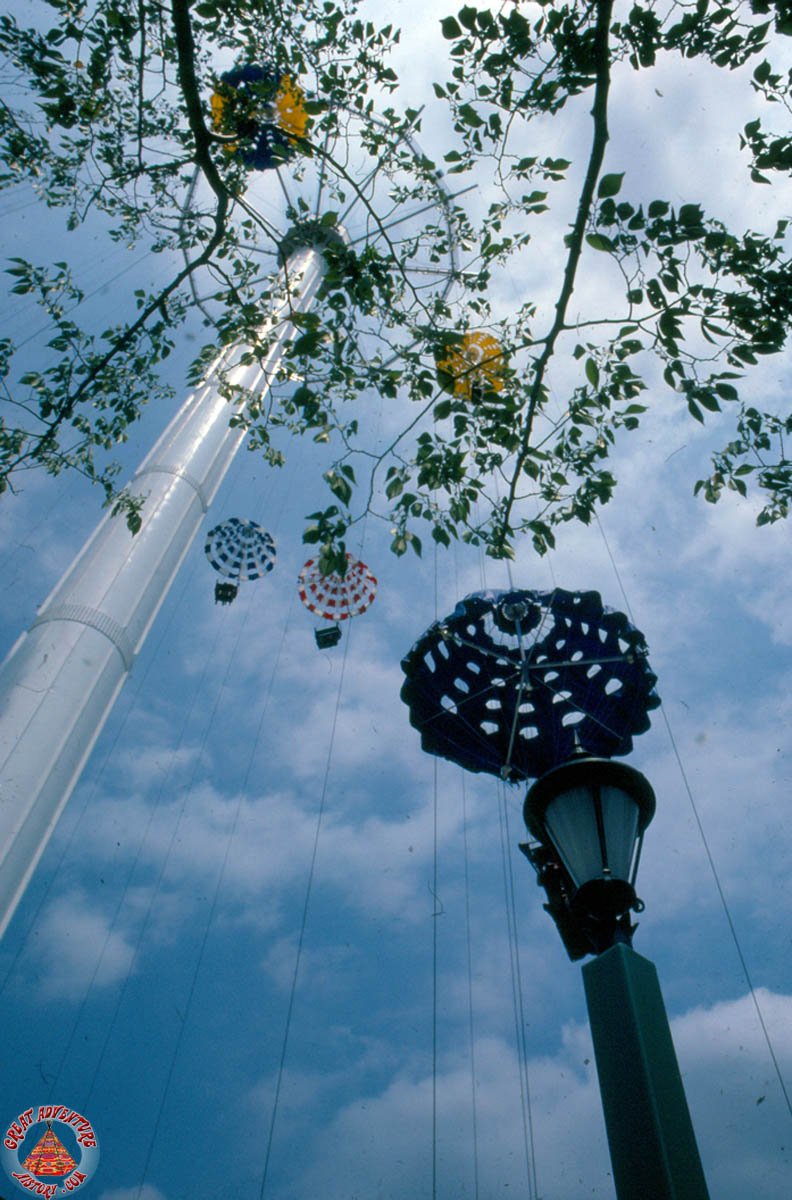
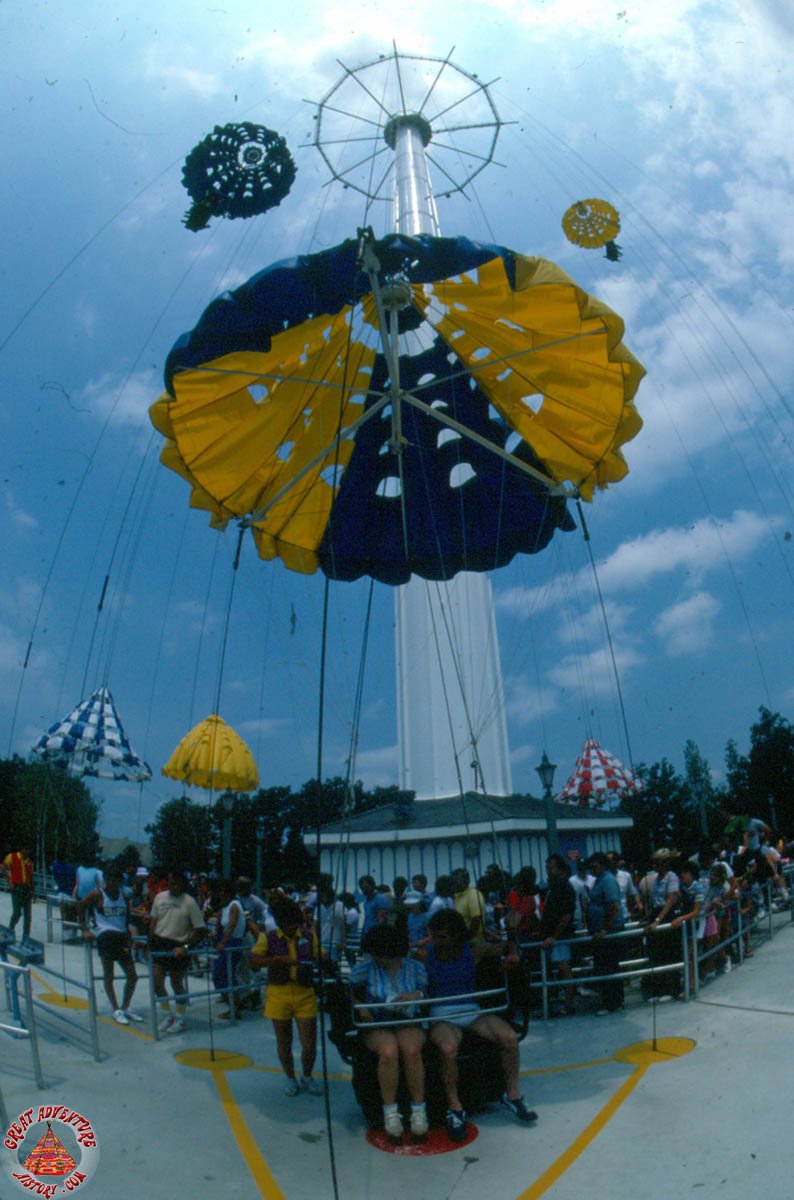
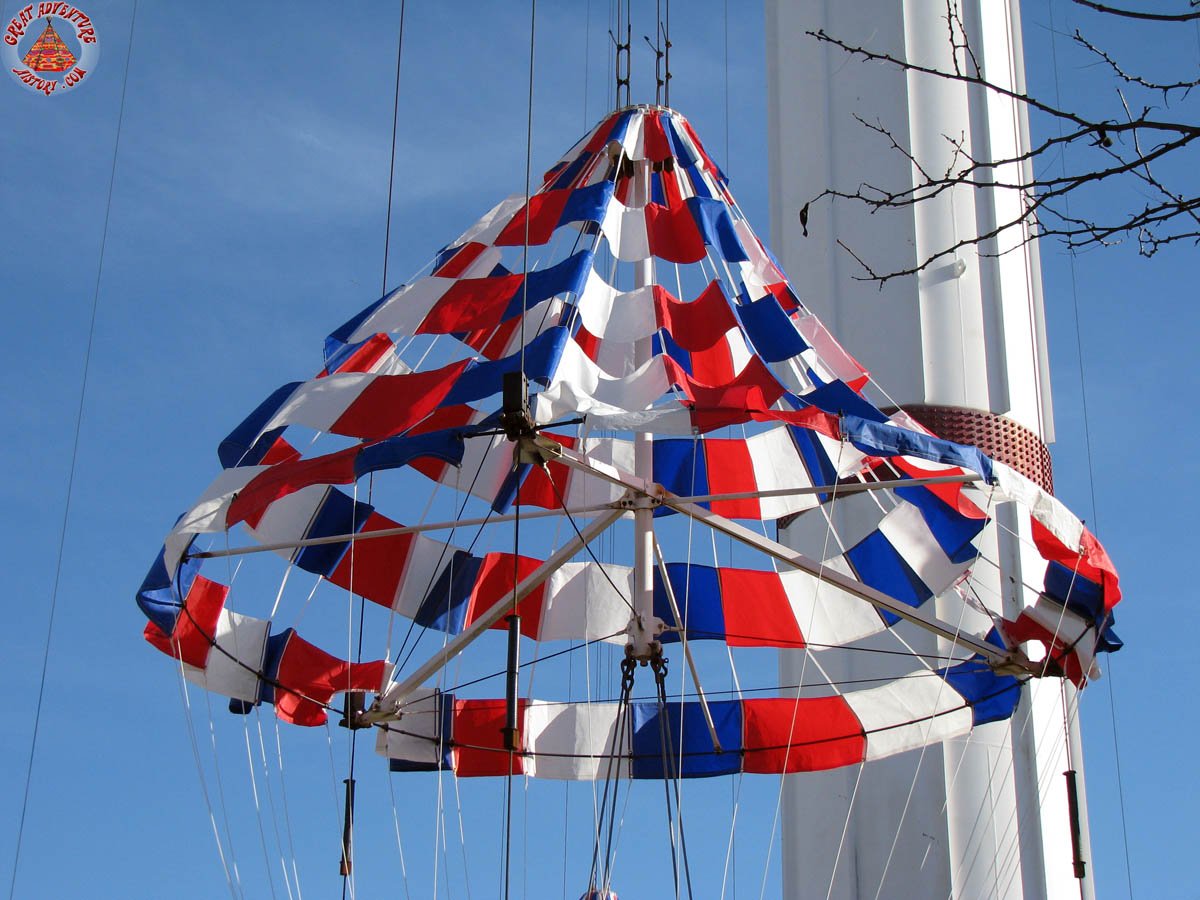
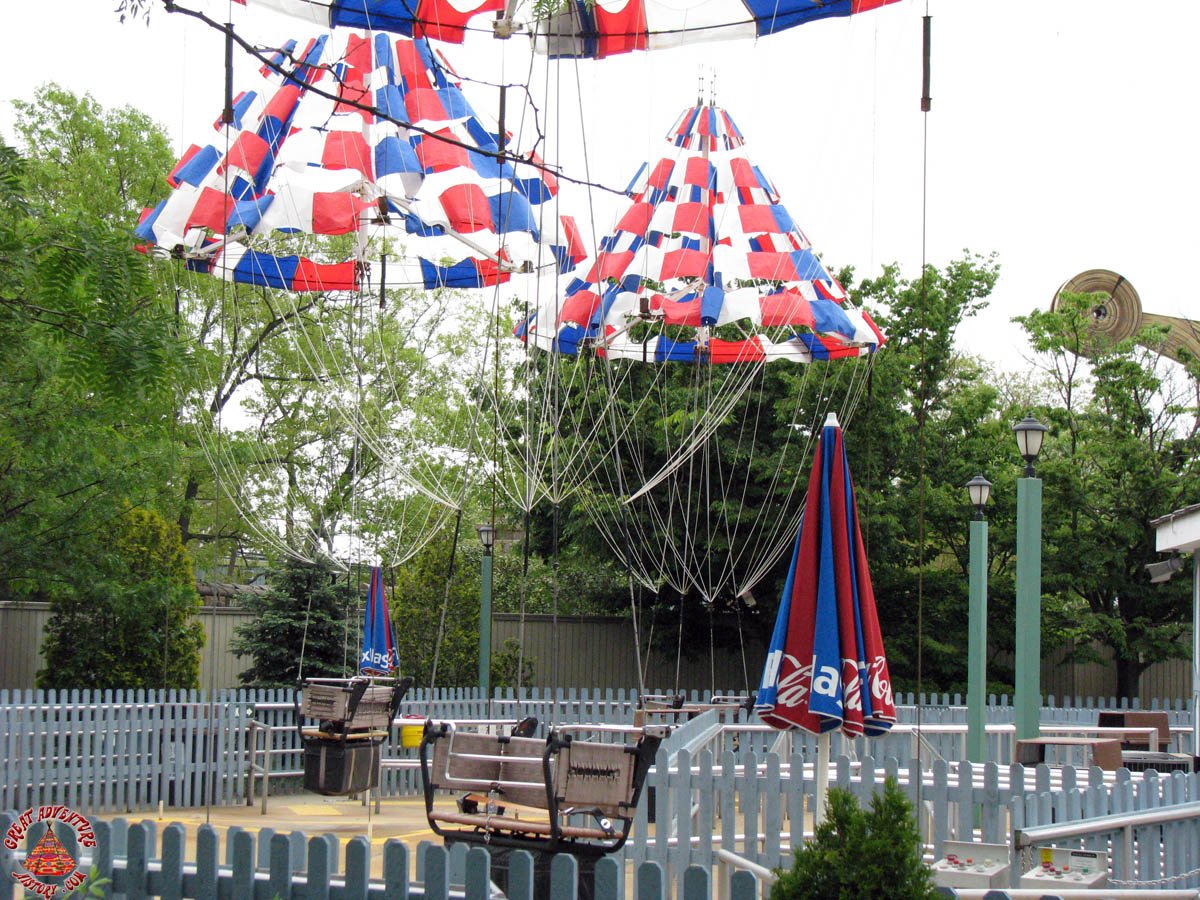
mostly solid with only small openings in their canvas. Within weeks, these were replaced with a combination of yellow, blue, and a hybrid yellow and blue color scheme. Soon after, lighter weight and less substantial parachutes were being tested. These red and white, and blue and white parachutes would prove to be most effective and be the style that would be used for the ride's remaining years. |
 |
 |
 |
 |
 |
 |
 |
 |
 |
 |
 |
 |
 |
 |
 |
 |
 |
 |
 |
 |
 |
 |
 |
 |
 |
 |
||
 |
||
 |
 |
 |
 |
 |
 |
 |
 |
 |
 |
||
 |
 |
 |
 |
 |
 |
 |
||
| A Brief History of
Parachutes,
Jackson Township, New Jersey, The Switlik Family, and the property that would become Great Adventure |
||
 |
Jackson Township has had a long history with parachutes and was home to
the world's first parachute jump tower.
In 1907, Stanley Switlik
emigrated from Poland and arrived at Ellis Island as a 16 year old
"steerage" passenger. While working at a variety of jobs from house
painting to selling insurance and real estate, he found a small canvas
and leather manufacturing company, and, in September of 1920, agreed to
purchase it. The Canvas-Leather Specialty Company was
incorporated October 9, 1920, with his friends and relatives among the
stockholders. The first products included collapsible hampers, golf
bags, coal bags, pork roll casings, and one which would foretell a
future in government contracting-leather mail bags manufactured for the
United States Post Office Department. As "barn-storming" pilots of the day excited the public's imagination, the company began manufacturing pilot and gunner belts, designing flight clothing, and experimenting with parachutes. In the 1930's, with a new name, Switlik Parachute & Equipment Company became the largest manufacturer of parachutes in the country. Friends with many of aviation's pioneers, Stanley outfitted the expeditions and record attempts of Amelia Earhart, Wiley Post, and Admiral Richard Byrd. |
|
| In 1934, Stanley Switlik and George Palmer Putnam, Amelia Earhart's husband, formed a joint venture and built a 115 foot tall tower on Stanley's farm in Ocean County. Designed to train airmen in parachute jumping, the first public jump from the tower was made by Ms. Earhart on June 2, 1935. Witnessed by a crowd of reporters and officials from the Army and Navy, she described the descent as "Loads of Fun!". |
 |
|
|
As war clouds grew,
the firm received its present name, Switlik Parachute
Company, Inc. and became a part of the "Arsenal of
Democracy." In December of 1941, a small nucleus of parachute
manufacturers were called to a meeting and ordered by the Government to
increase production 50-fold. Additional space was acquired and a large
work force trained. The company's productivity was so impressive that
the War Department gave it the first of five Army-Navy "E" Awards in
1942. Today, the Switlik company still makes a variety of life saving
equipment for aviation including life vests and rafts. Stanley Switlik and his wife Wanda owned a large tract of land complete with beautiful unspoiled woods, picturesque lakes and gentle rolling hills. Their home was located on this property, and parts of the land were used as a Girl Scout camp known as "Camp Wanda", which was named for Wanda Switlik. The Switlik's donated money in Jackson Township, and the Stanley Switlik Elementary School was built in 1948 from money provided by the Switliks. The large tract of land was ideally located in the center of the state of New Jersey, almost exactly halfway between New York City and Philadelphia which was why along with the natural beauty of the property it was chosen by Warner LeRoy and Hardwicke Company to become the home of Great Adventure. |
.jpg) |
|
 |
||
 |
 |
 |
 |
 |
 |
 |
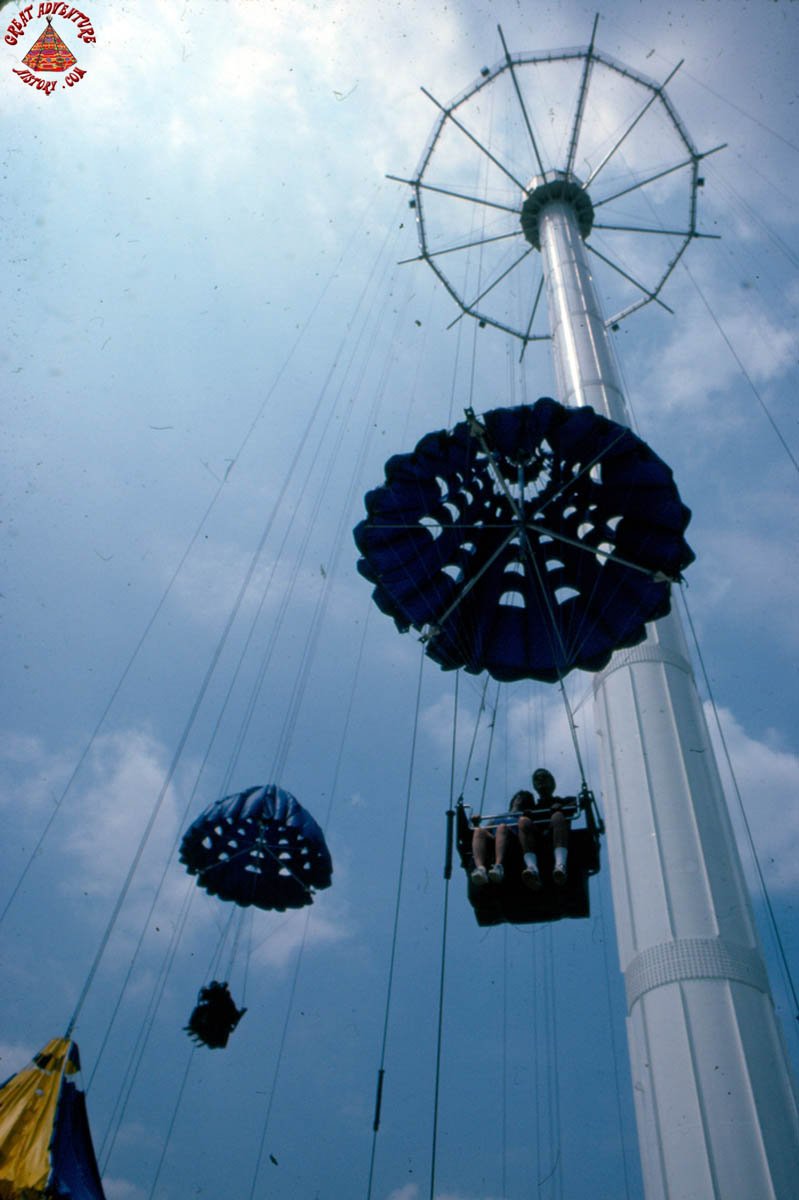
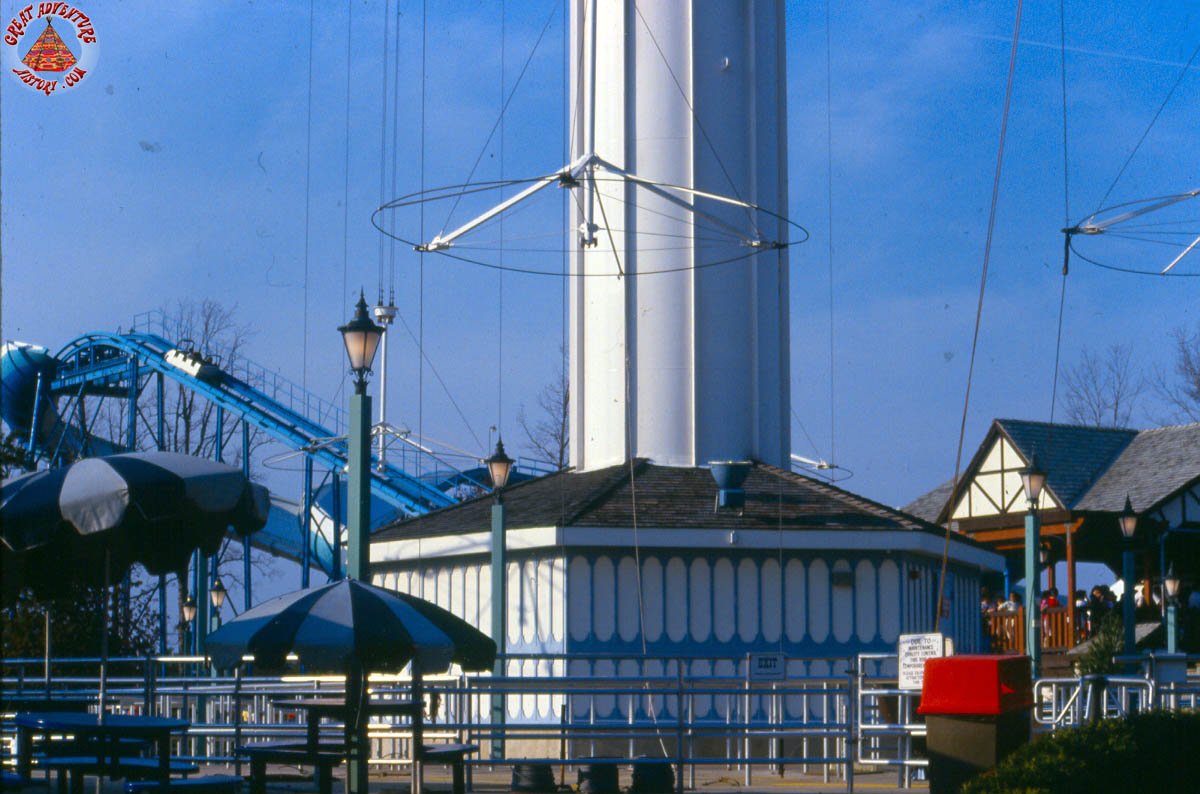
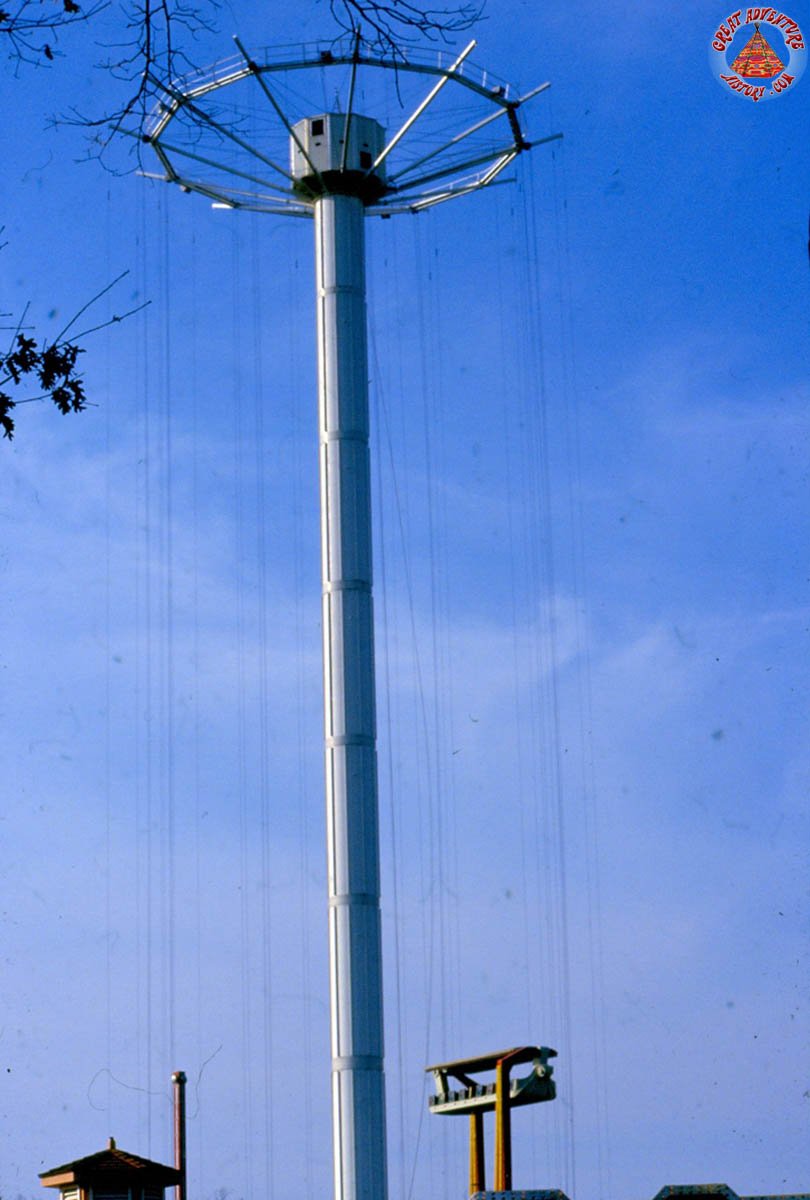
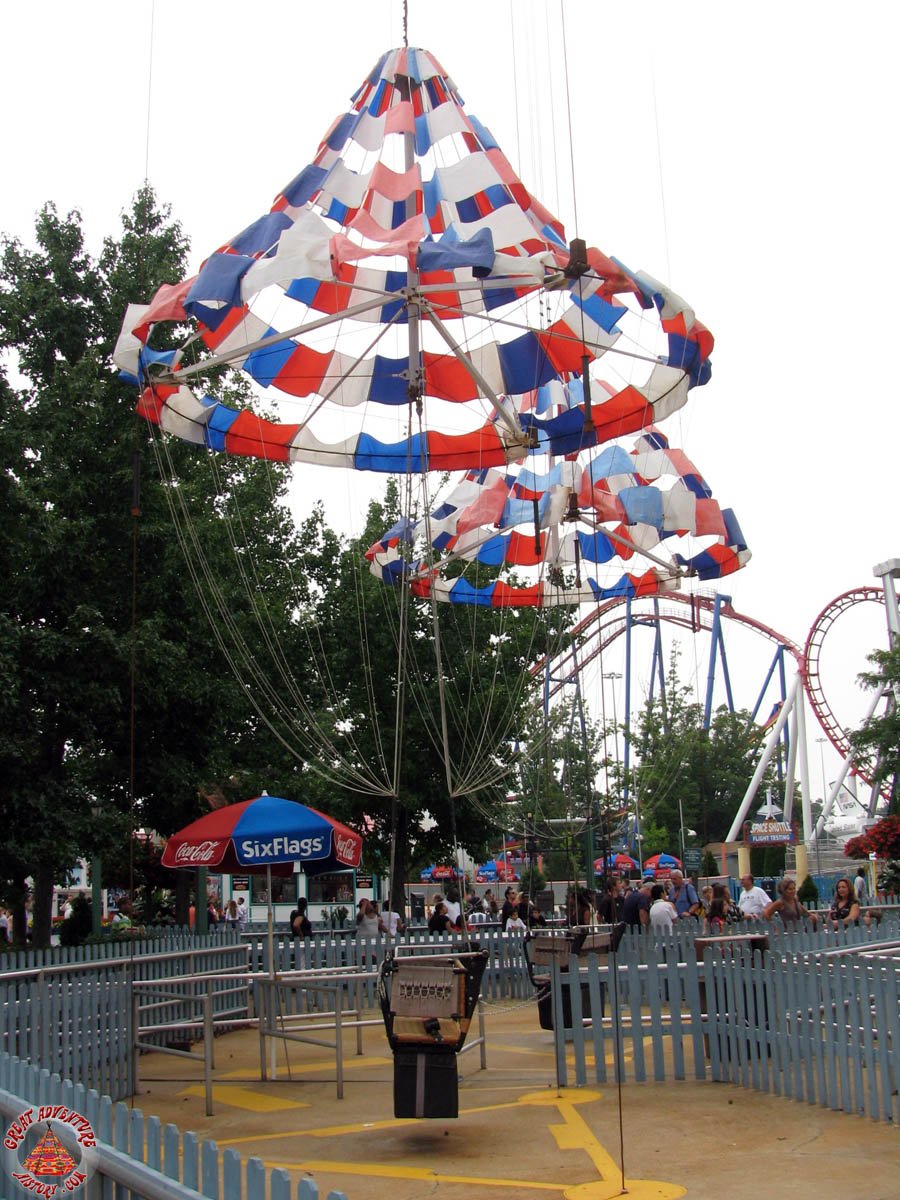
With three guide cables and four lift cables for each of the eight
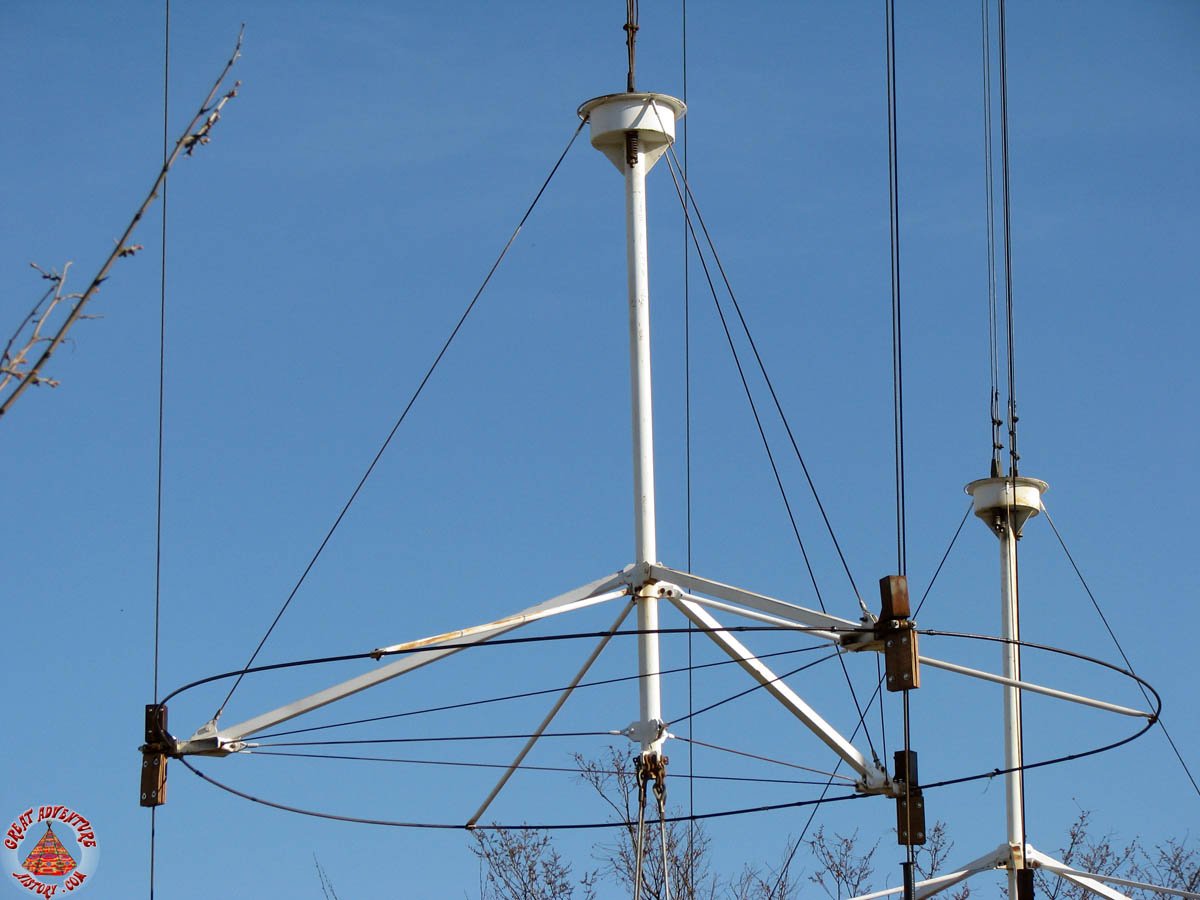
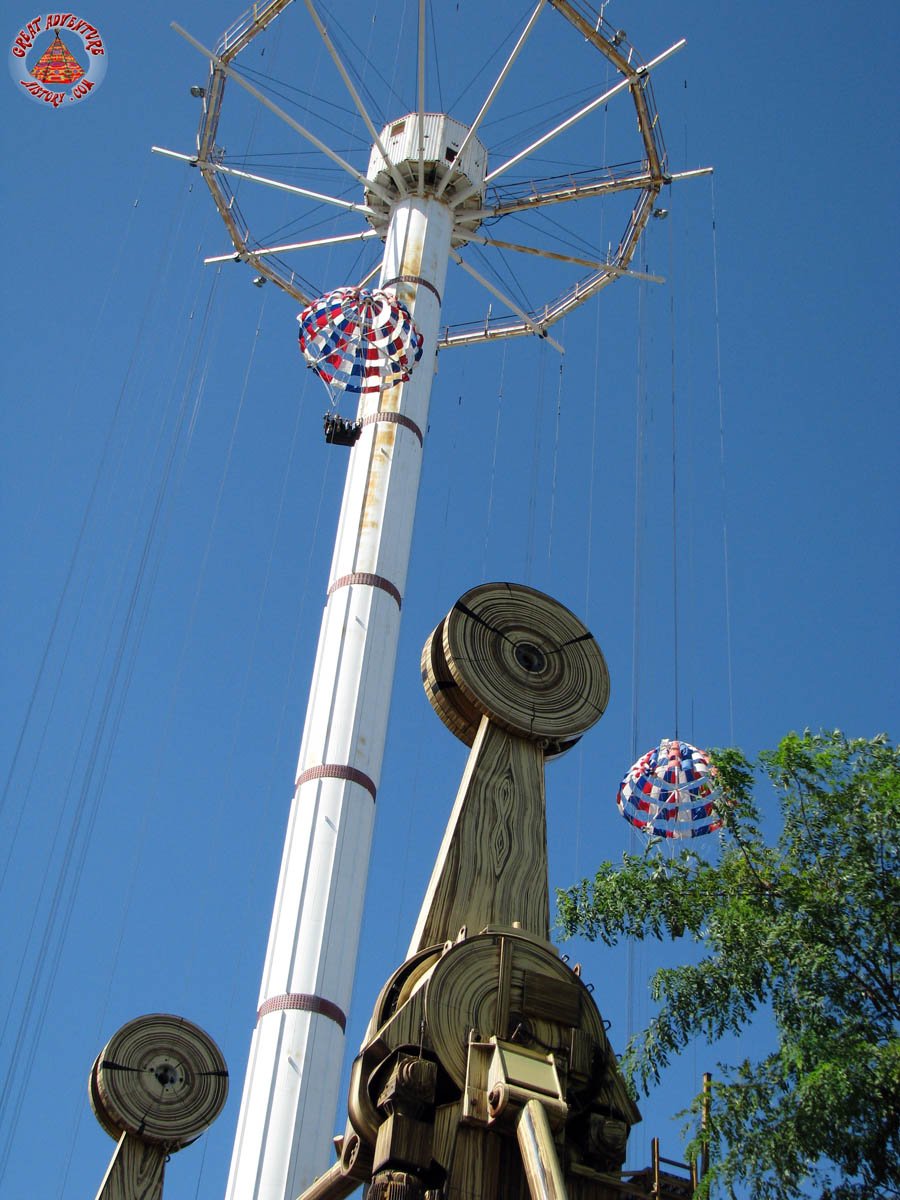
parachutes, the ride has over 2.25 miles of steel cables in total. The three guide cables stretch from the top of the ride's crown to a below ground level weight. The three cables are arranged in a triangular shape which surrounds the parachute and serves as a path for them to travel up and down. The four cables attached to the top of the parachute lift and lower the ride vehicle. There are multiple cables for redundancy ensuring safe operations. Occasionally, two of the four cables will cross causing the computer system to stop the chute. This error is known as a "rope" and requires the cables to be manually reset. Over the years the cables have been replaced multiple times. The first time the cables were replaced was in 1986. |
 |
 |
 |
|
 |
 |
 |
 |
Ride manufacturer INTAMIN’s version of the parachute ride was a much more controlled experience than the originals designed in the 1930’s. The ride did not rely so much on the actual parachute to control its descent, but instead a motorized cable system lowering the chutes at a constant and safe speed. The chutes came to a stop gently as they approach the ground, unlike the original version which came to a jarring finish when the chute reached a set of springs mounted on the base of the guide cables. The modern version of the parachute ride is much more sophisticated than the original, with additional safety features added. The originals required a crew of three to operate each chute, while the INTAMIN version allowed a single operator to run a pair of chutes. A computerized system monitor the cable reels which cause the chutes to raise and lower, making sure the cables do not tangle or kink. |
 |
 |
 |
|
 |
 |
 |
 |
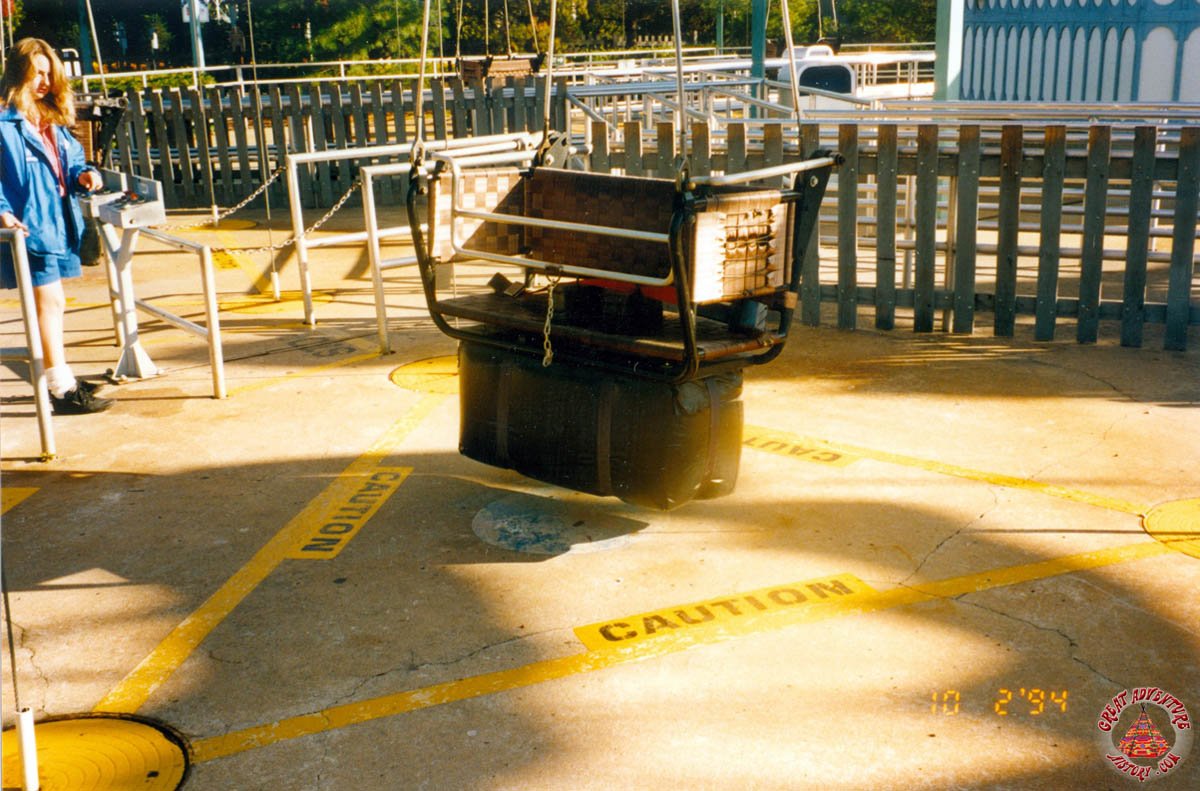
The parachutes require a certain amount of weight to ensure safe
operation. Each can seat up to three riders with a
combined weight between 160 and 400 pounds.
If the weight of the passengers exceeds
the 400 pound limit, the chute will not lift. During daily testing
runs of the ride, metal weights are strapped into the seats to simulate
a passenger load. Riders are secured with a seat belt, a locking lap bar, and a lap bar backup clasp. A new wireless safety monitoring system was added to the seats around 2008 as and extra precautionary measure. |
 |
 |
 |
 |
 |
 |
 |
 |
 |
 |
|
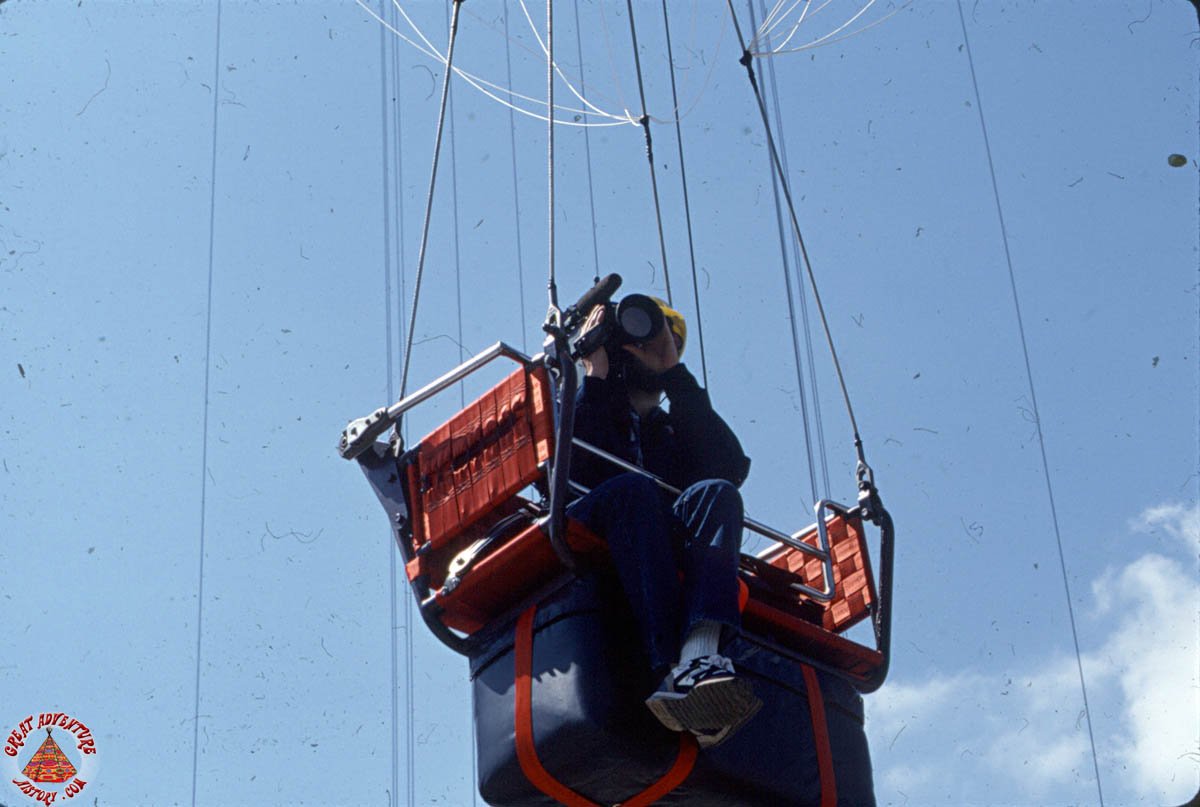
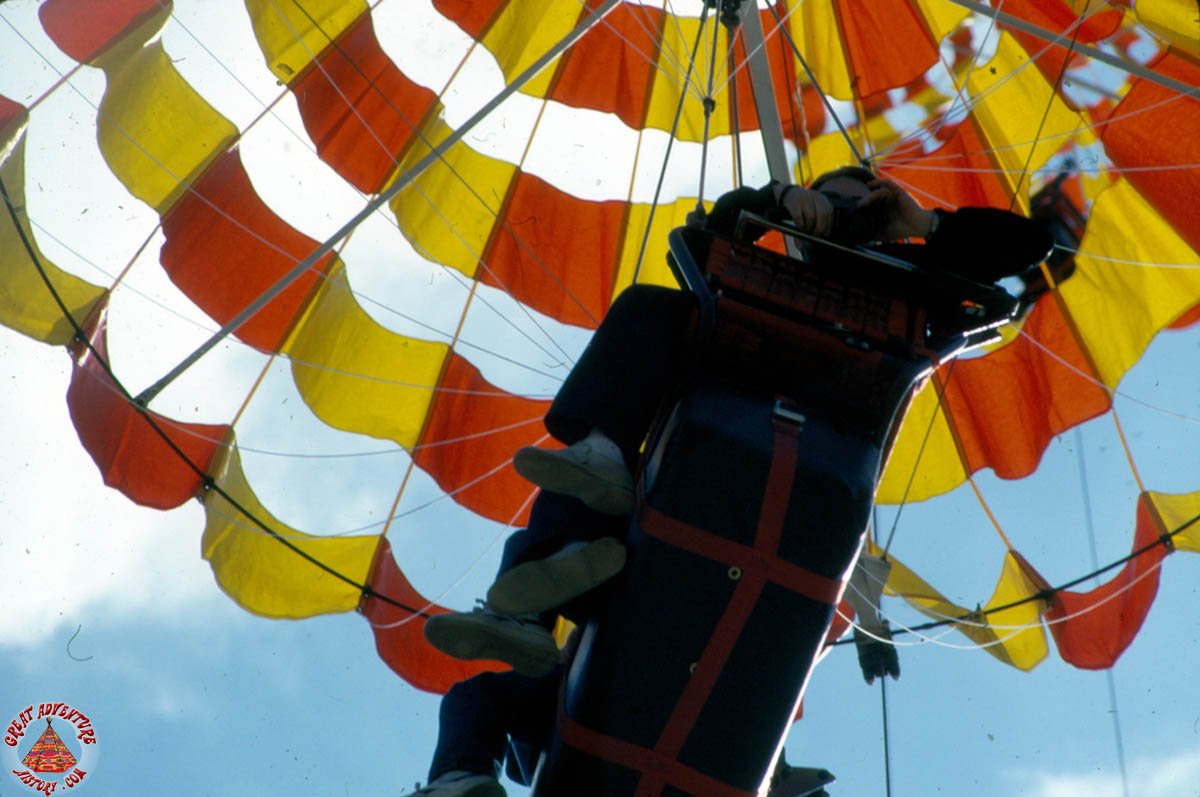
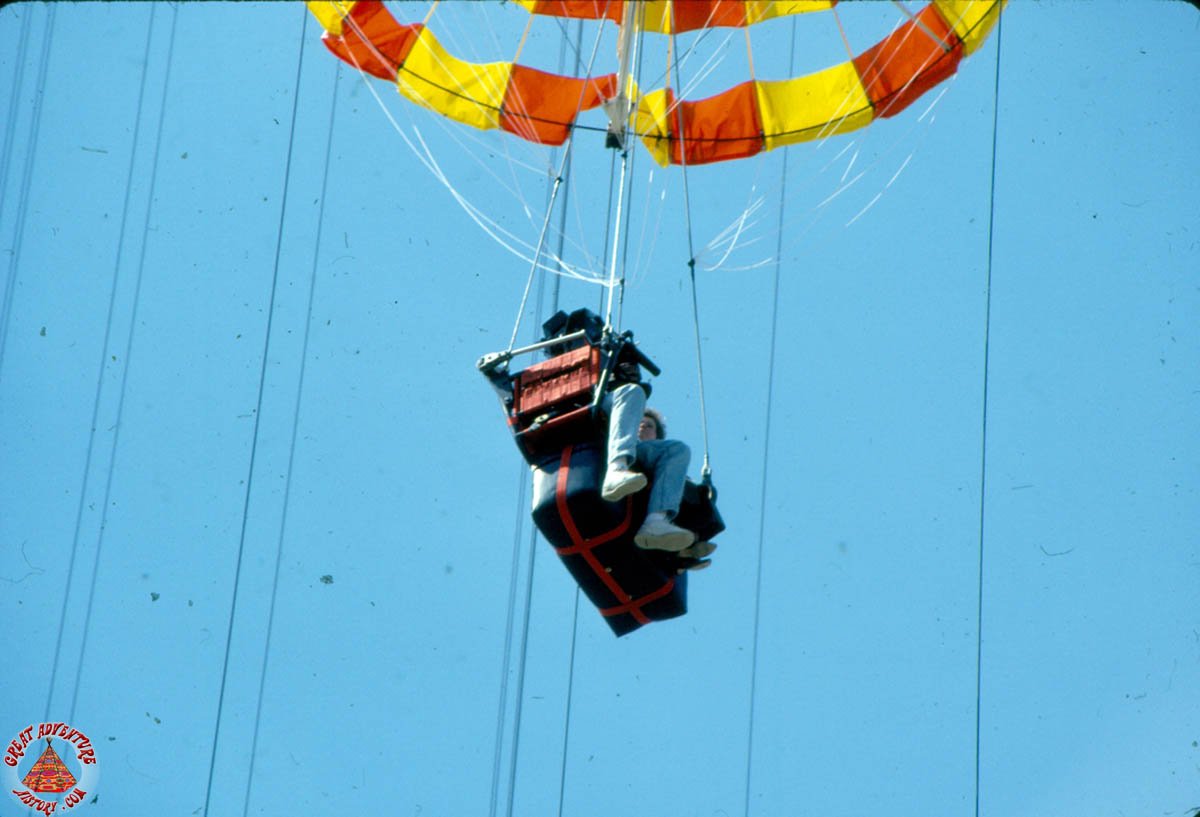
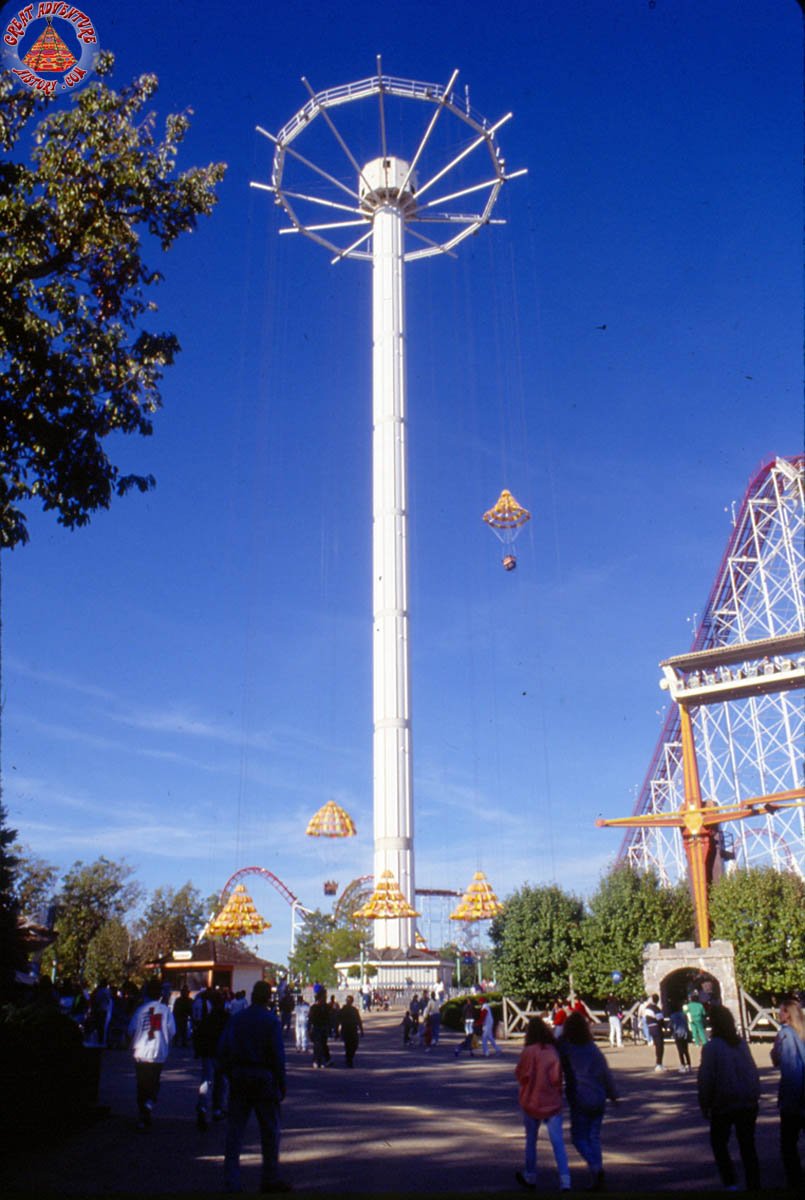
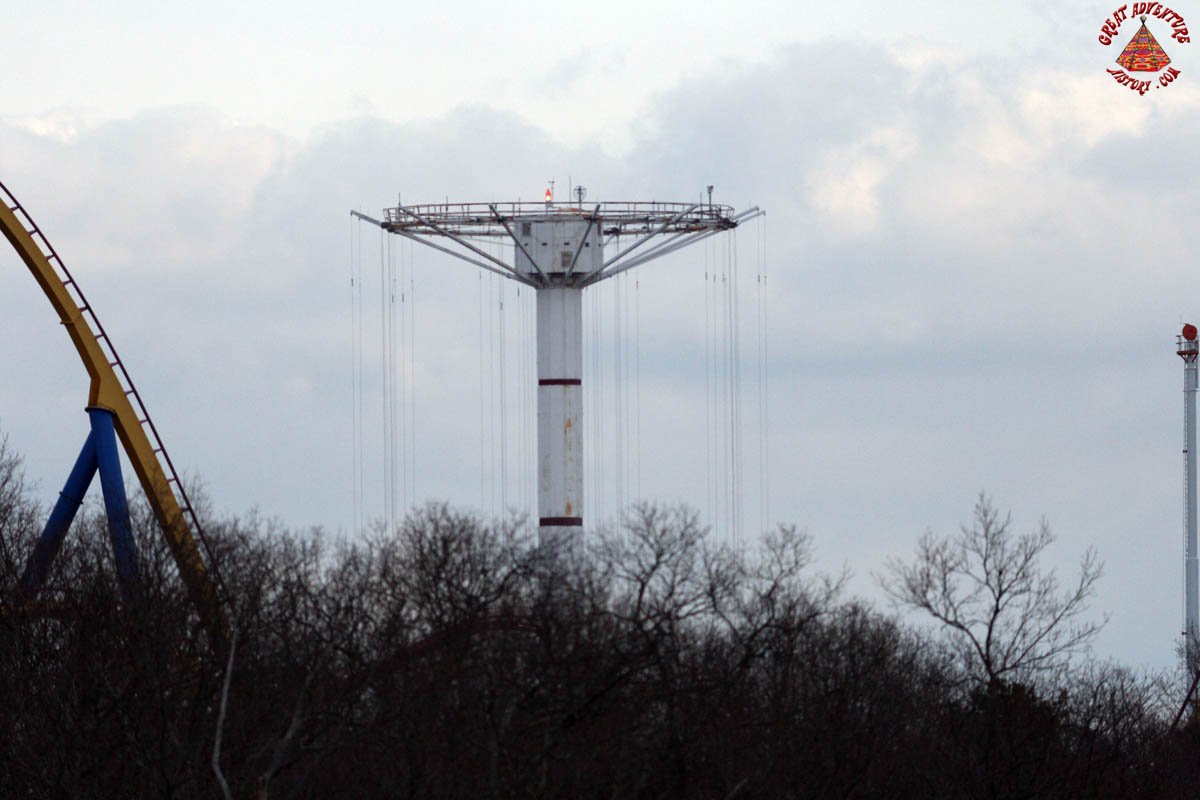
In 1989 when the Great American Scream Machine
made its debut for the media, the parachutes facing the coaster were
used by news teams to get aerial footage of the roller coaster.
News crews were raised in a controlled "manual" mode to their desired
height where they were able to remain until they wished to come back
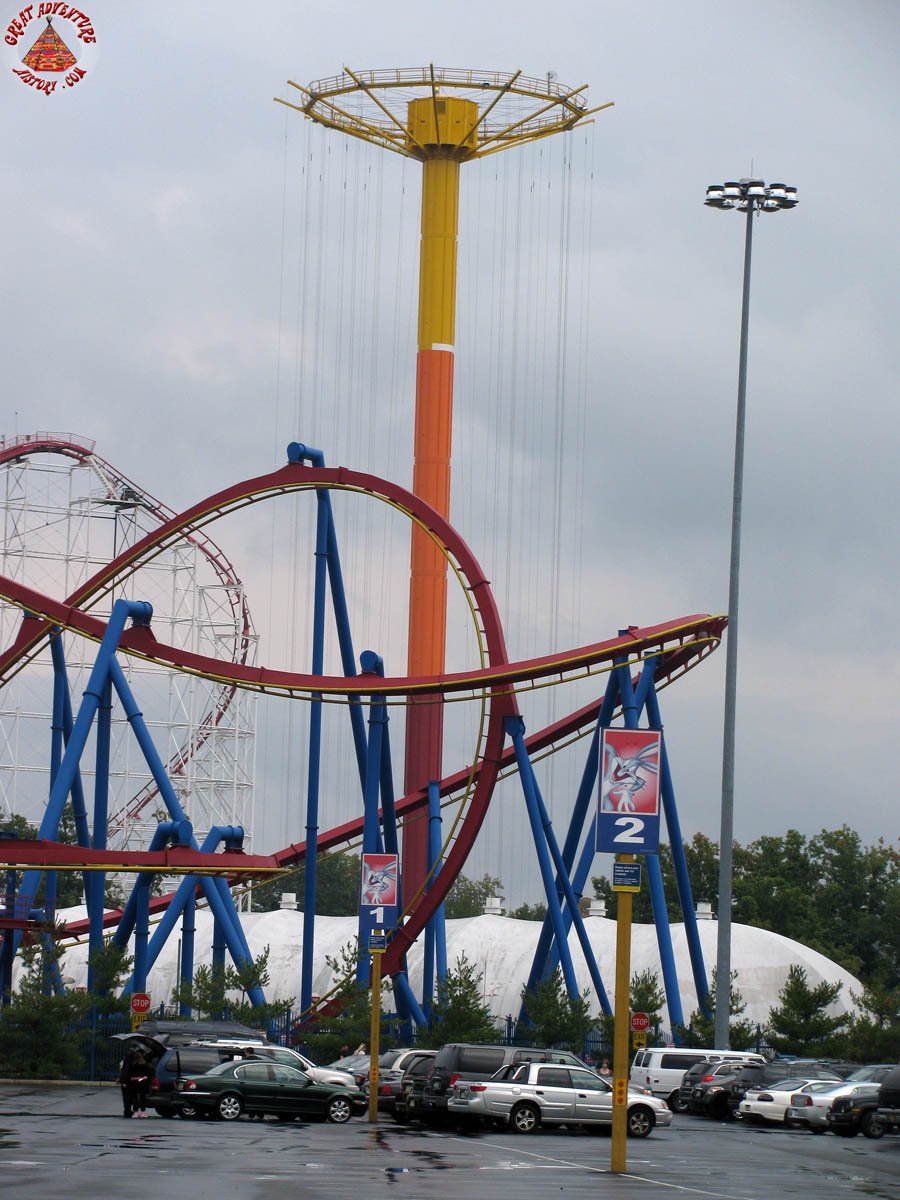
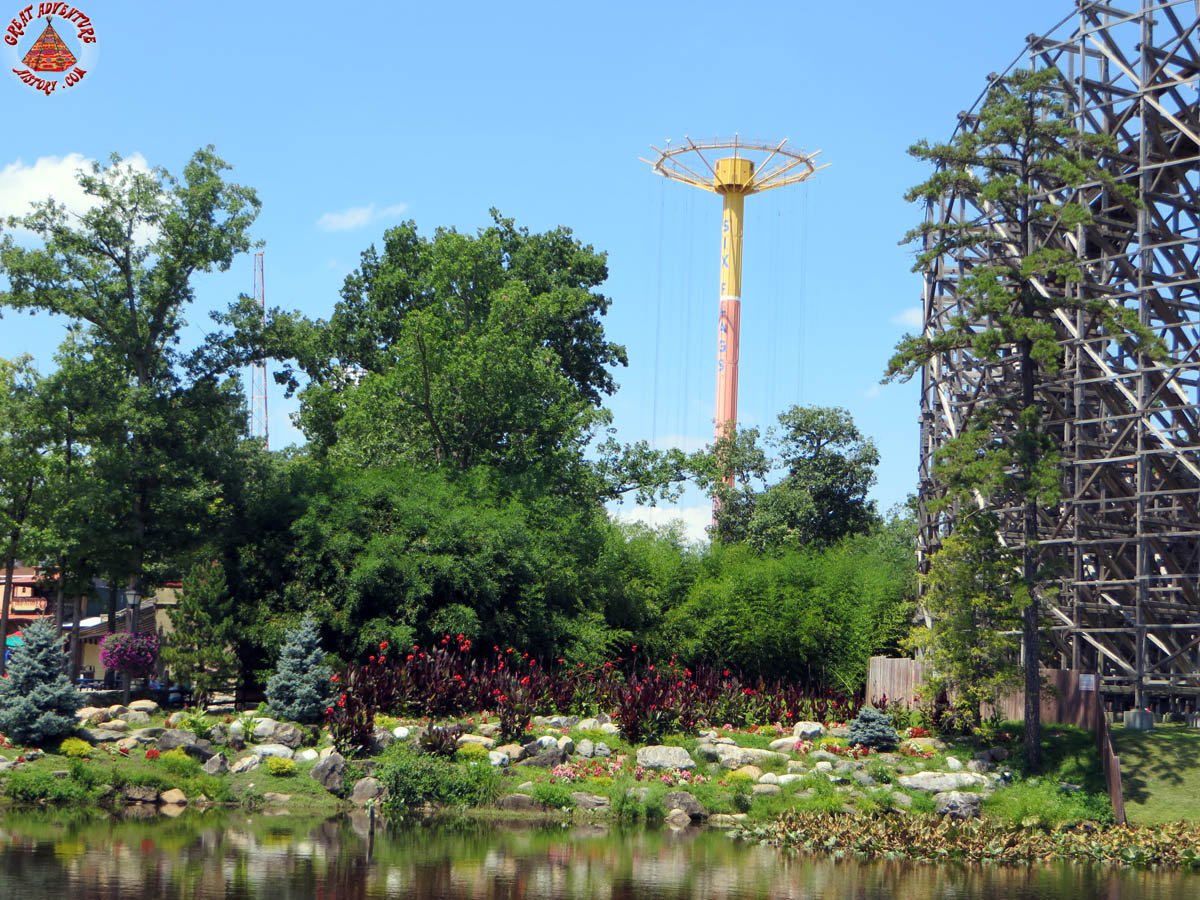
down. The addition of the Great American Scream Machine next to the Parachuter’s Perch emphasized the height of the tower, still looming high above the lift hill. |
 |
|
 |
 |
|
 |
 |
 |
 |
||
 |
CLICK IMAGE
ON LEFT TO VIEW Ride Video Parachuter's Perch Summer 1989 |
|
 |
 |
 |
 |
 |
 |
 |
 |
 |
 |
 |
 |
 |
 |
 |
 |
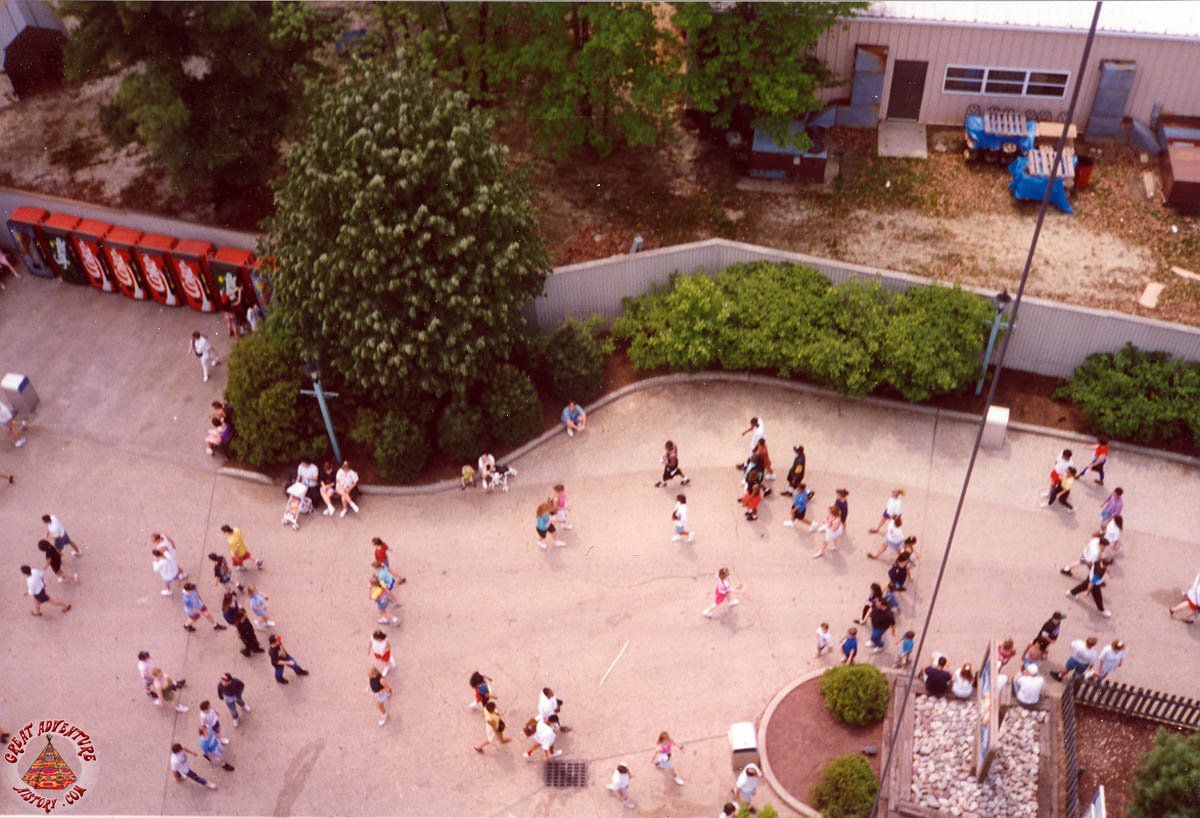
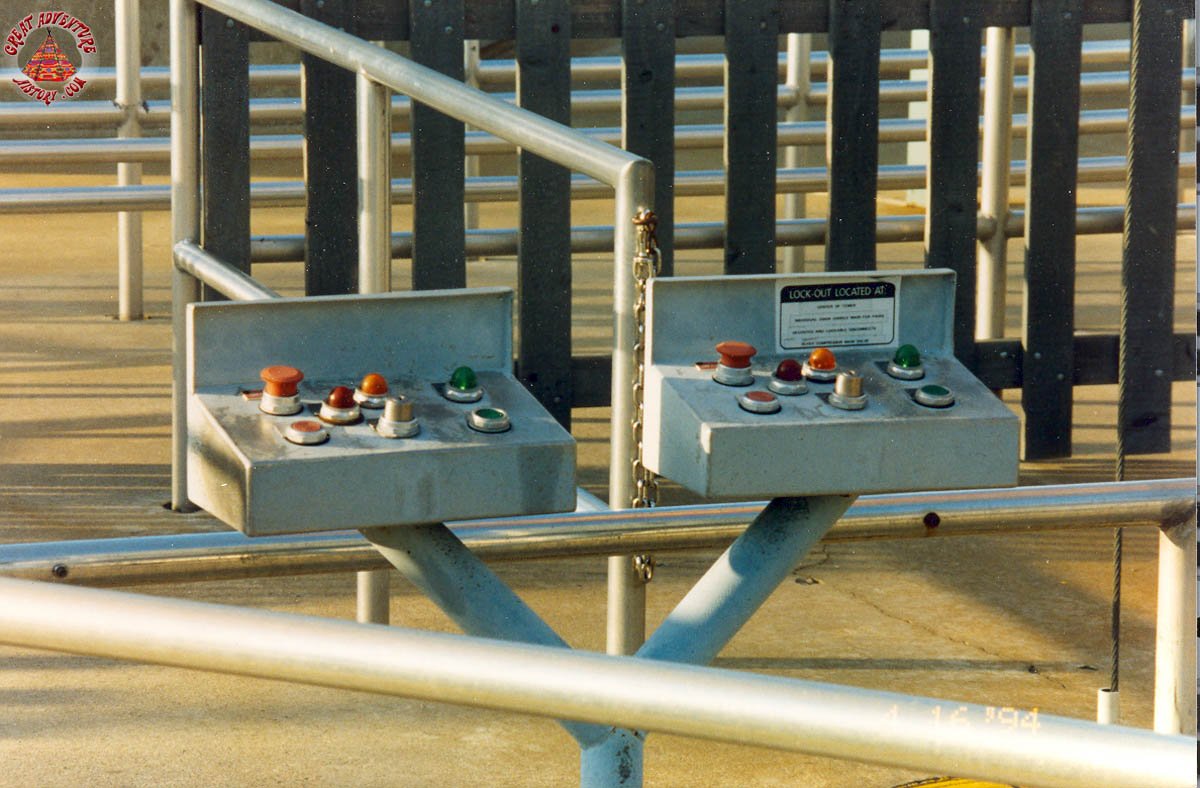
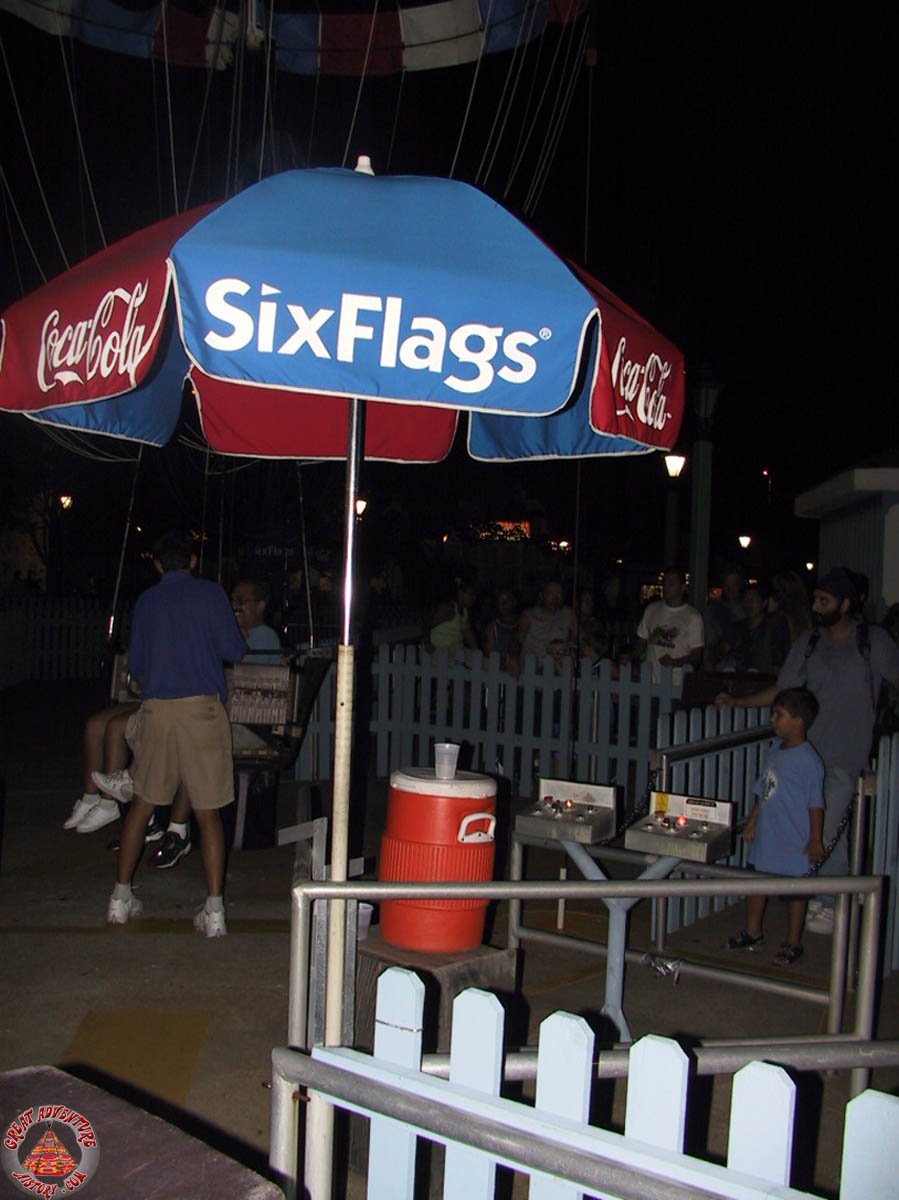
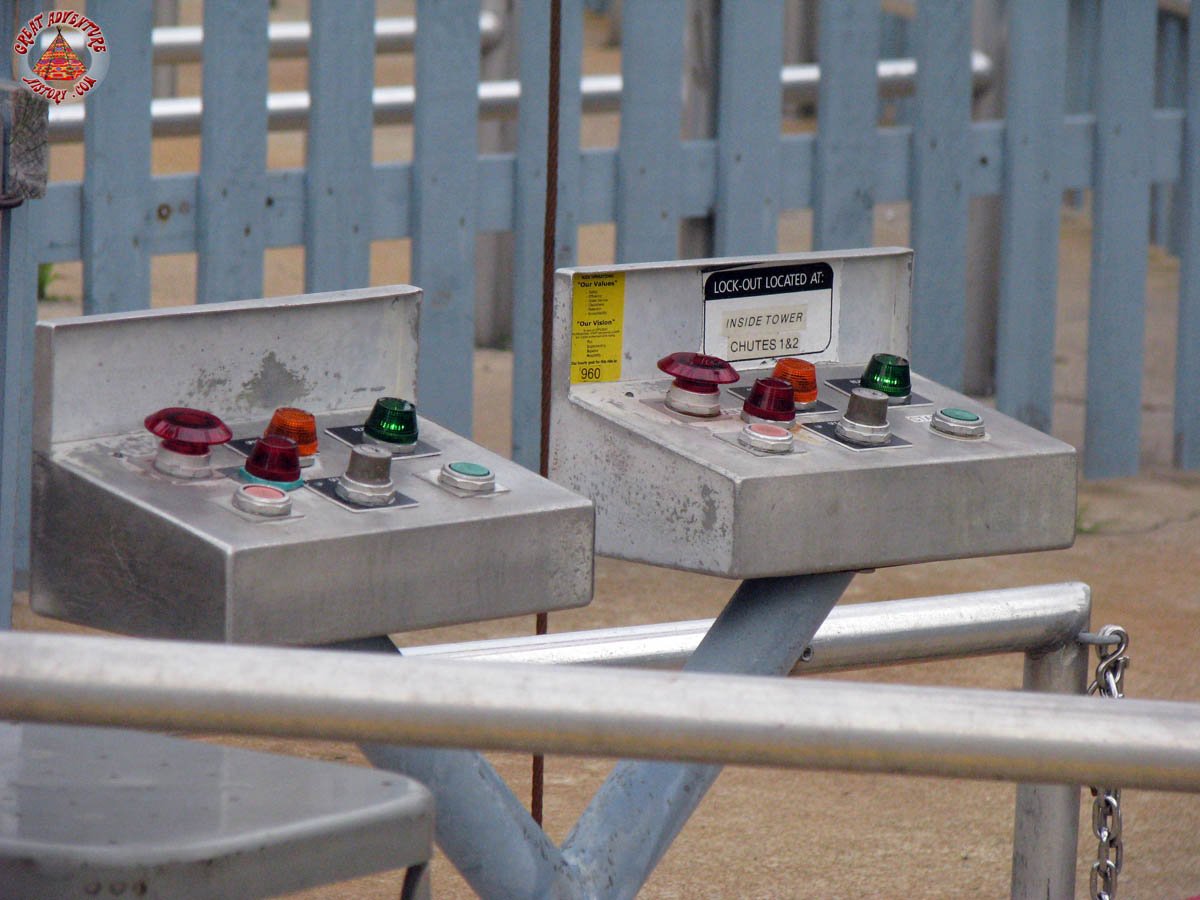
The regular ride cycle is automated, with an operator simply needing to press a dispatch button and send the ride vehicle up and then back down. The dispatch buttons are supplemented with a magnetically activated switch that the operator holds to the panel after the restraints have been checked, preventing any unauthorized button pushing on the ride operator panel by waiting guests. As mentioned, occasionally the ride's computer system will stop a chute as it raises or lowers if a problem is detected with the cables as they roll onto or off of the winches. In the event of a lengthy stoppage, park personnel can use the second chute of the pairing to get up to the point where the riders are stranded and reassure them they are safe. |
 |
 |
 |
 |
 |
||
 |
 |
 |
 |
 |
 |
 |
 |
 |
 |
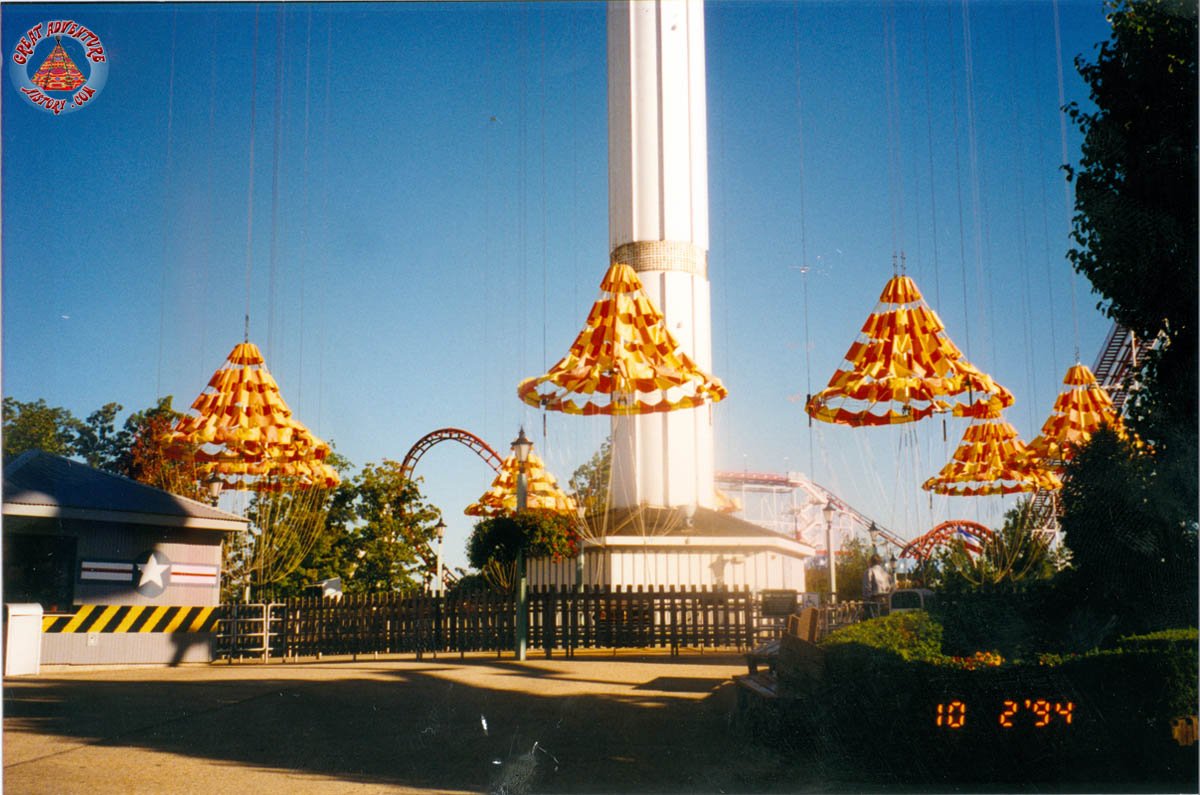
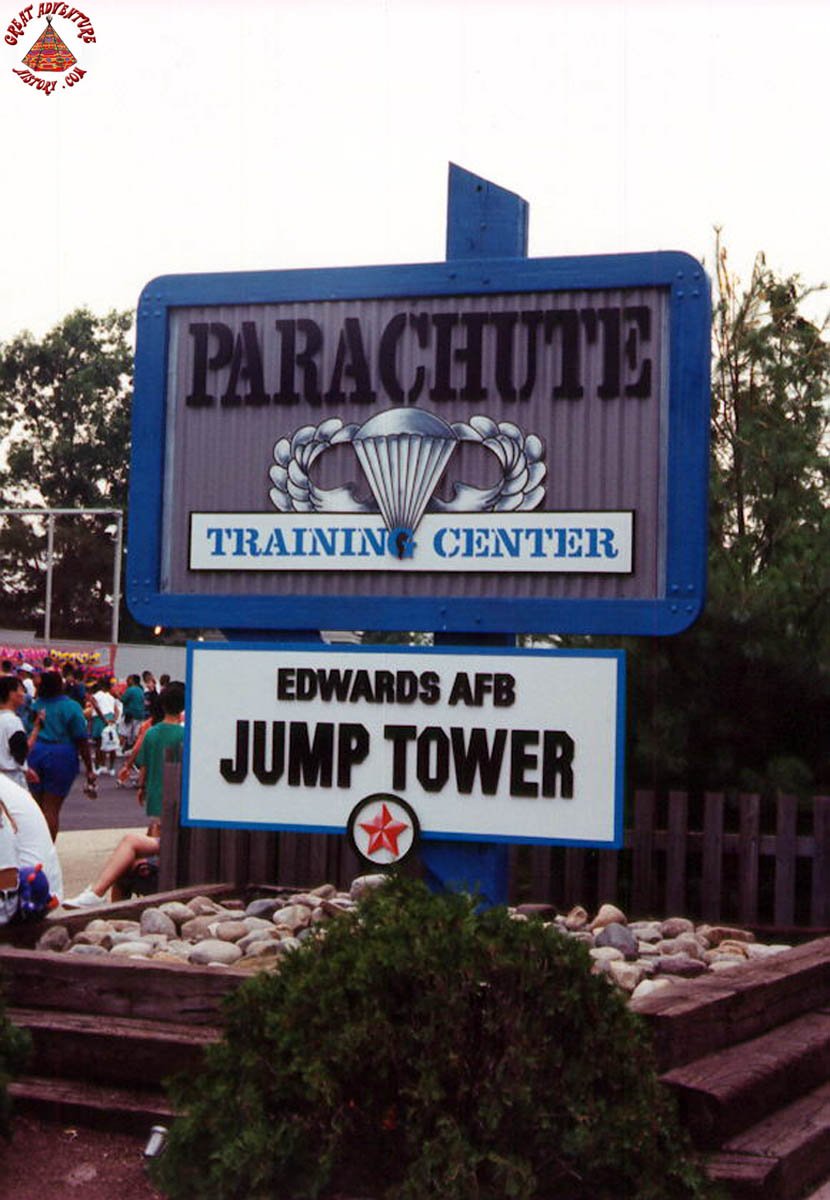
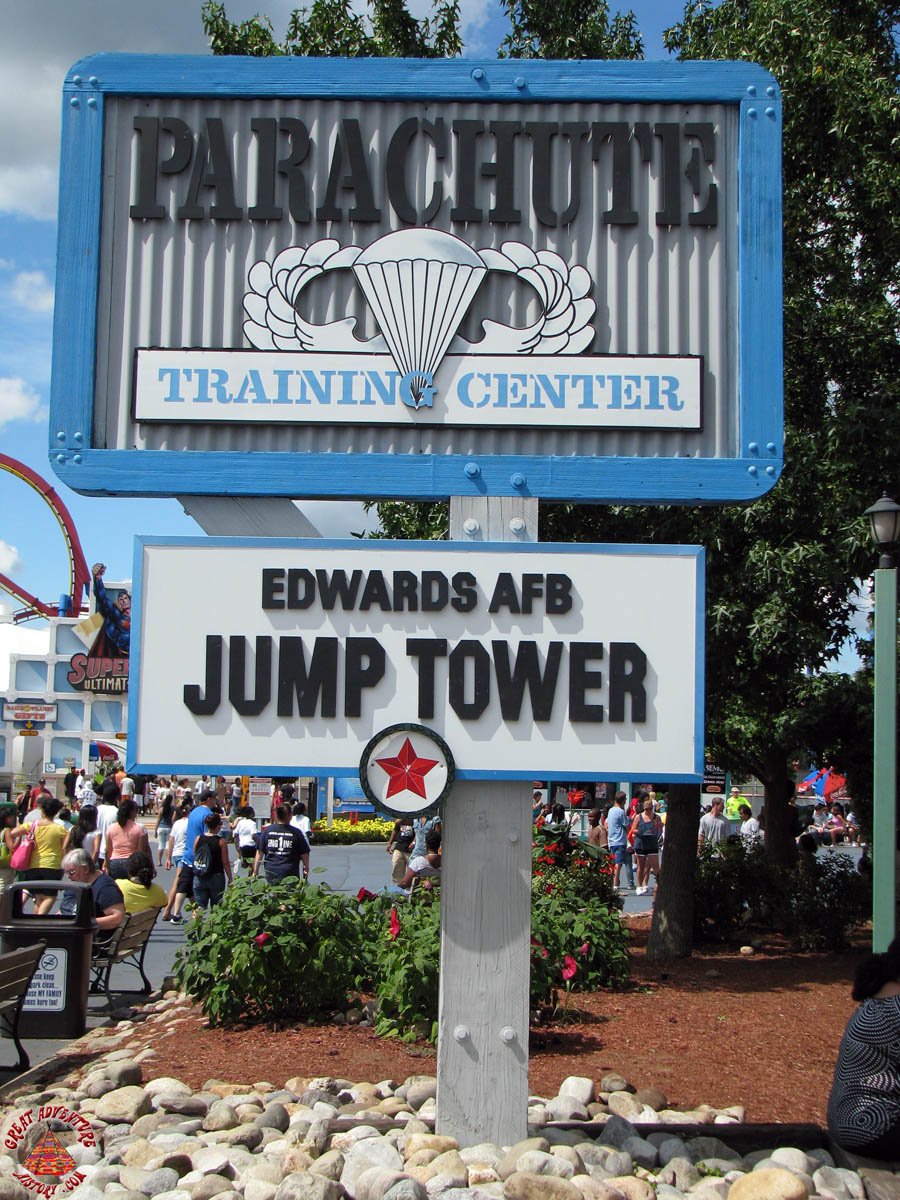
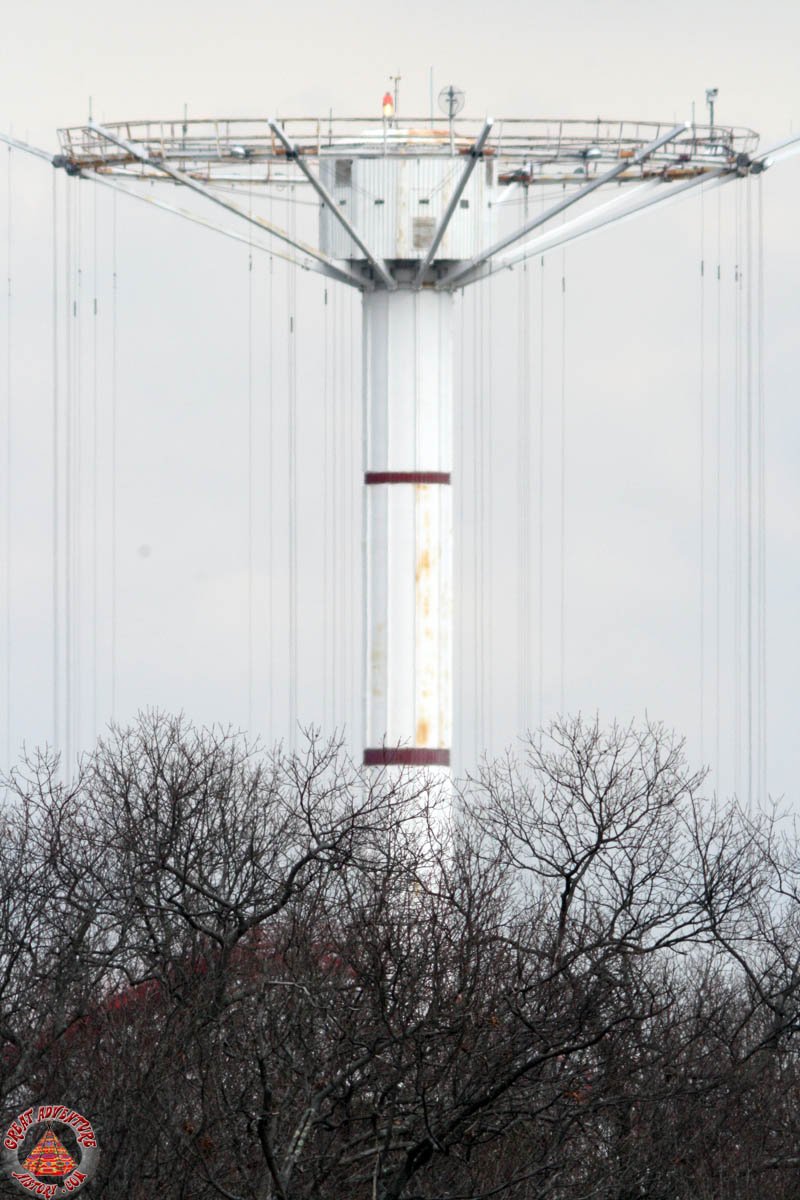
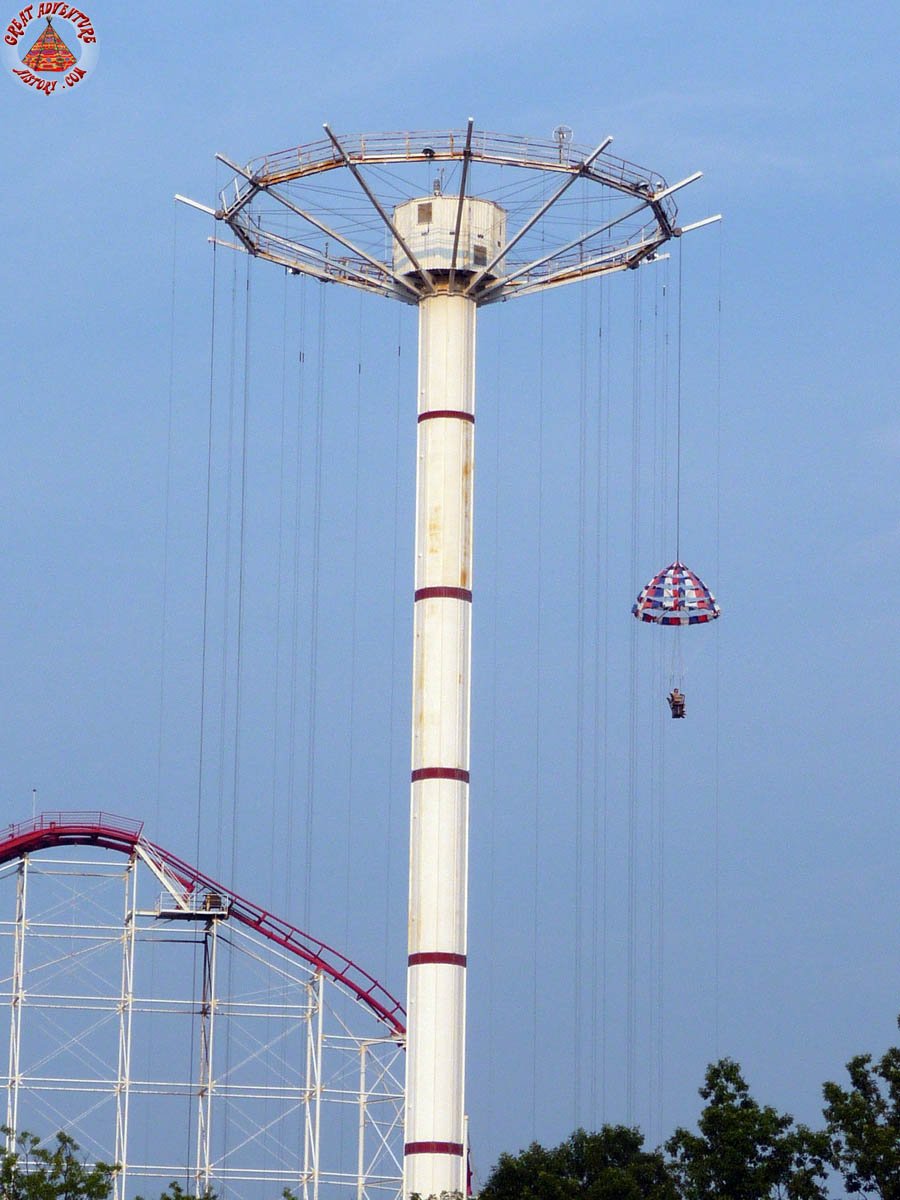
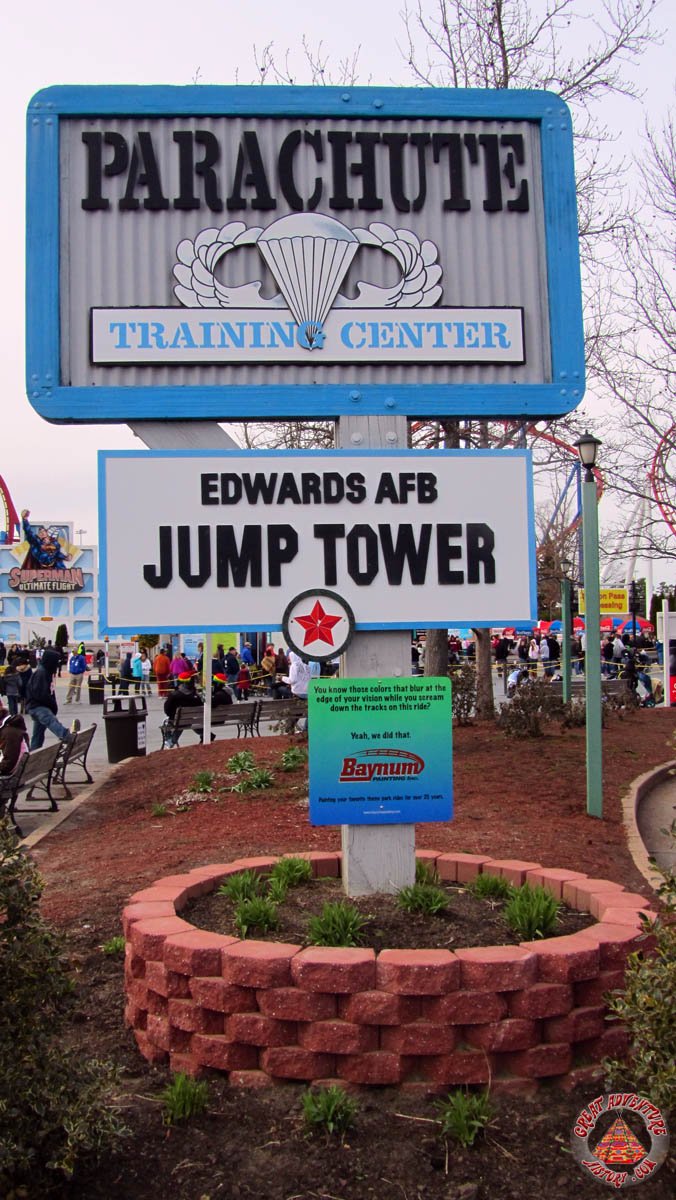
Originally painted completely white, the parachute tower was repainted in 1994 with bands of red added around the bolt rings. This, along with the red white and blue parachutes helped contribute to the ride’s theme change. Parachuter's Perch was renamed “Parachute Training Center - Edwards Air Force Base Jump Tower ” when the Right Stuff Mach 1 Adventure was added to the park and a military base theme was given to all the rides at the top of the Boardwalk area. |
 |
 |
 |
 |
 |
 |
 |
 |
 |
 |
 |
 |
 |
 |
 |
 |
 |
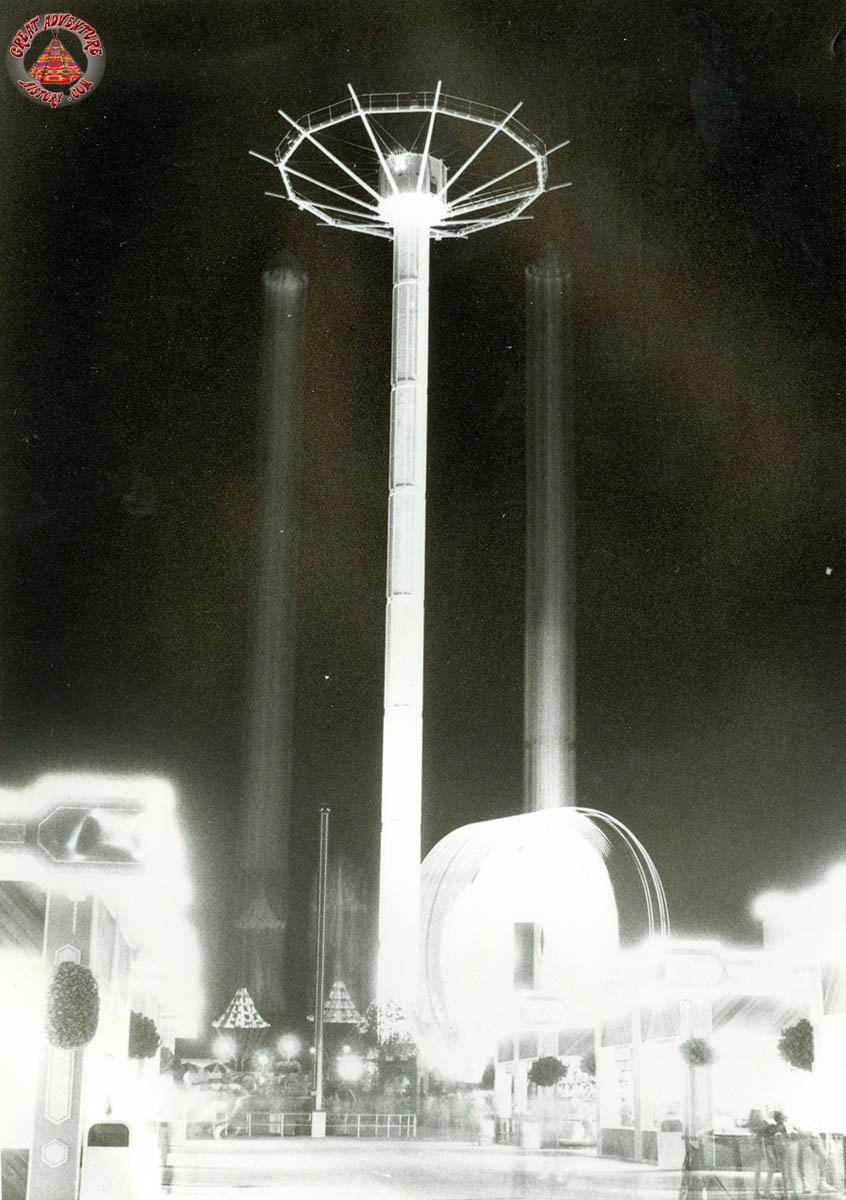
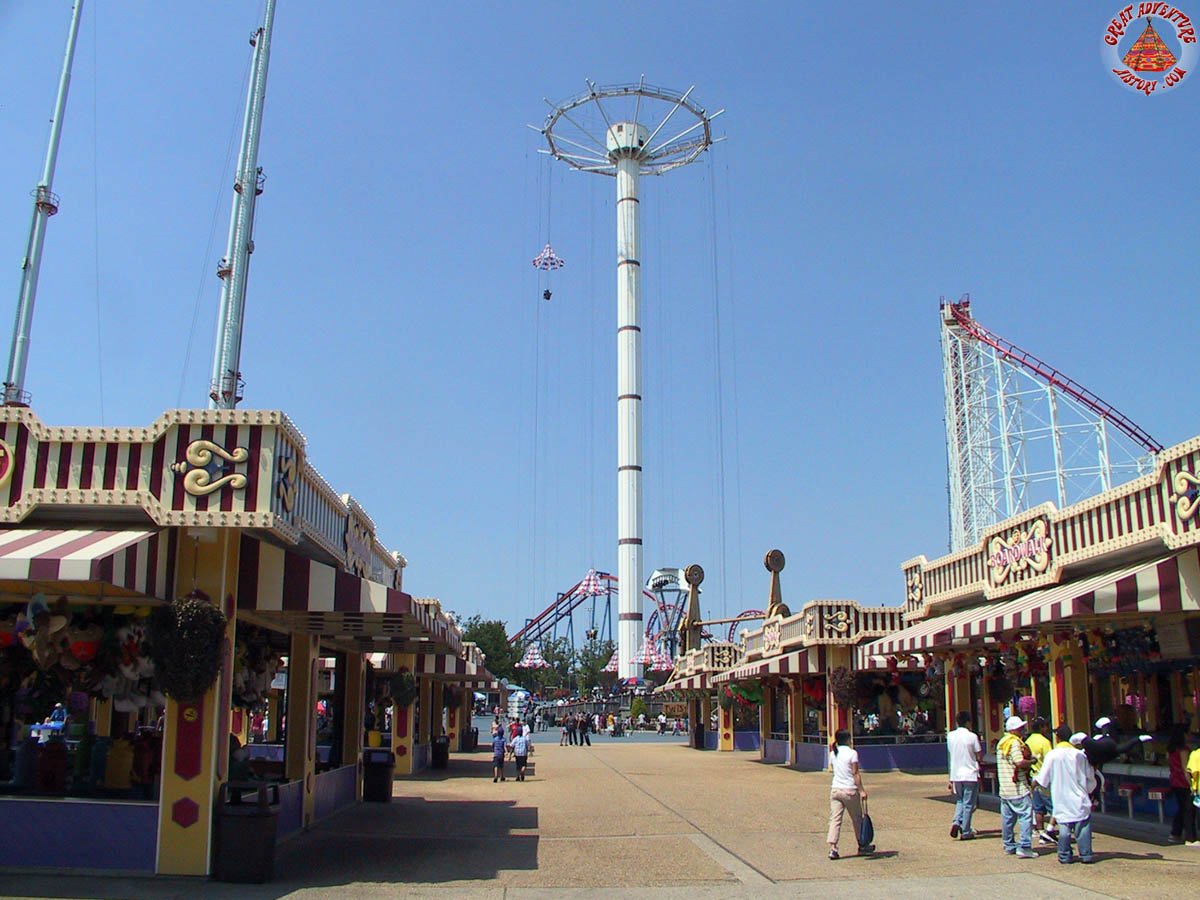
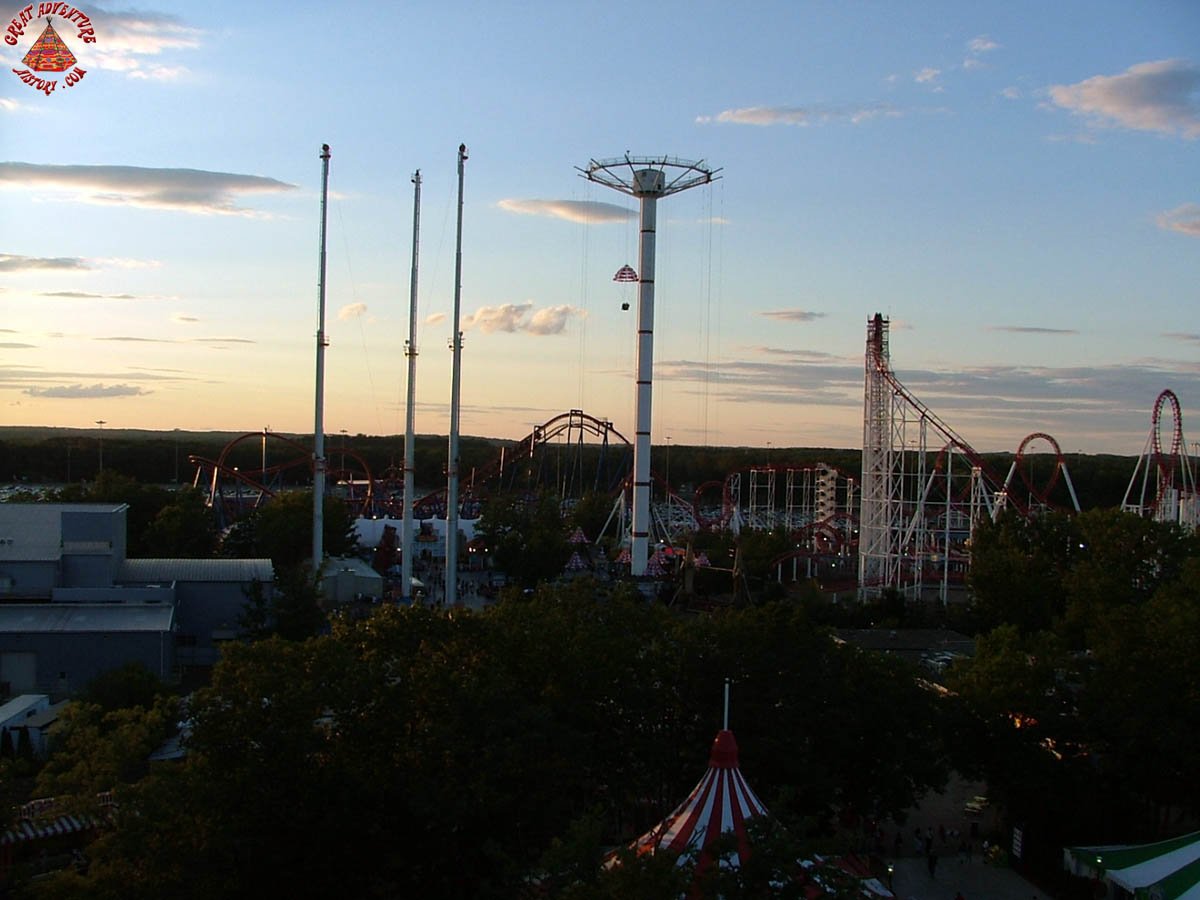
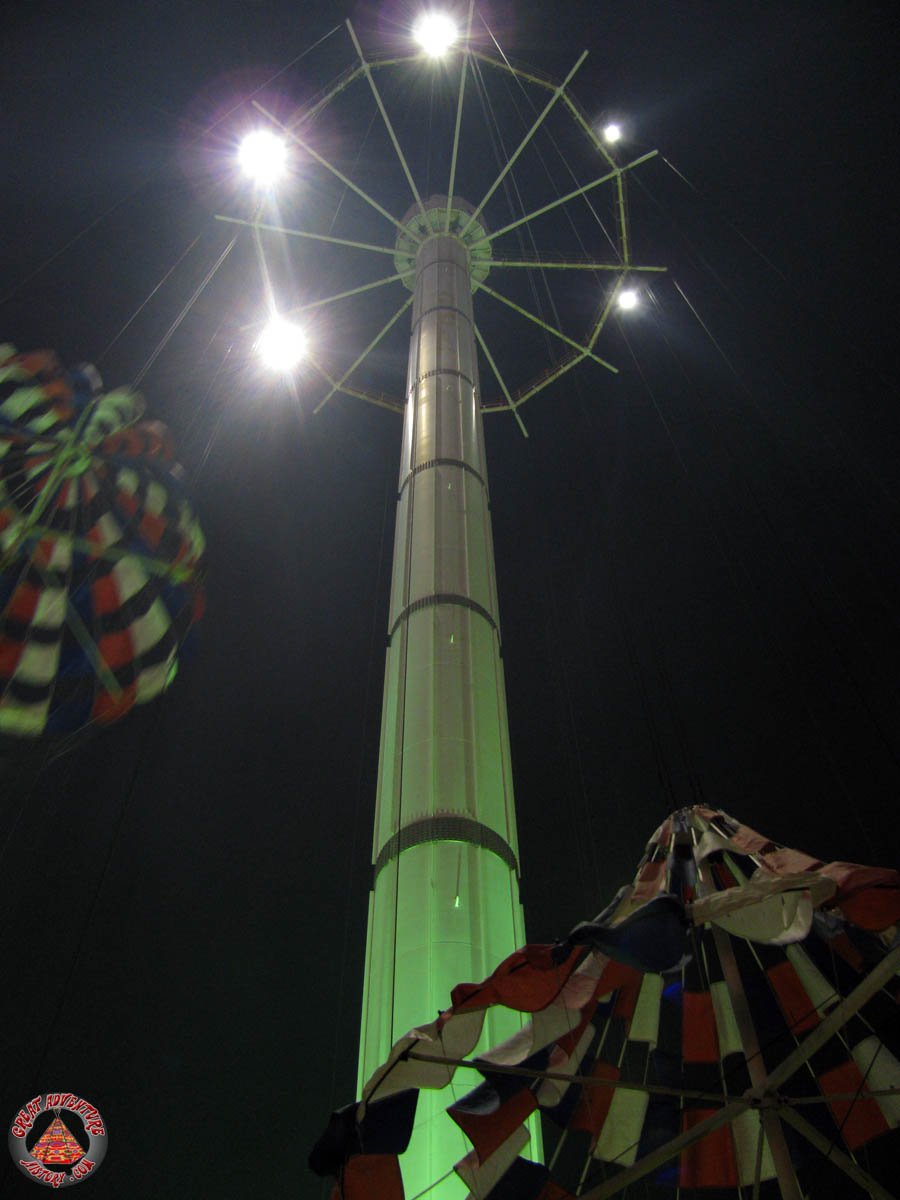
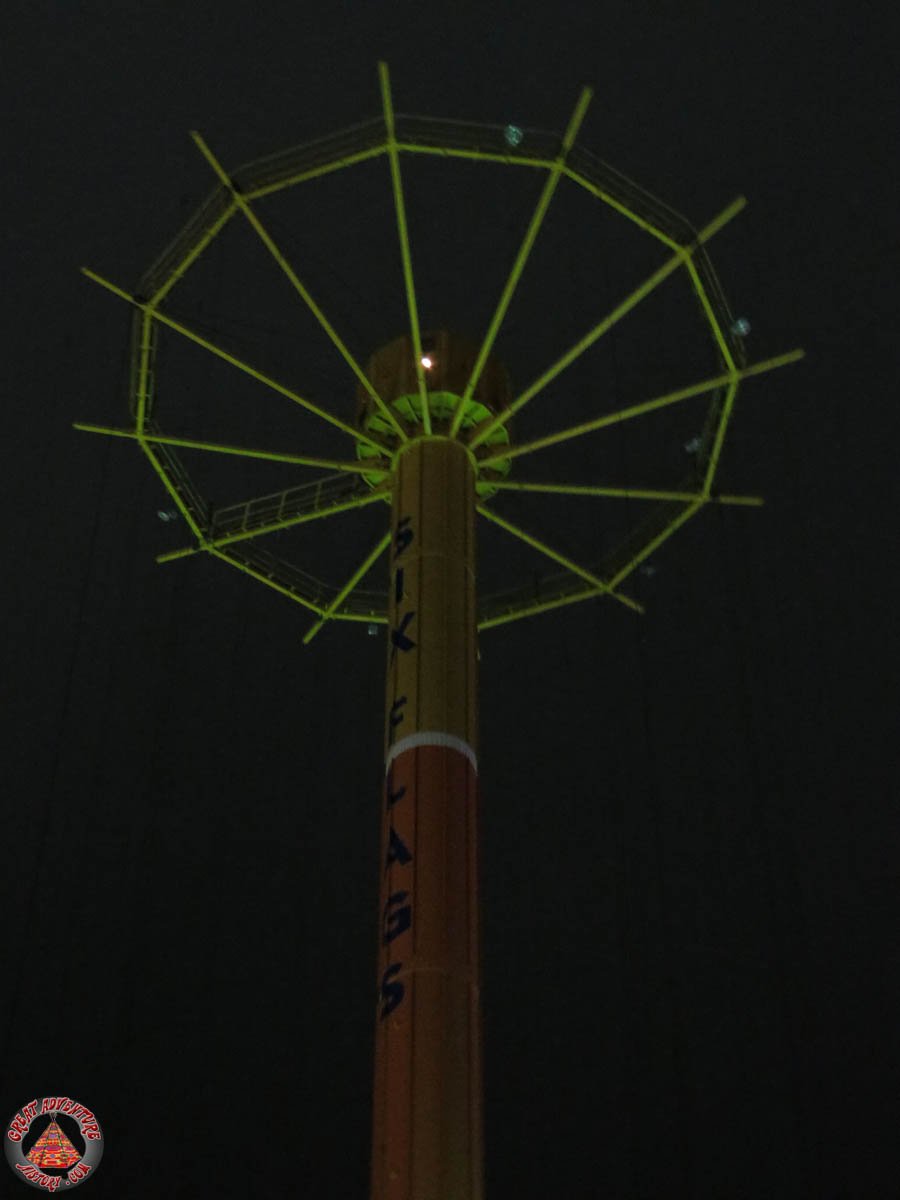
At 250 feet, the parachute tower is visible throughout the park both day and night. Originally the white tower stood out against the blue sky, and at night was lit with white spotlights. Over the years, the white lights became standard blue tinged mercury vapor lights. For the two seasons of Winter Lights in 2002 and 2003, the lighting was changed to green, standing as a backdrop to the lights of the Victorian Village section of the drive-thru event which snaked through the main parking lot. |
 |
 |
 |
 |
 |
 |
 |
 |
 |
 |
 |
 |
 |
 |
 |
 |
 |
 |
 |
 |
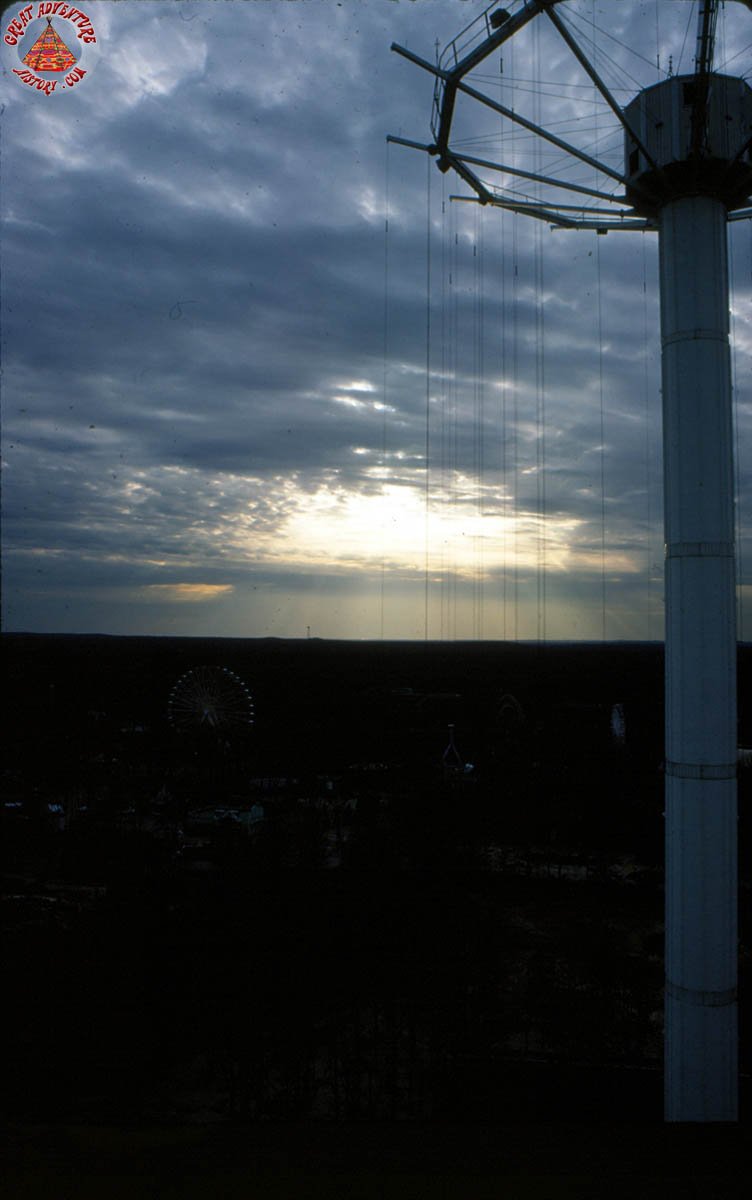
From 1983 until 2005, the parachute tower stood as the tallest ride in the state of New Jersey until it was surpassed by Great Adventure's own Kingda Ka. The parachute tower structure offers spectacular views of the surrounding area. The huge Hangar 1 building at Lakehurst Naval Air Station designed to house dirigibles is clearly visible on most days. The biggest operational issue experienced by the parachute ride has involved weather. Closures are occasionally required during high winds. An anemometer at the top of the tower keeps tabs on wind speed which closes the ride when wind gusts exceed 26 MPH. At such a speed, wind gusts run the risk of shifting the hanging seats which could pivot too close to the guide cables. The winds need to be below a certain threshold for a determined period of time before operations can resume. |
 |
 |
 |
|
 |
 |
 |
 |
 |
 |
 |
 |
 |
 |
||
 |
||
 |
CLICK IMAGE
ON LEFT TO VIEW How It Works Video Parachuter's Perch |
|
 |
 |
 |
 |
 |
 |
 |
 |
 |
 |
 |
 |
 |
 |
 |
 |
 |
 |
 |
 |
 |
 |
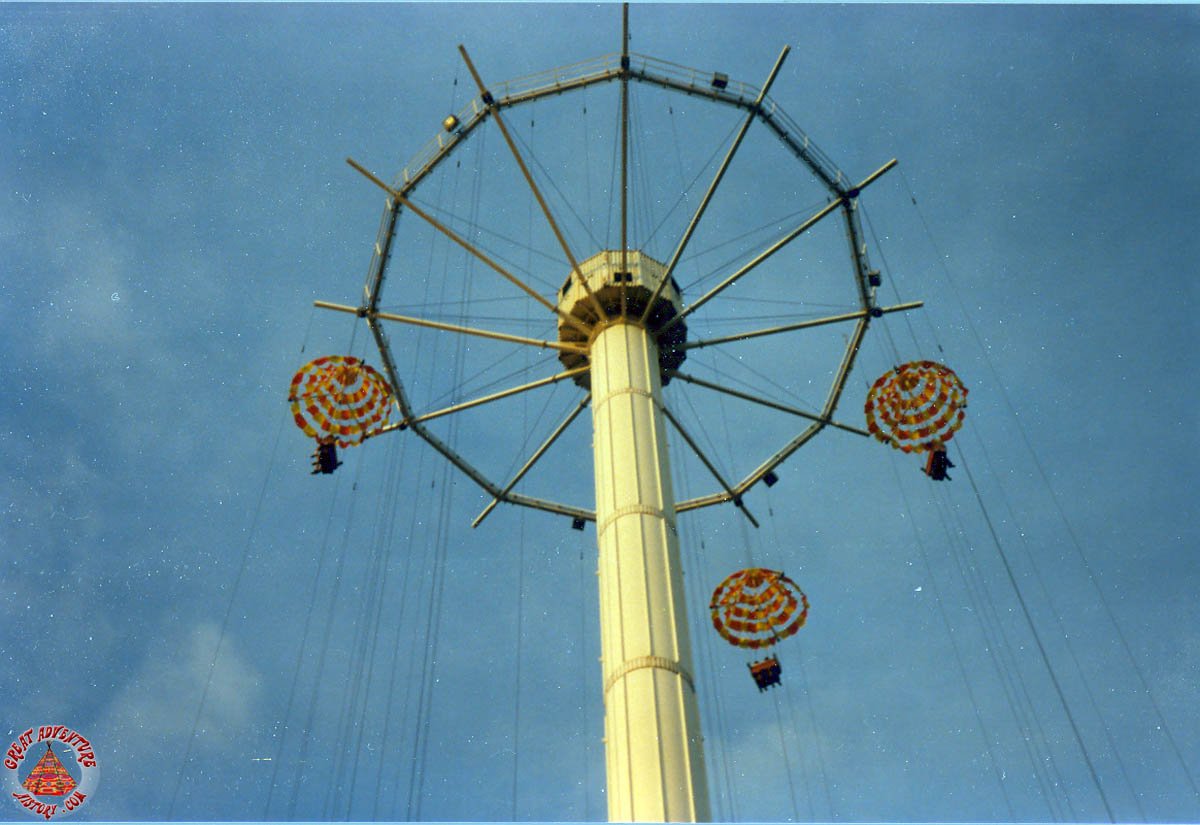
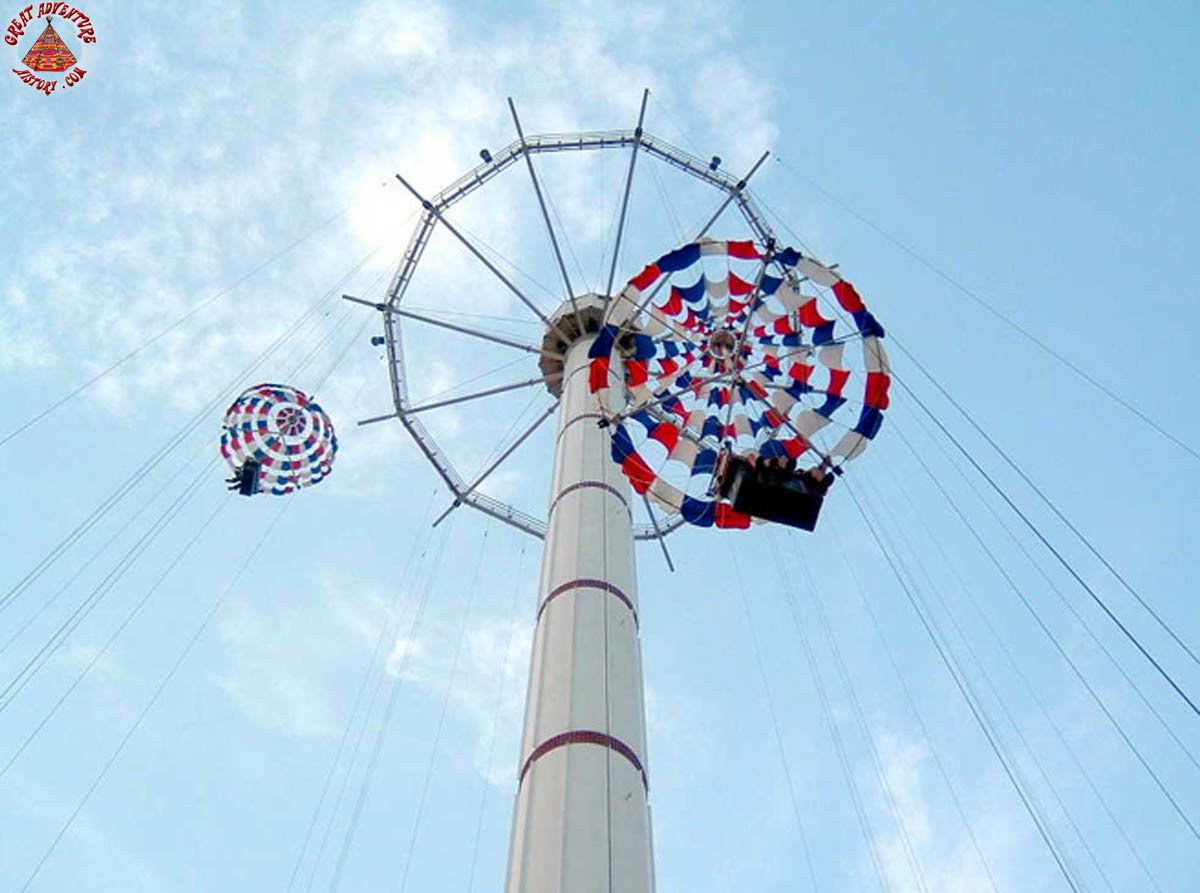
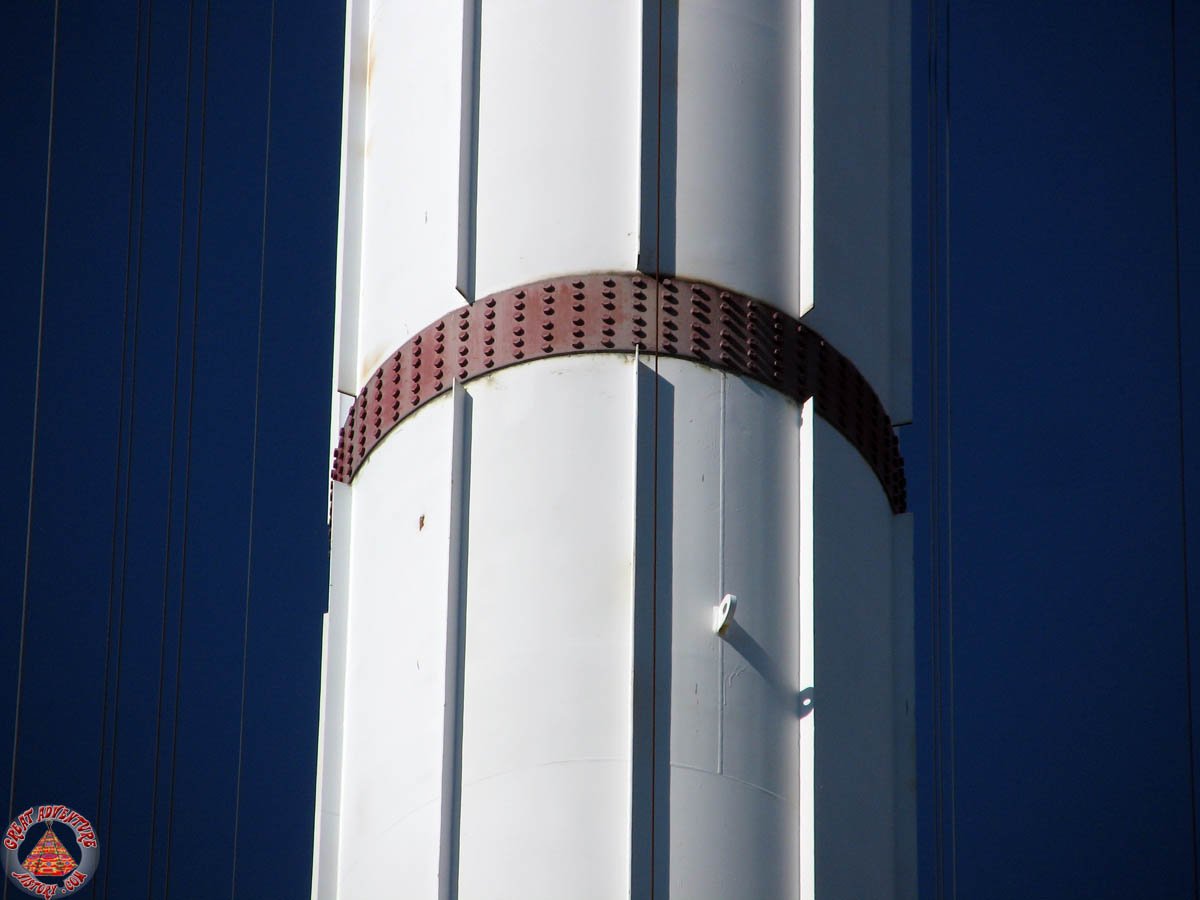
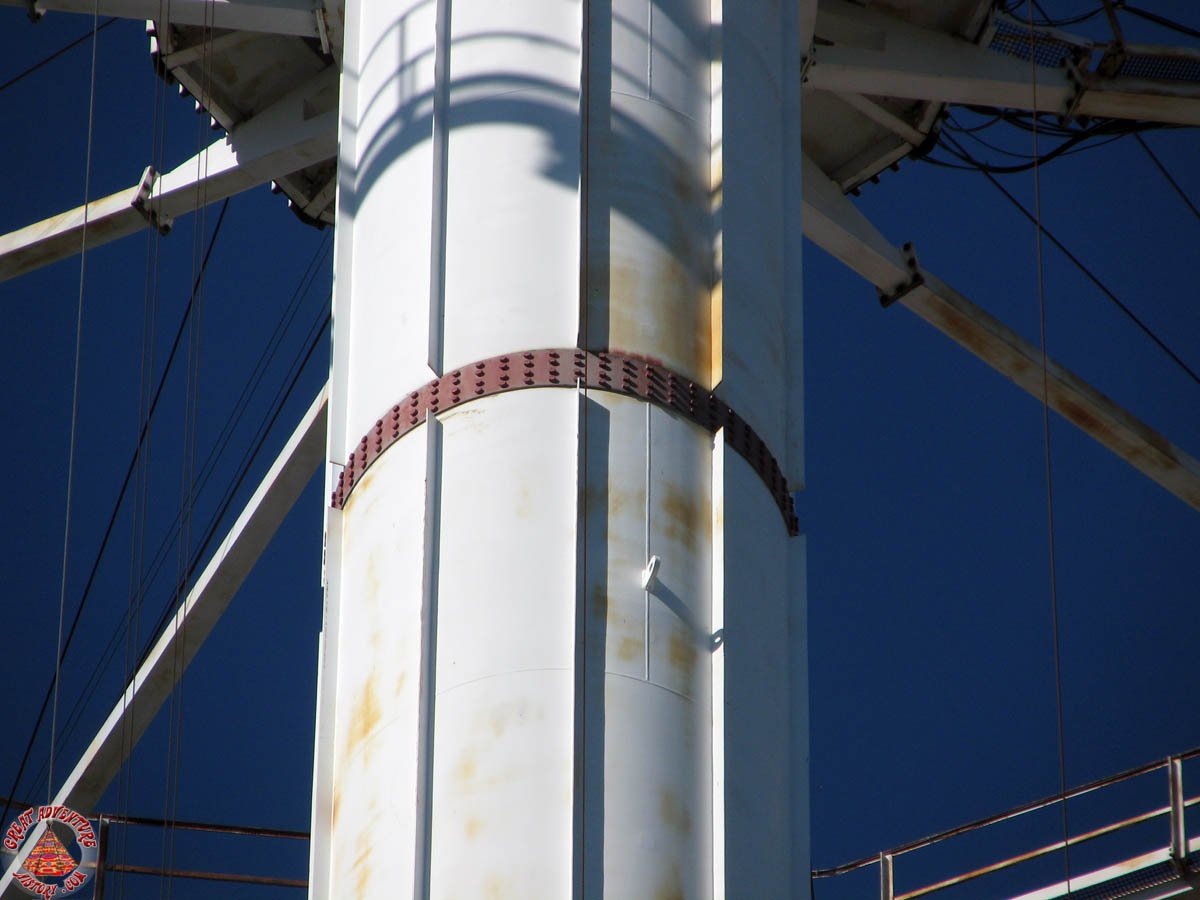
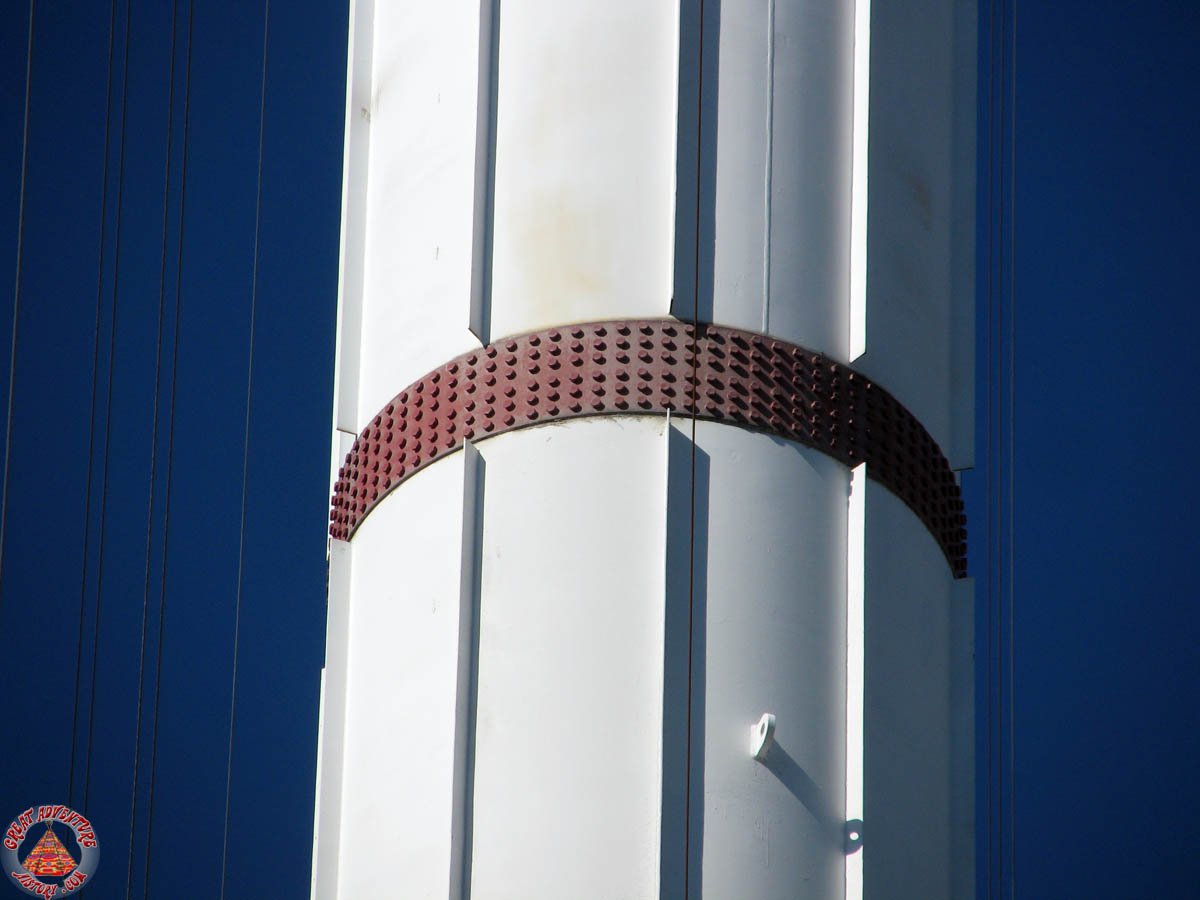
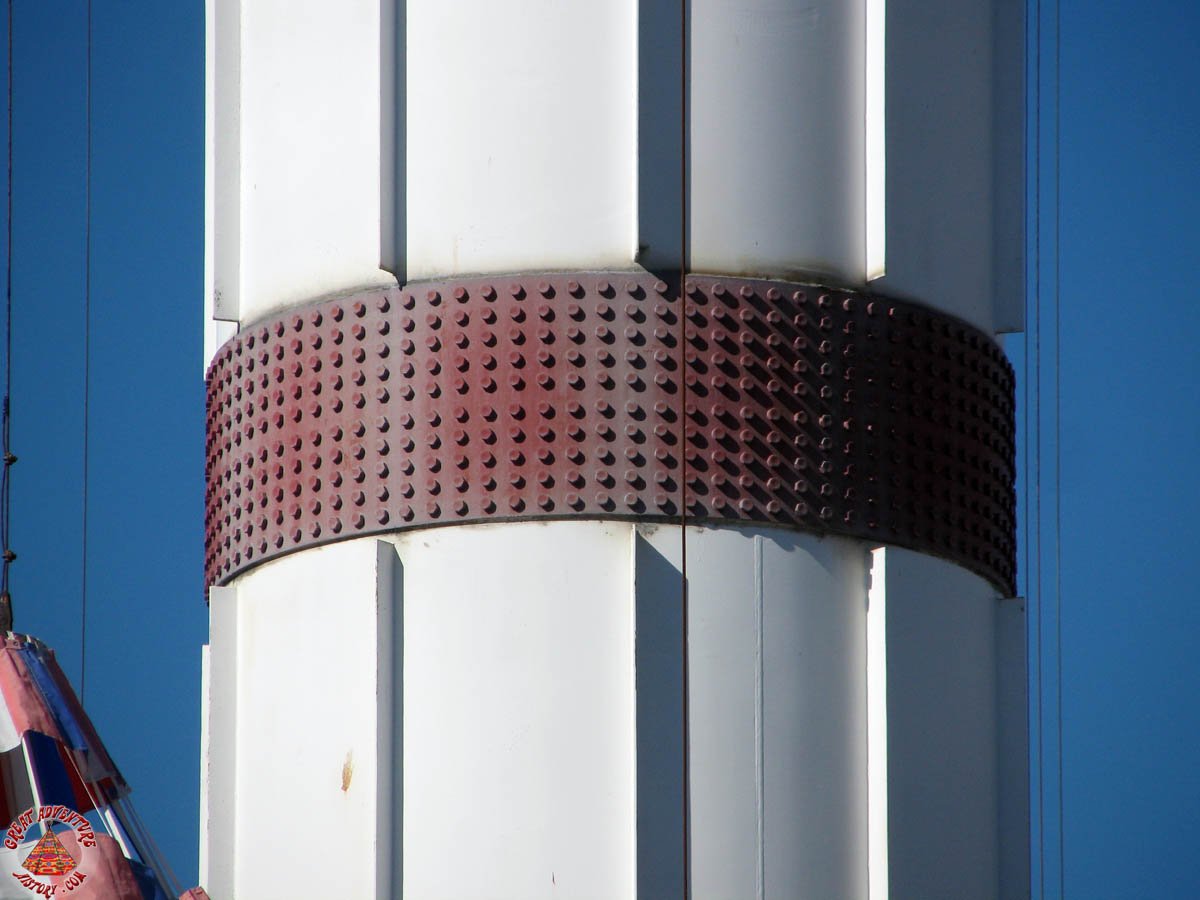
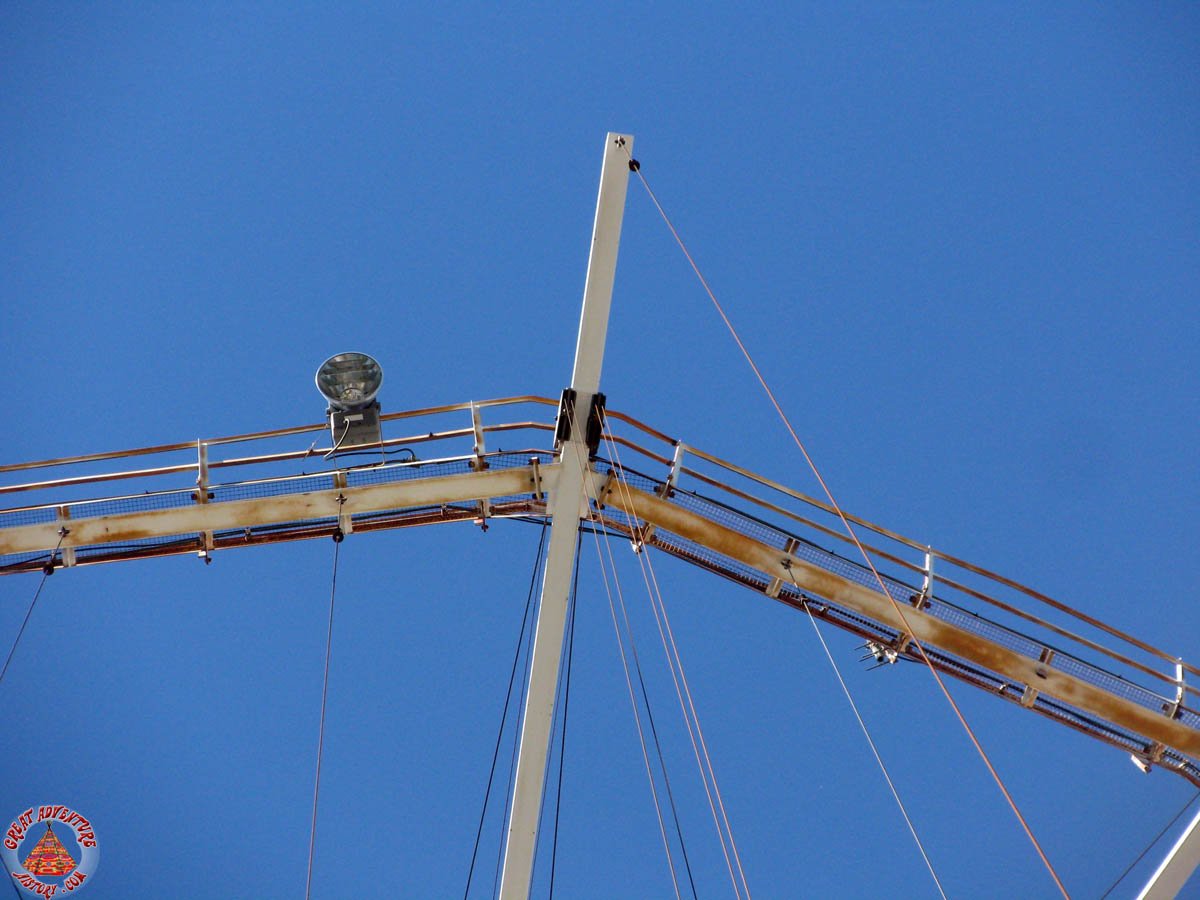
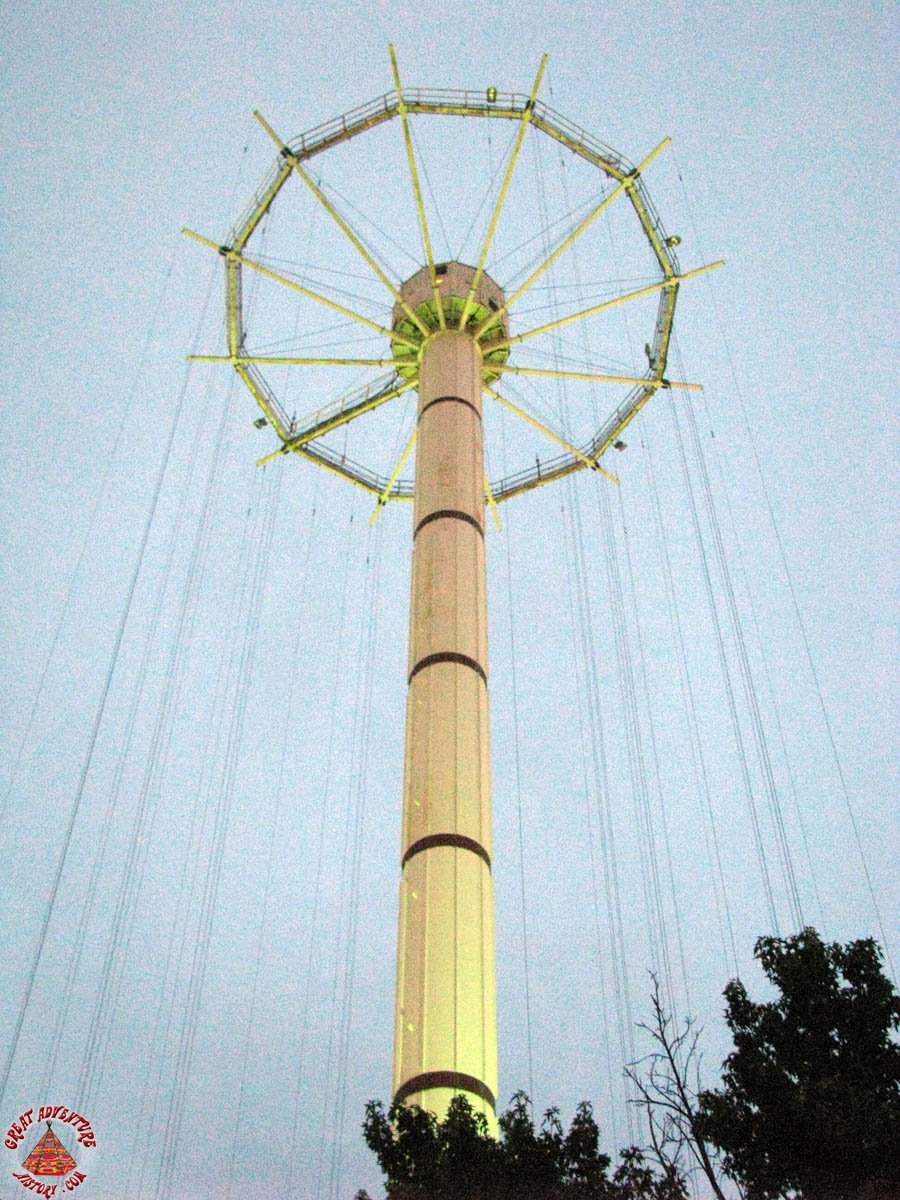
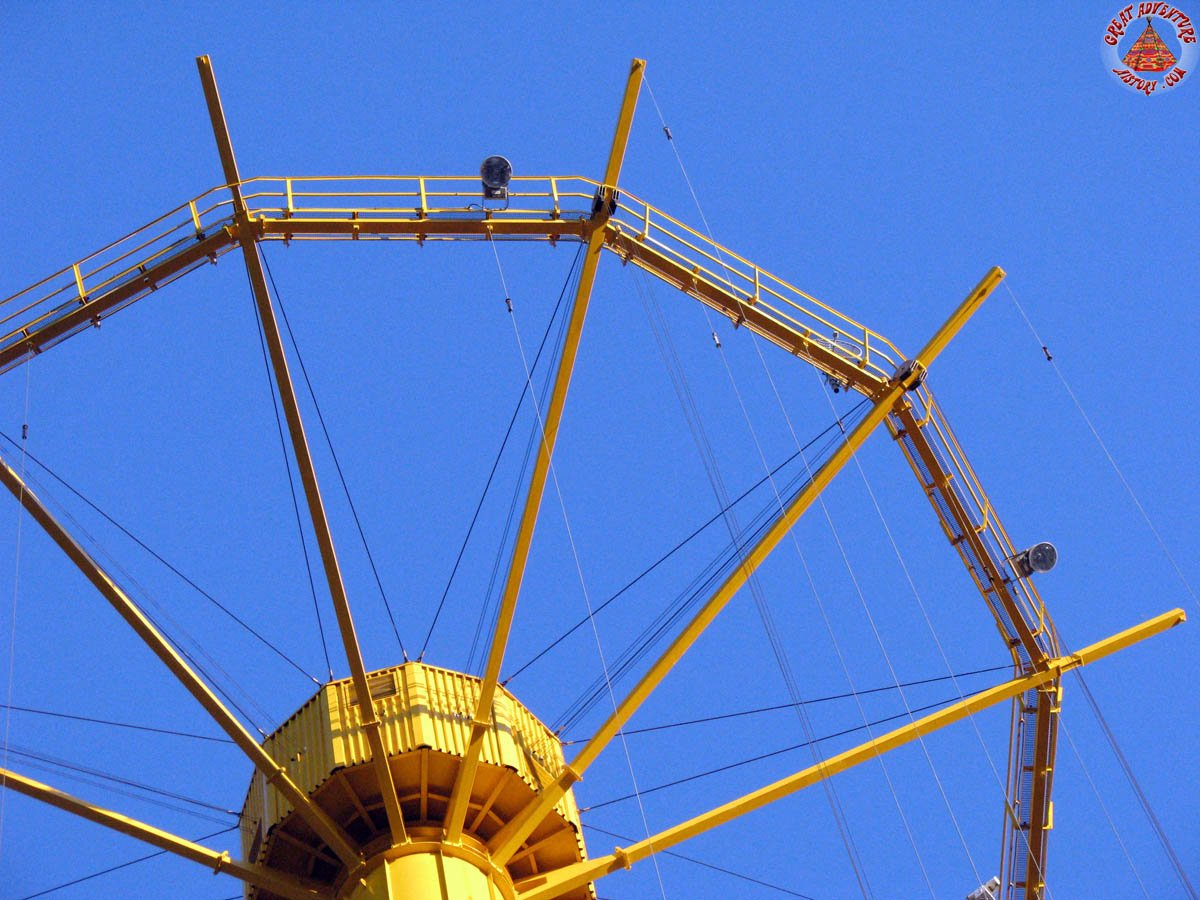
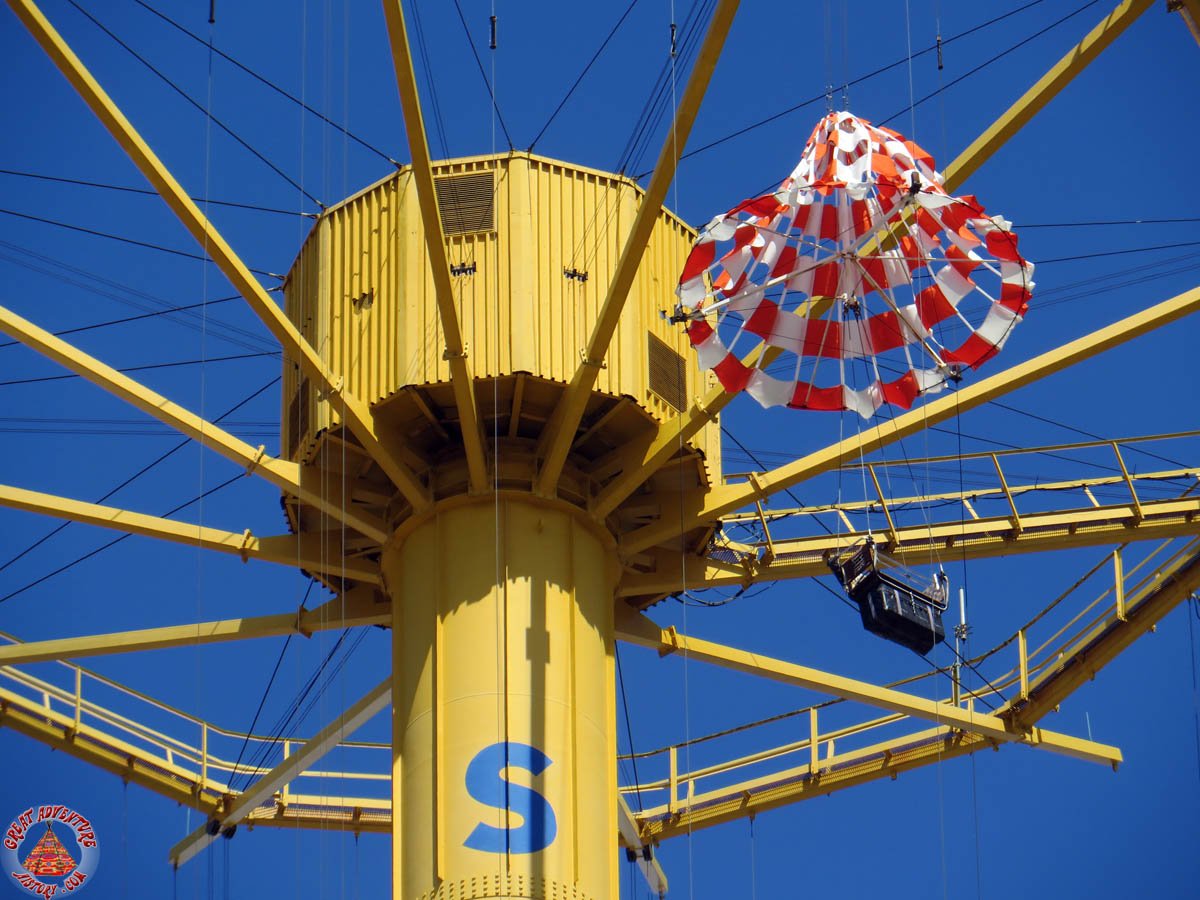
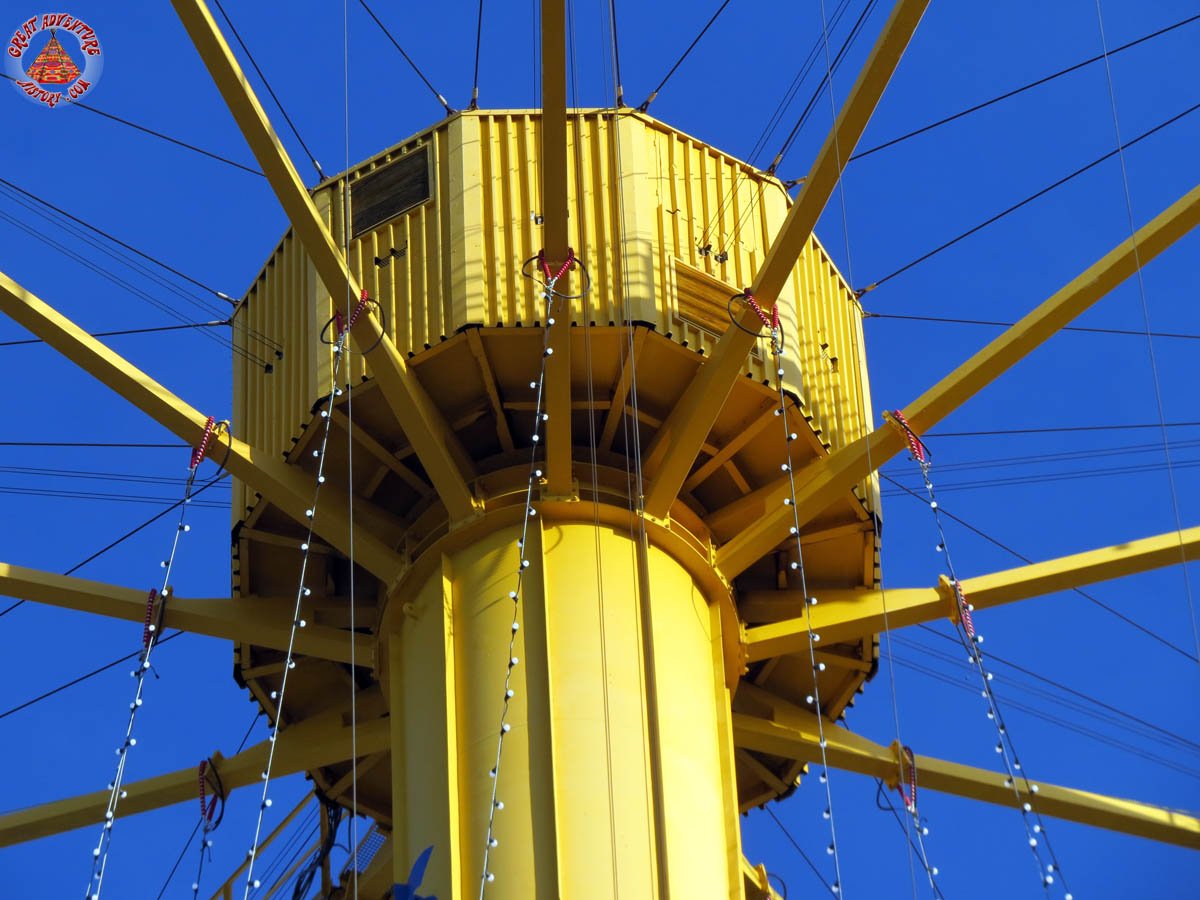
As mentioned, the ride’s tower is comprised of 8 steel sections held together with rings of bolts. With each higher section of the tower, there are fewer rows of bolts on the connecting ring, with ten rows of bolts between the the lowest sections and only four rows connecting the uppermost two sections. The towers built for Six Flags Over Texas and Six Flags Over Georgia were both shorter by one section, giving Parachuter's Perch the record for the tallest operating parachute ride. Each tower section features two pairs of steel ears used for raising them into place with a crane. The same ride tower design is used by INATMIN for building observation towers and drop towers, with a hollow core which can house a counterweight for the larger observation and drop car vehicles as well as access ladders. In the case of the parachute rides, a two person elevator was installed, allowing maintenance and ride personnel to access the winch motors and sensor arrays. The mechanical workings of the ride are located in a small enclosed structure at the top of the tower. The top of the ride features a twelve spoke crown with a catwalk ring around the outside accessed by a passage through a door on the central structure. Each of every parachute's four steel lift cables run out from the center structure through openings out to pulleys located on the ends of the spokes. |
 |
 |
 |
|
 |
 |
|
 |
 |
 |
 |
 |
 |
 |
 |
 |
 |
 |
 |
 |
 |
 |
 |
 |
 |
 |
 |
 |
 |
 |
 |
 |
 |
 |
 |
 |
 |
 |
 |
 |
 |
 |
 |
 |
 |
 |
 |
 |
 |
 |
 |
 |
 |
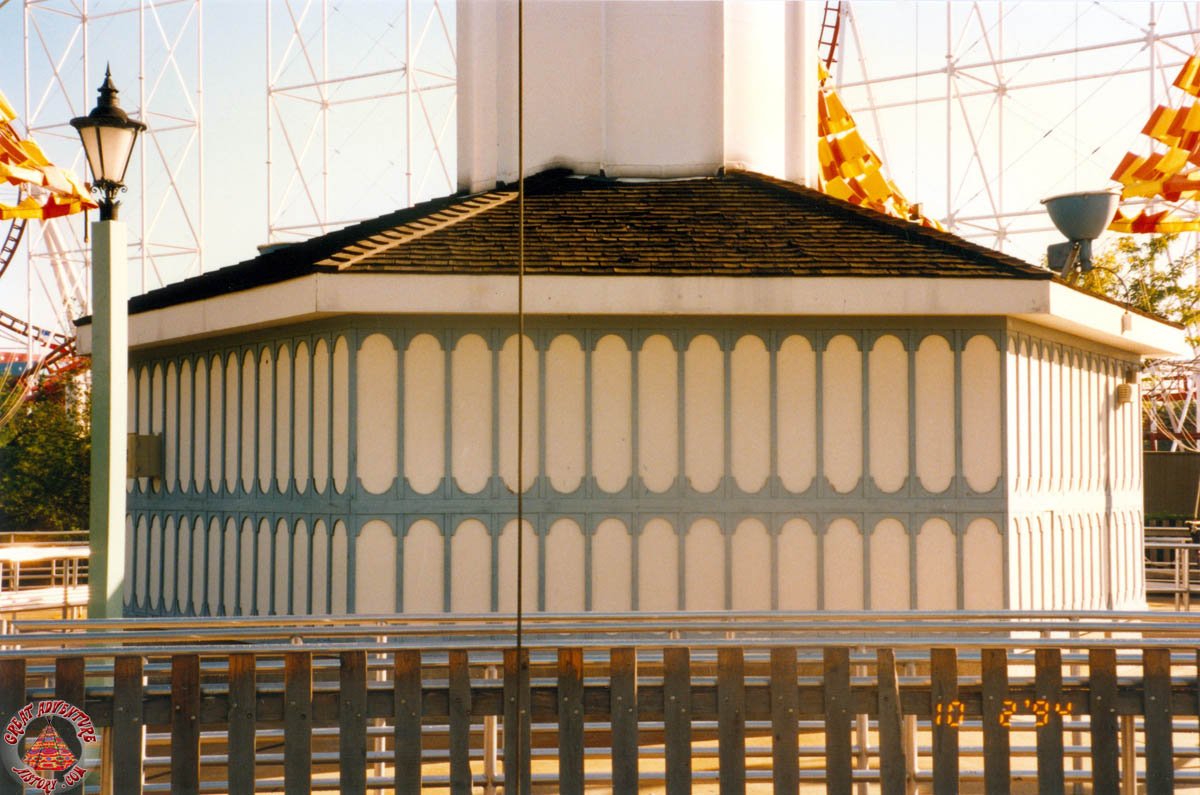
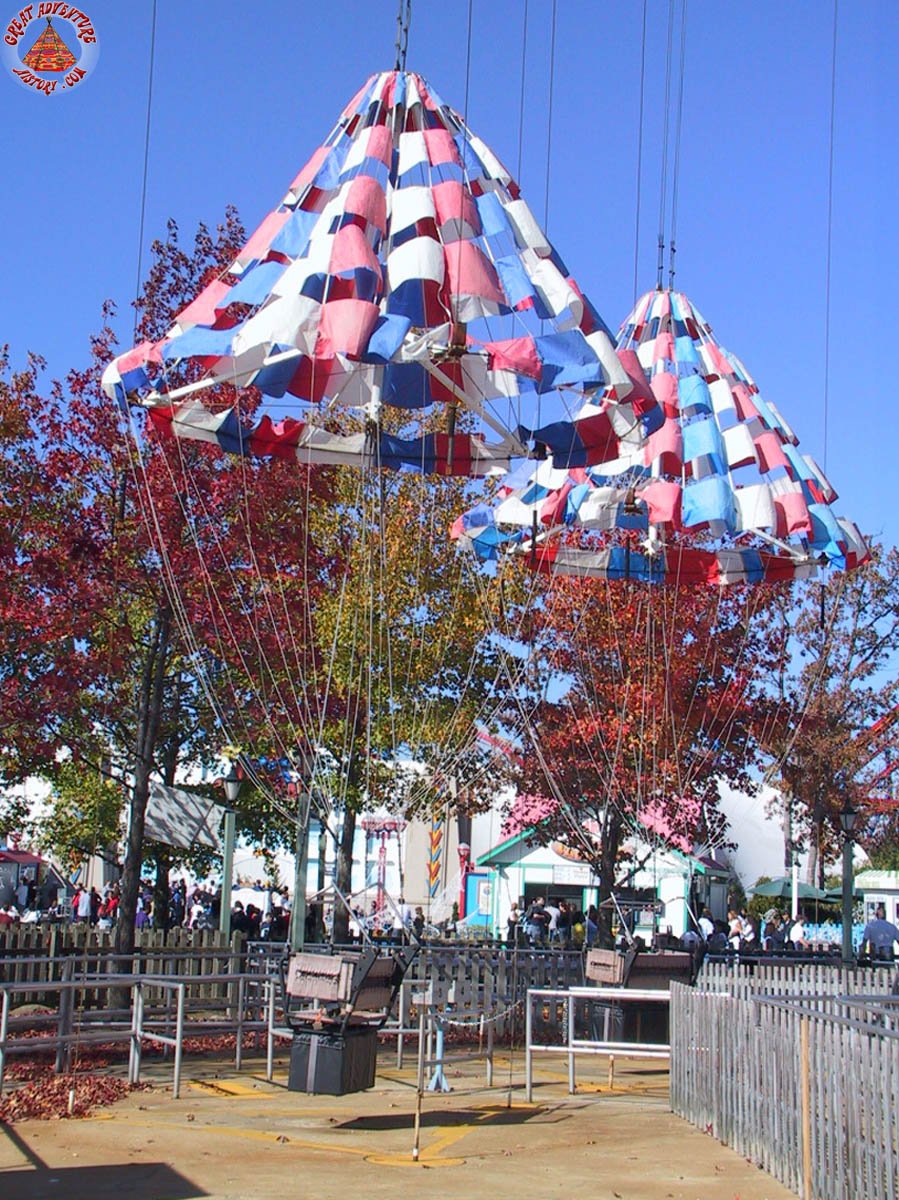
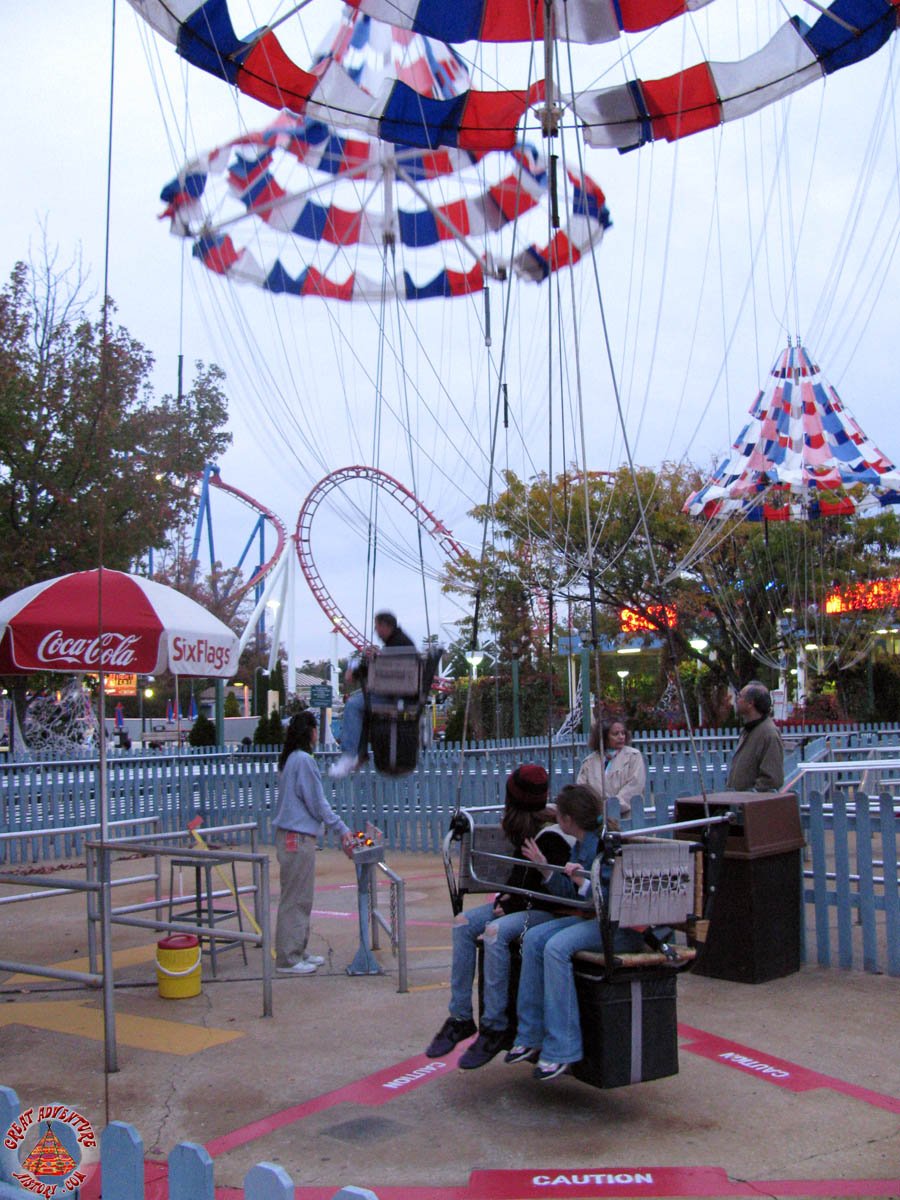
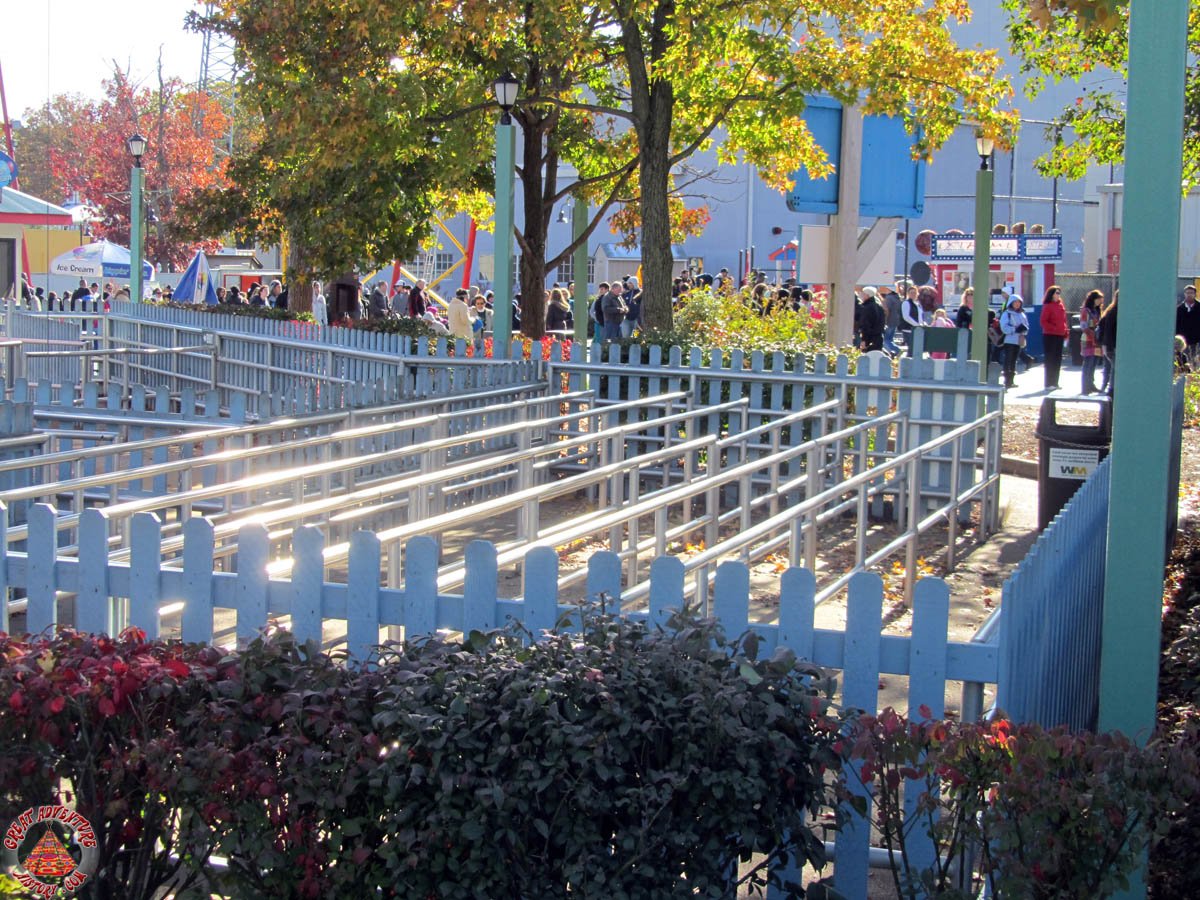
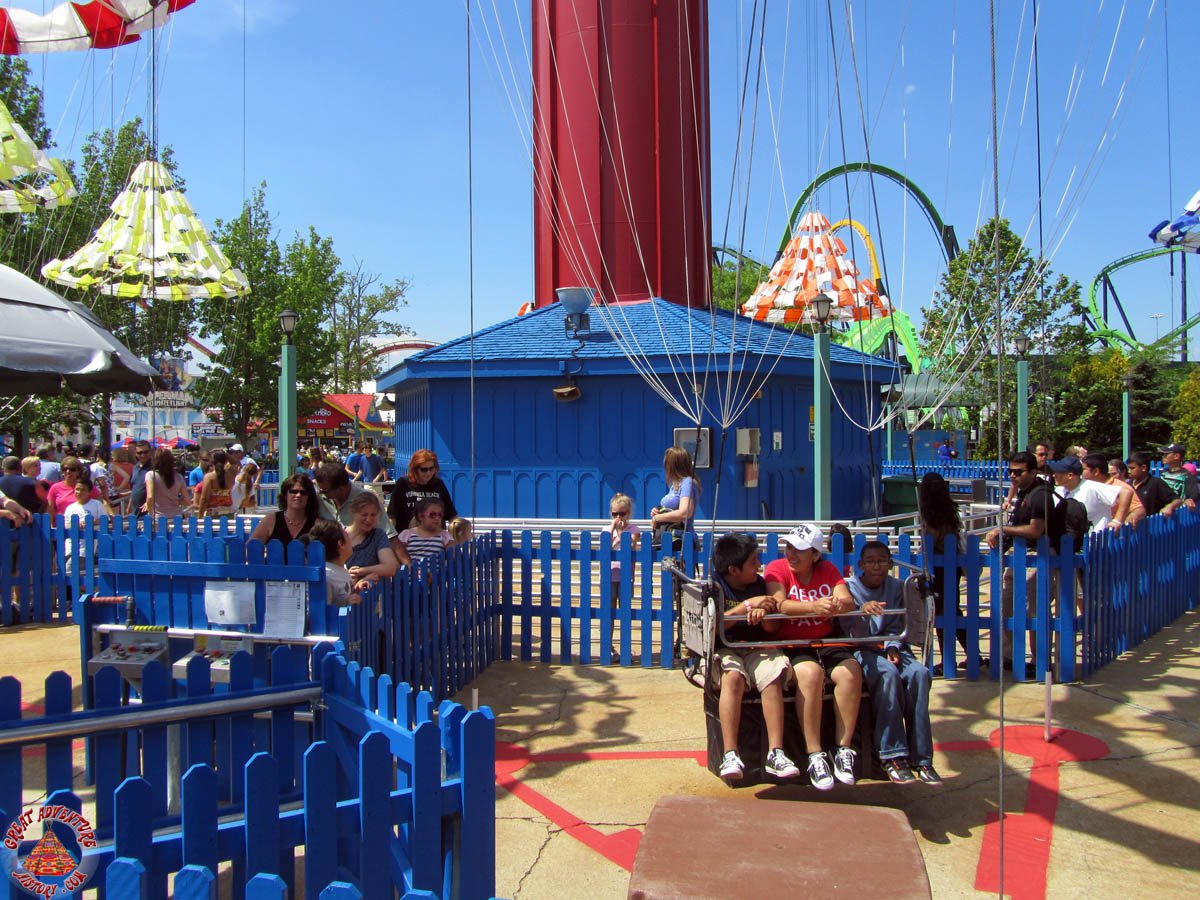
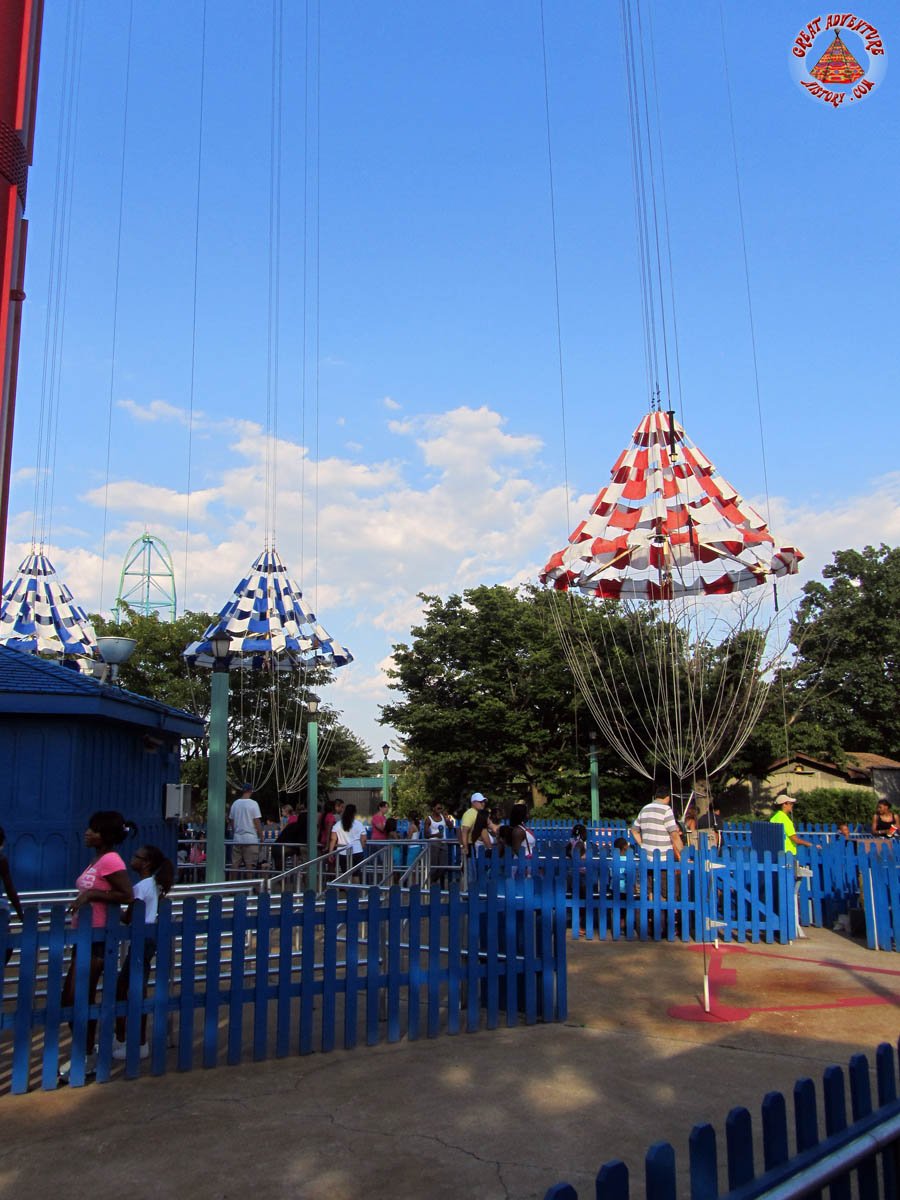
Additional safety precautions were added when wooden fencing was introduced surrounding all queue areas neighboring the parachute launch pads. In early years, the simple two rung queue bars afforded the opportunity for a waiting guest to climb through the bars when attempting to leave the line. These new fences along with gates at the parachute entry points locked visitors from stepping into the parachute's path. |
 |
 |
 |
 |
 |
 |
 |
 |
 |
 |
 |
 |
 |
 |
 |
 |
 |
 |
 |
 |
 |
 |
 |
 |
 |
 |
 |
 |
 |
 |
 |
 |
||
 |
 |
 |
 |
 |
 |
 |
 |
 |
 |
 |
 |
 |
In the fall
of 2009, the parachute ride wrapped up its season early as the tower was
prepped for a complete repainting. Baynum Painting Inc., an
industry leader in repainting amusement park rides and superstructures,
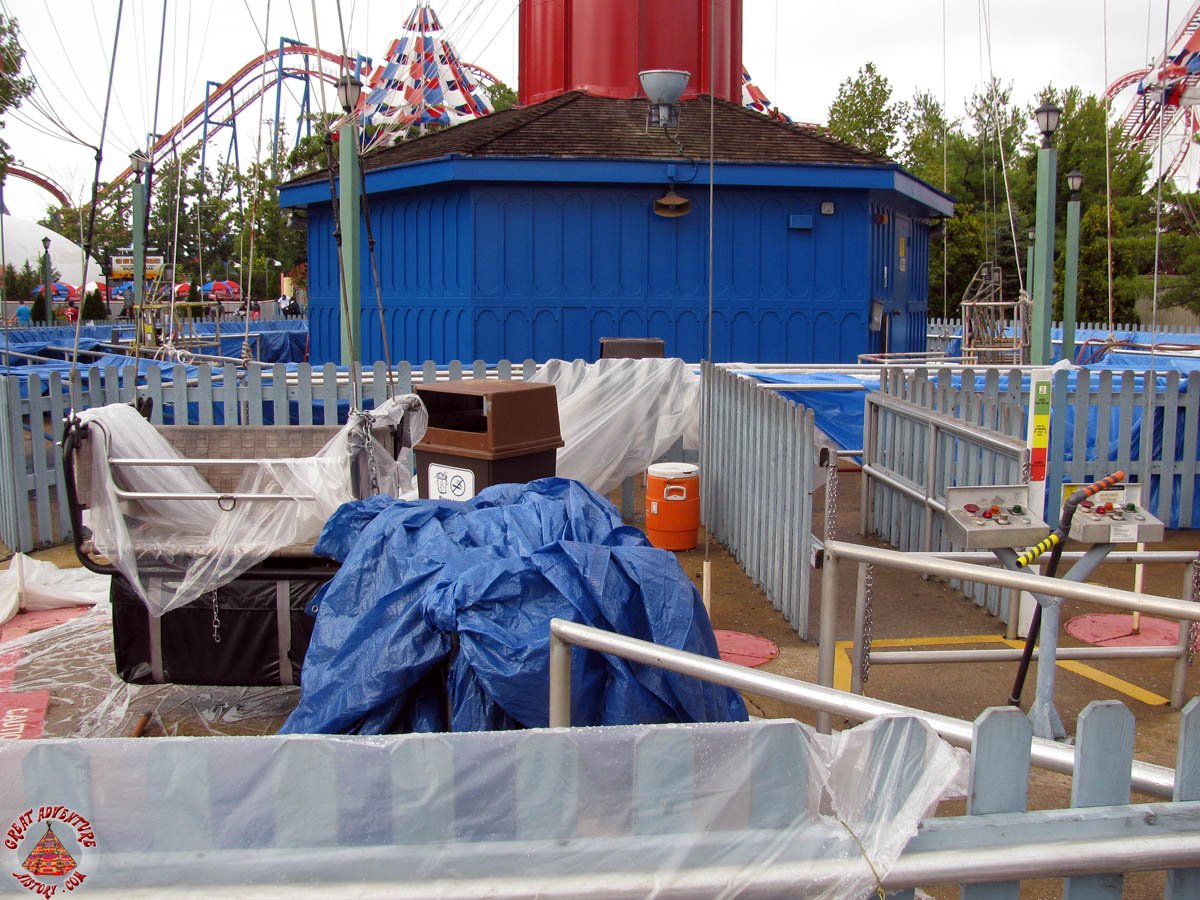
was hired by Six Flags to perform a makeover of the ride. Plastic
tarps were placed all across the base of the ride covering all the queue
bars and the parachutes and seats. Platforms were suspended from
the ride's main overhead superstructure providing accessibility from
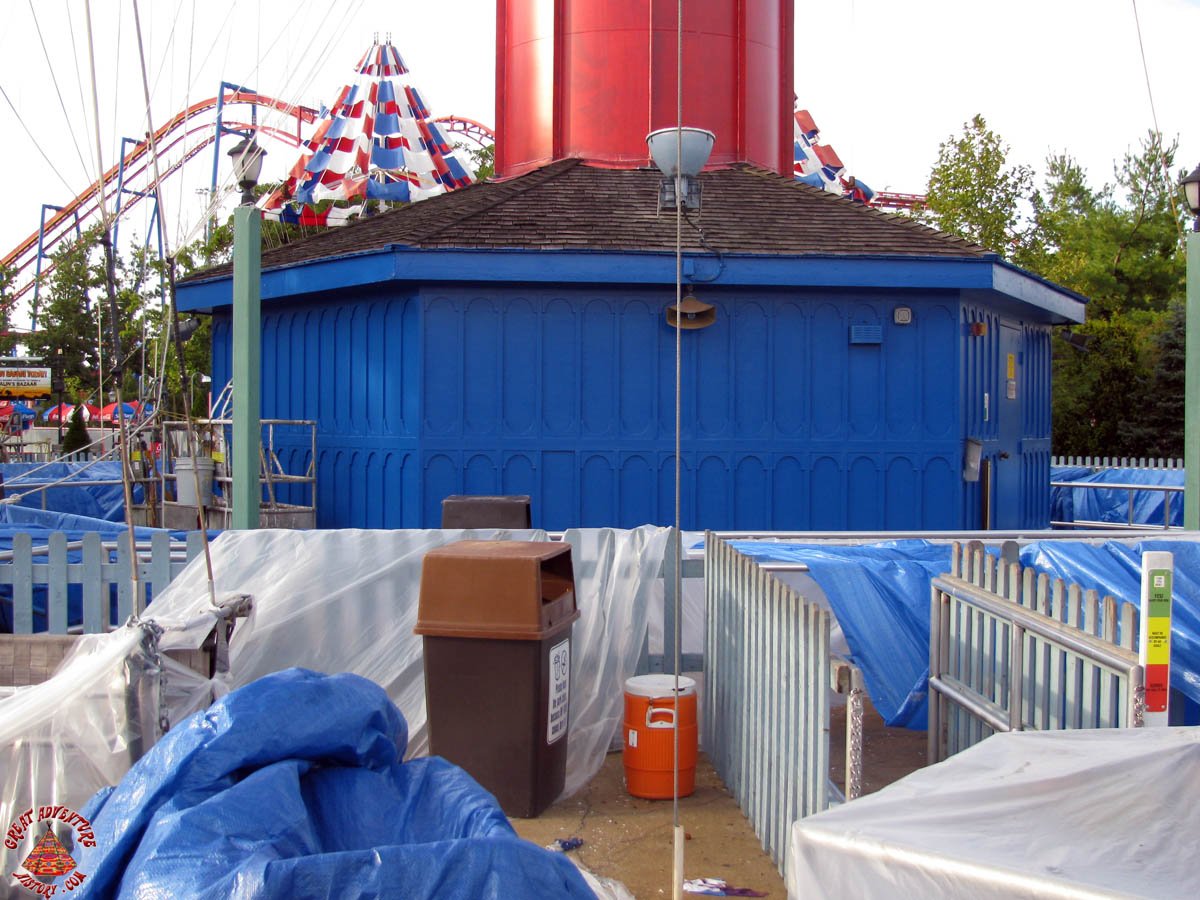
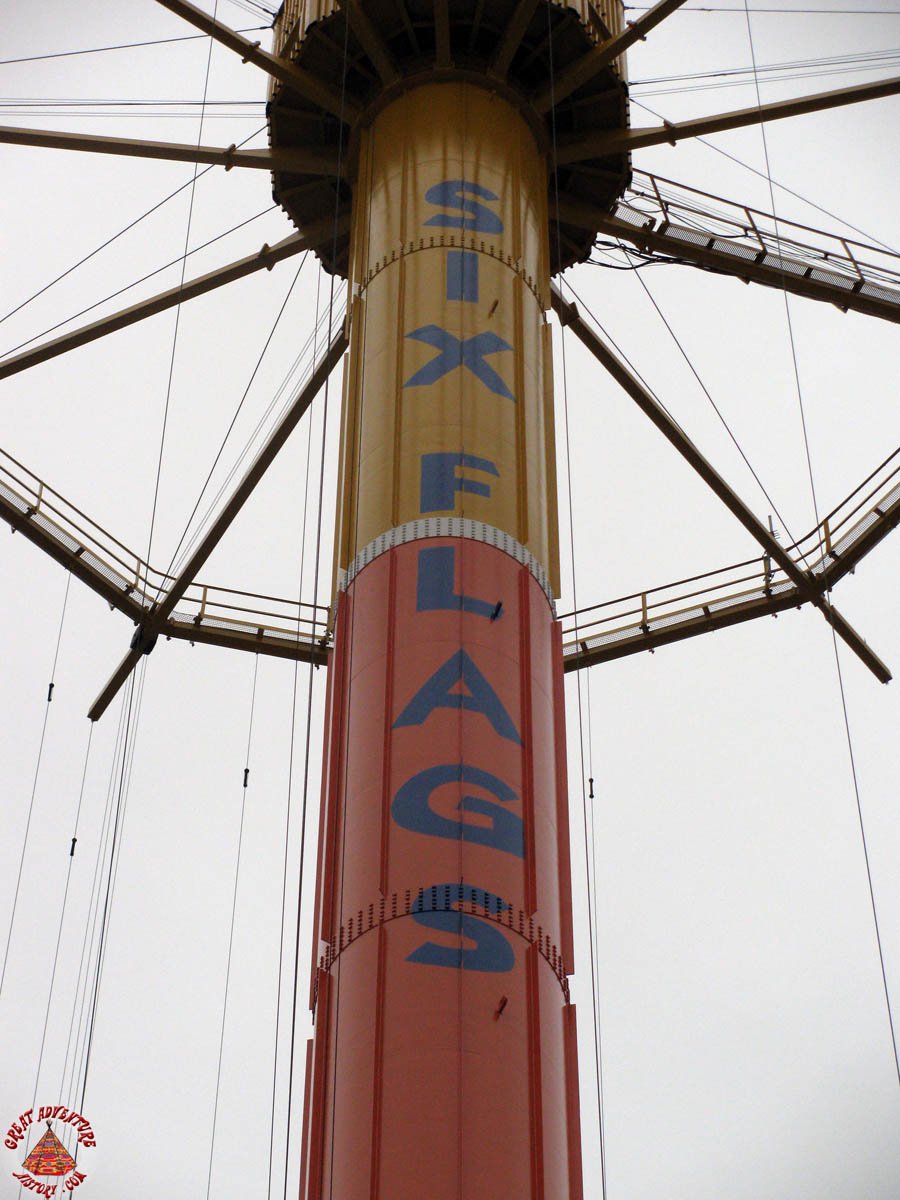
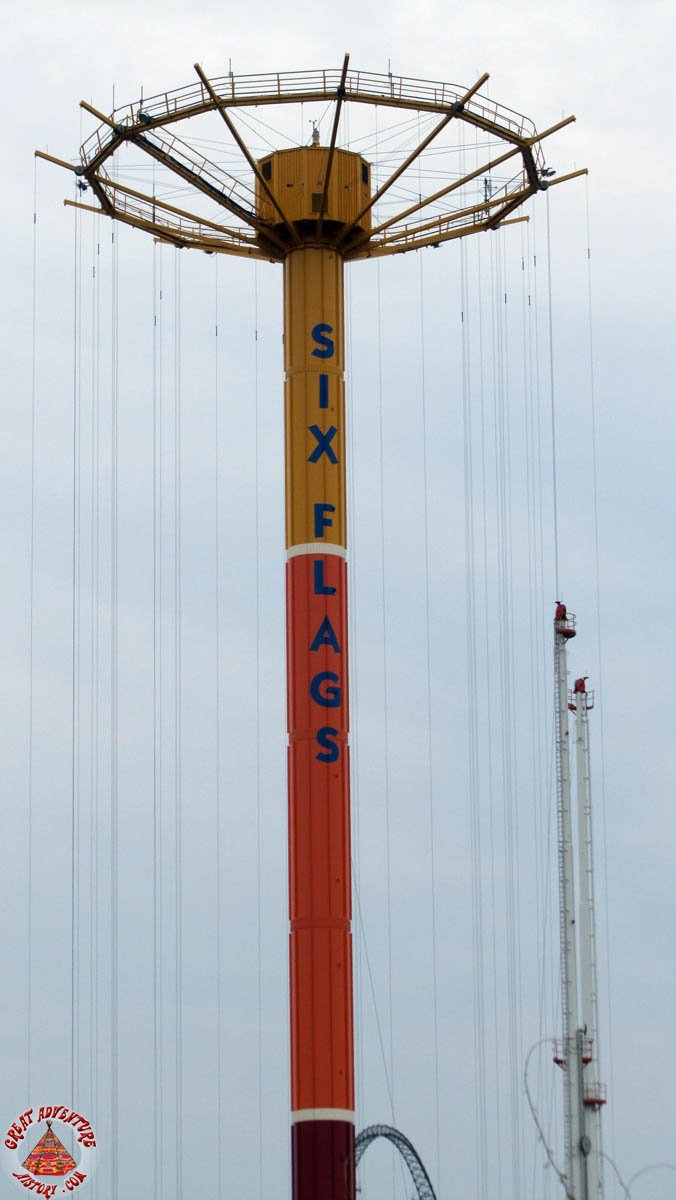
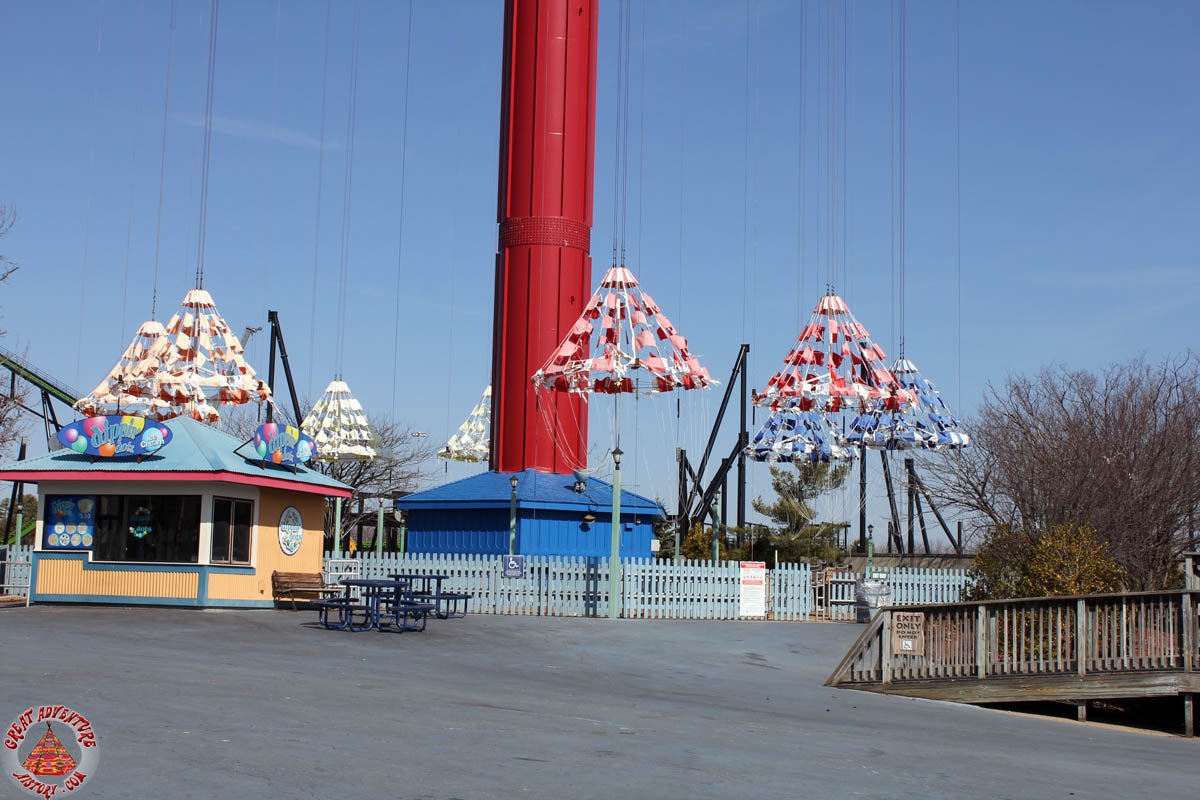
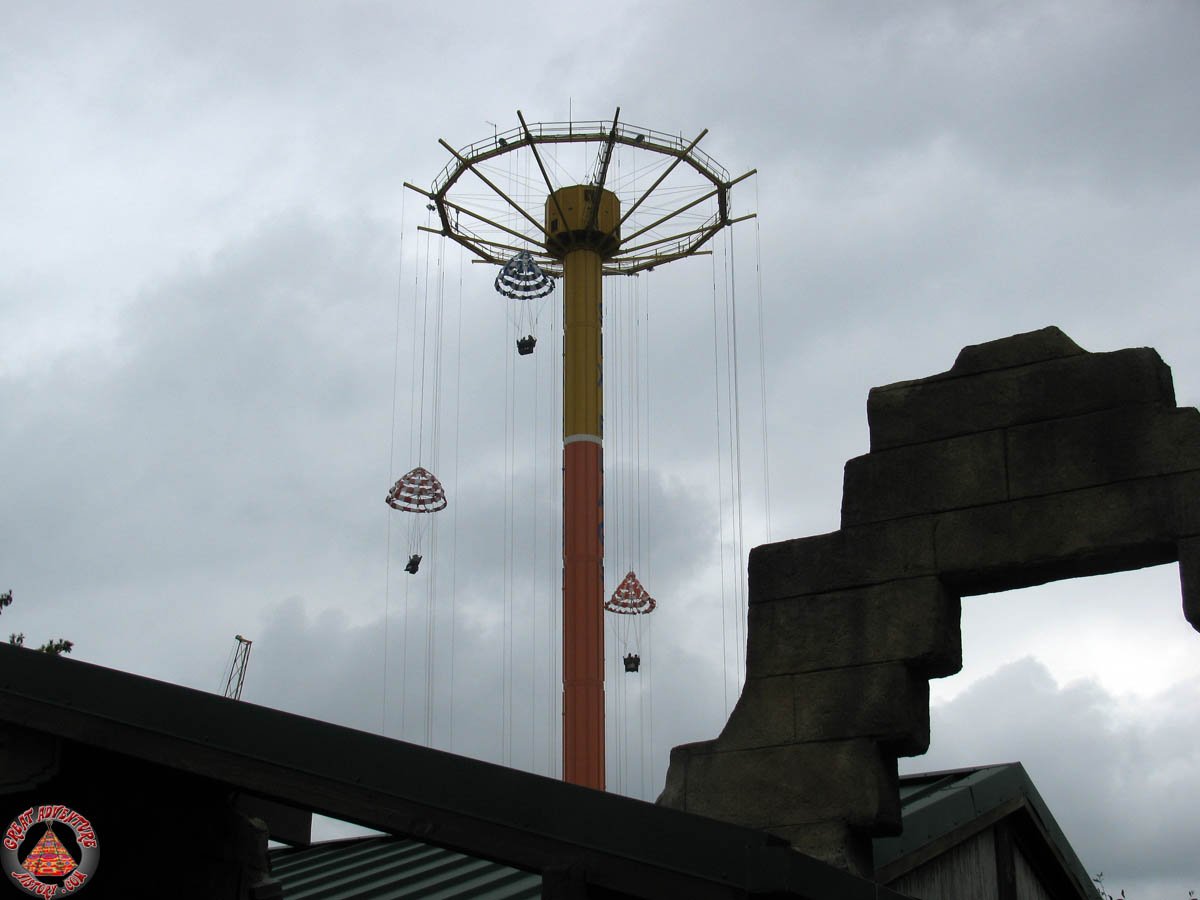
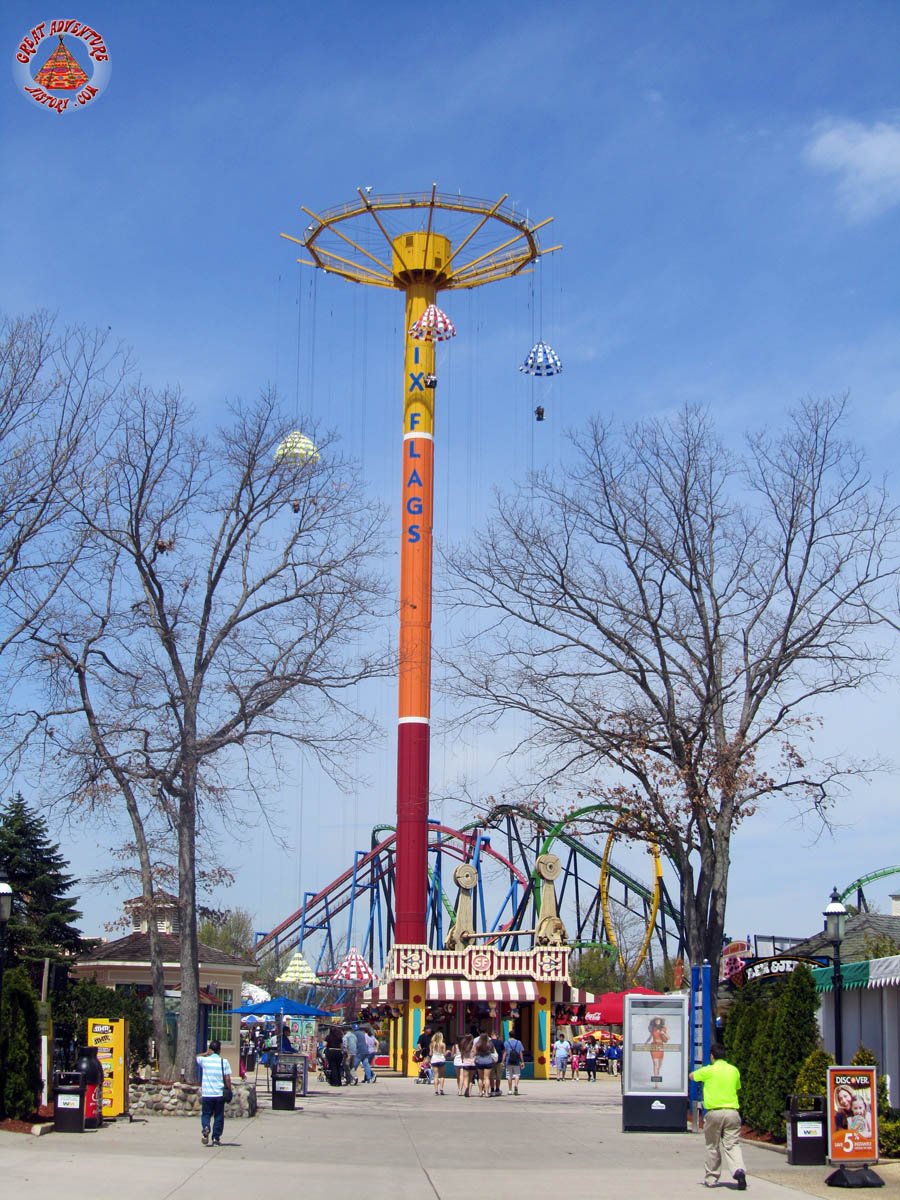
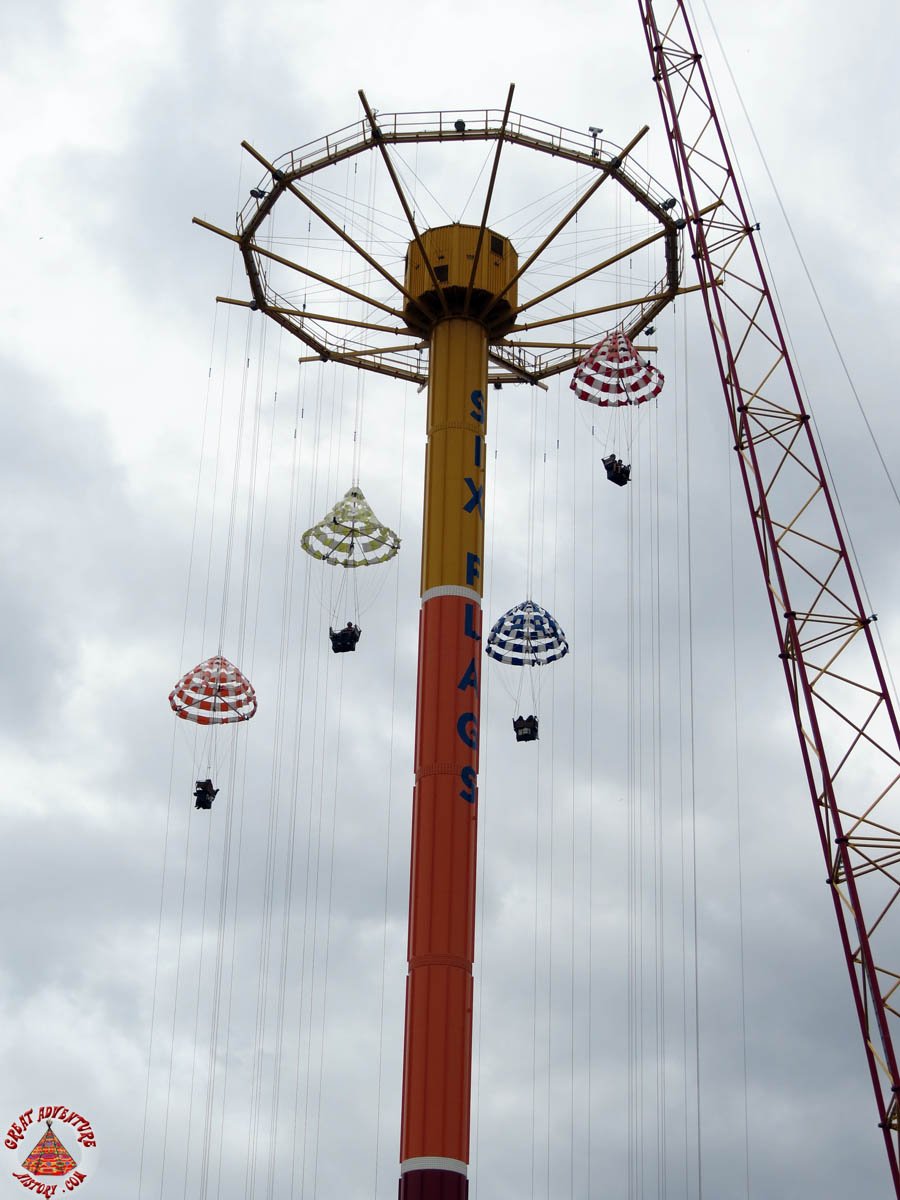
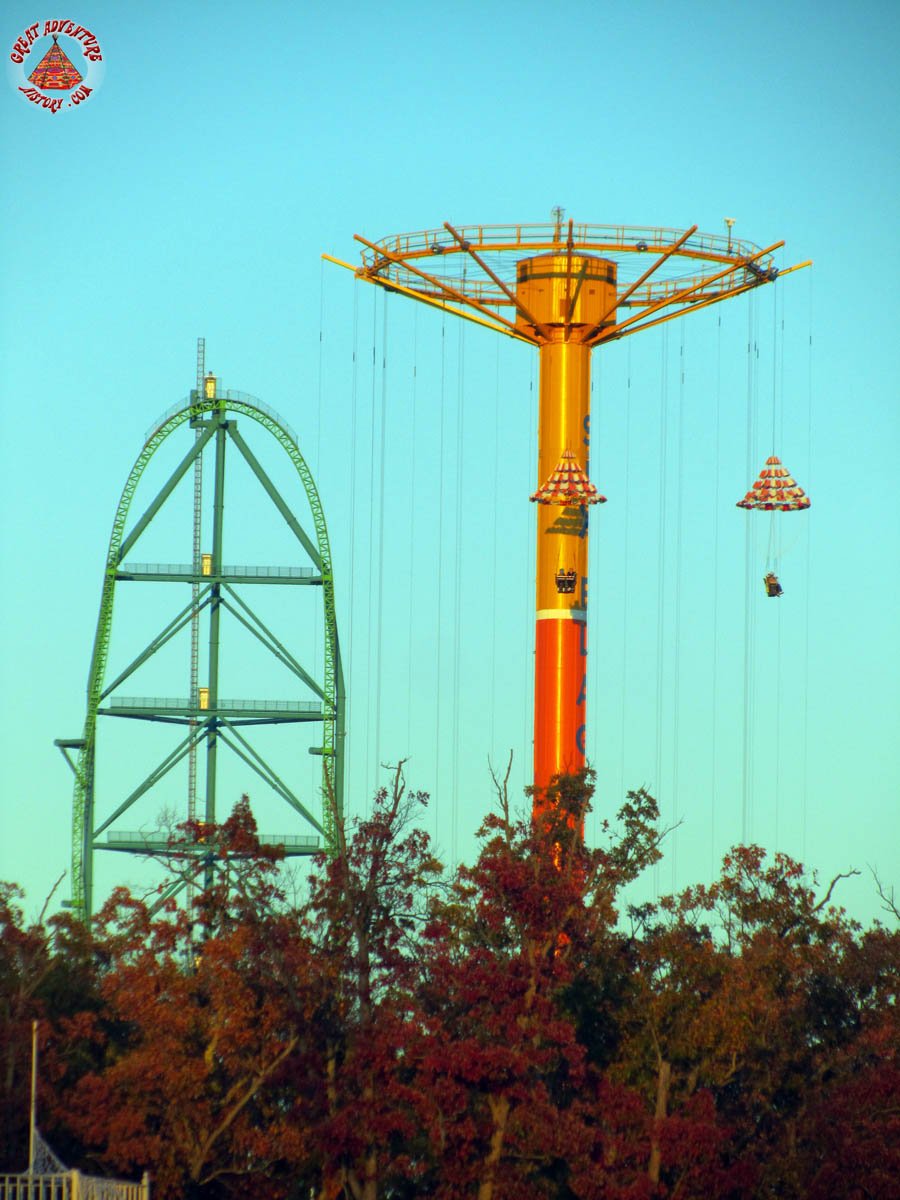
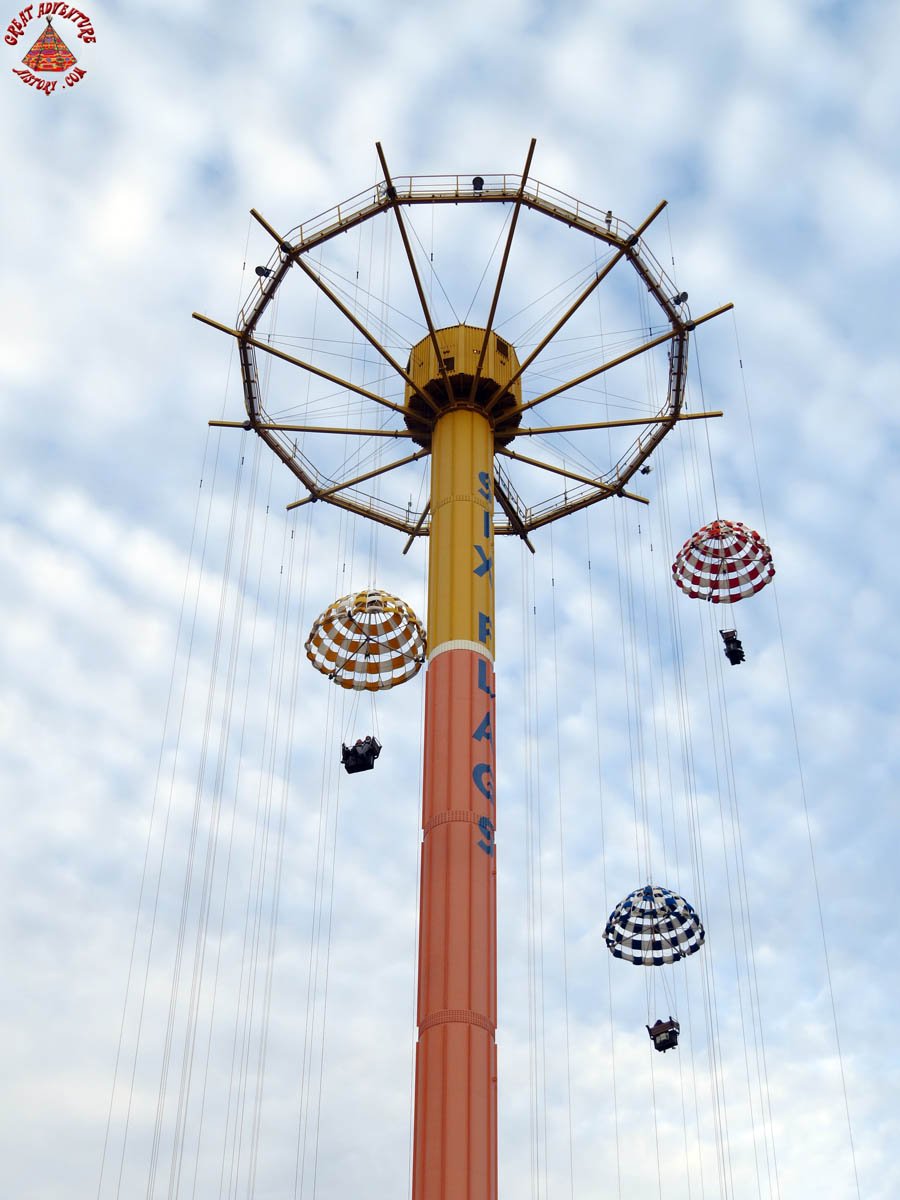
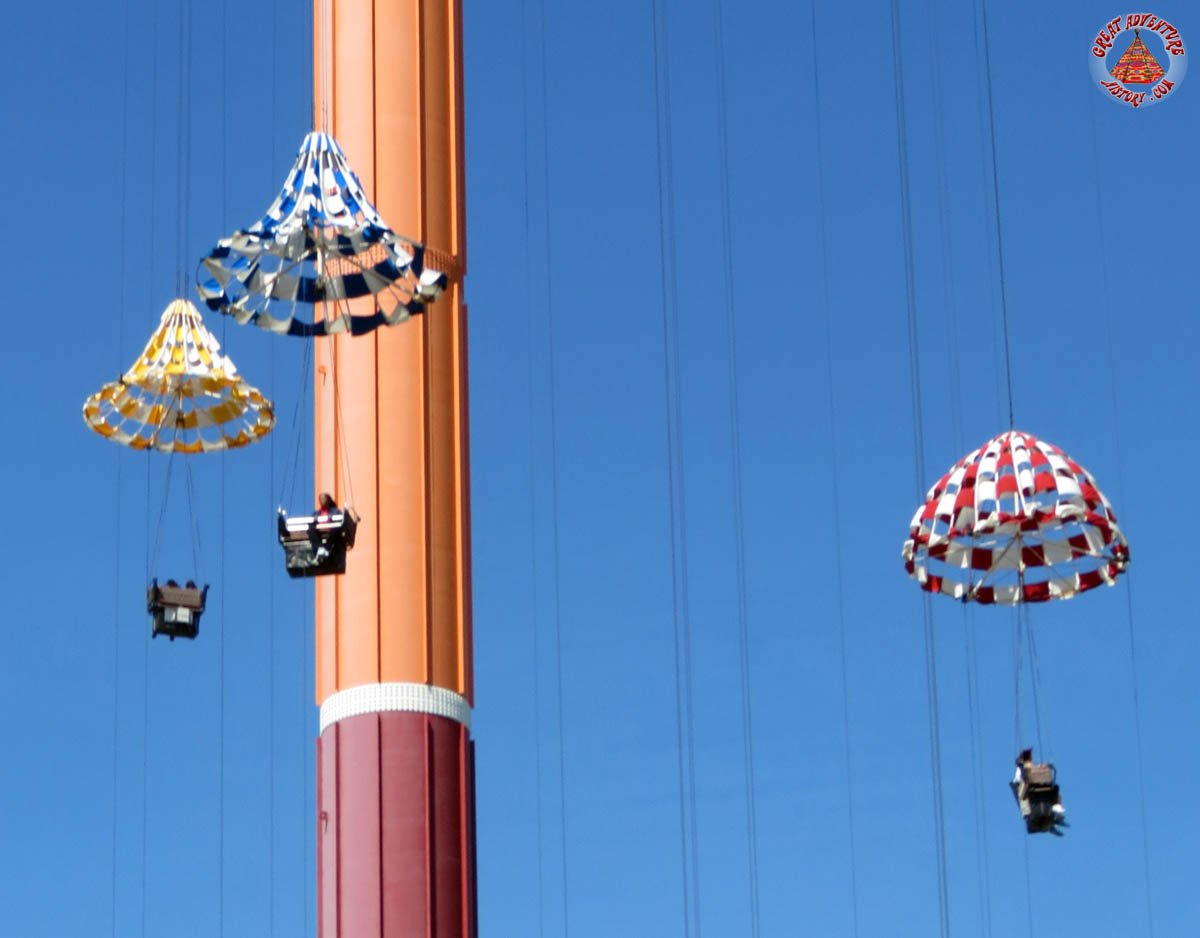
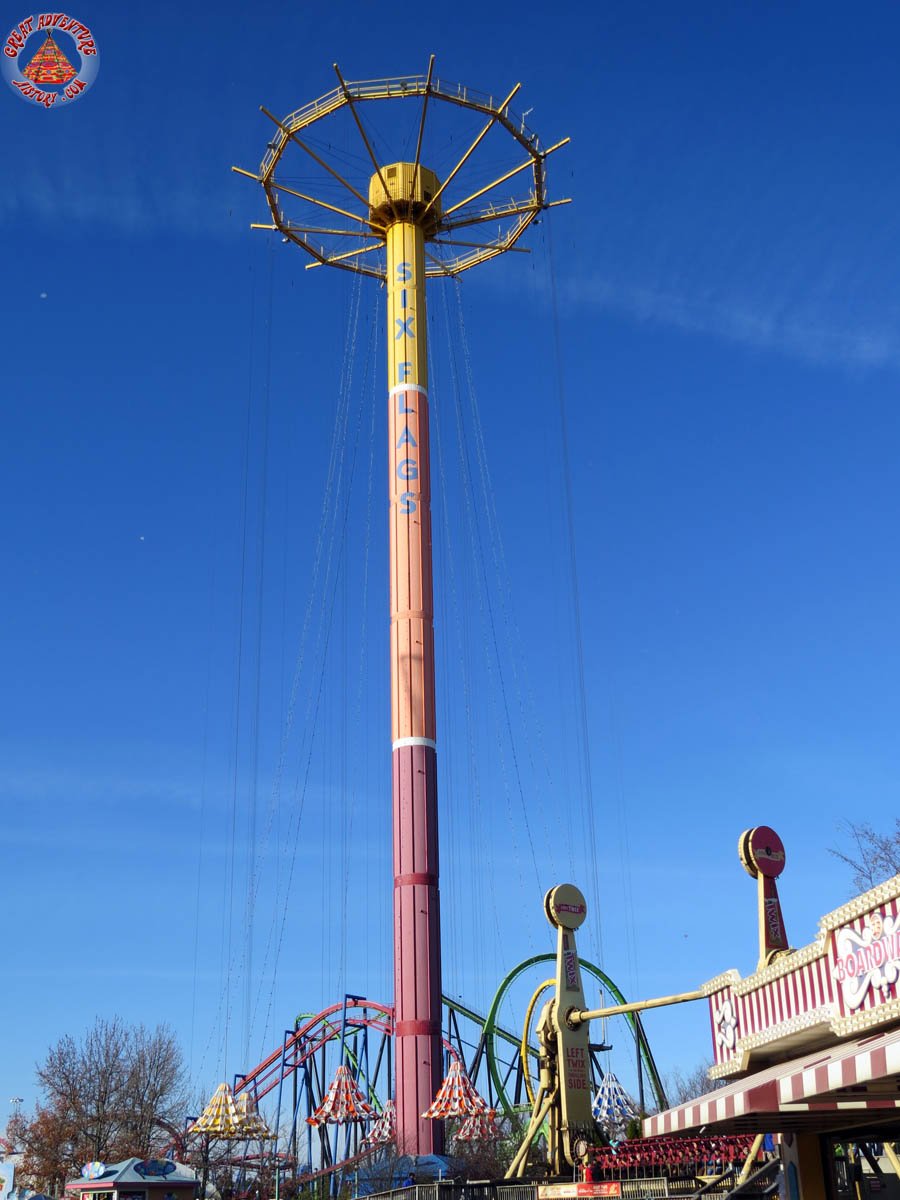
above. Instead of a predominantly white paint scheme, the tower would take on a drastically new color combination. The white and sky blue control room at the ride's base would be painted a bright blue. The tower's three lowest sections would be painted a deep maroon color, the three sections above that a true orange, topped off with gold gracing the uppermost two tower sections and the adjoining arms and catwalks. |
 |
 |
||
 |
 |
 |
 |
 |
 |
 |
 |
 |
 |
||
 |
 |
 |
 |
 |
 |
 |
 |
 |
 |
 |
 |
 |
The three different hues were separated by white
paint applied to the bolt rings holding the tower together and for the
first time, the Six Flags name was painted vertically in blue on
opposite sides of the tower - facing the parking lot and Boardwalk games
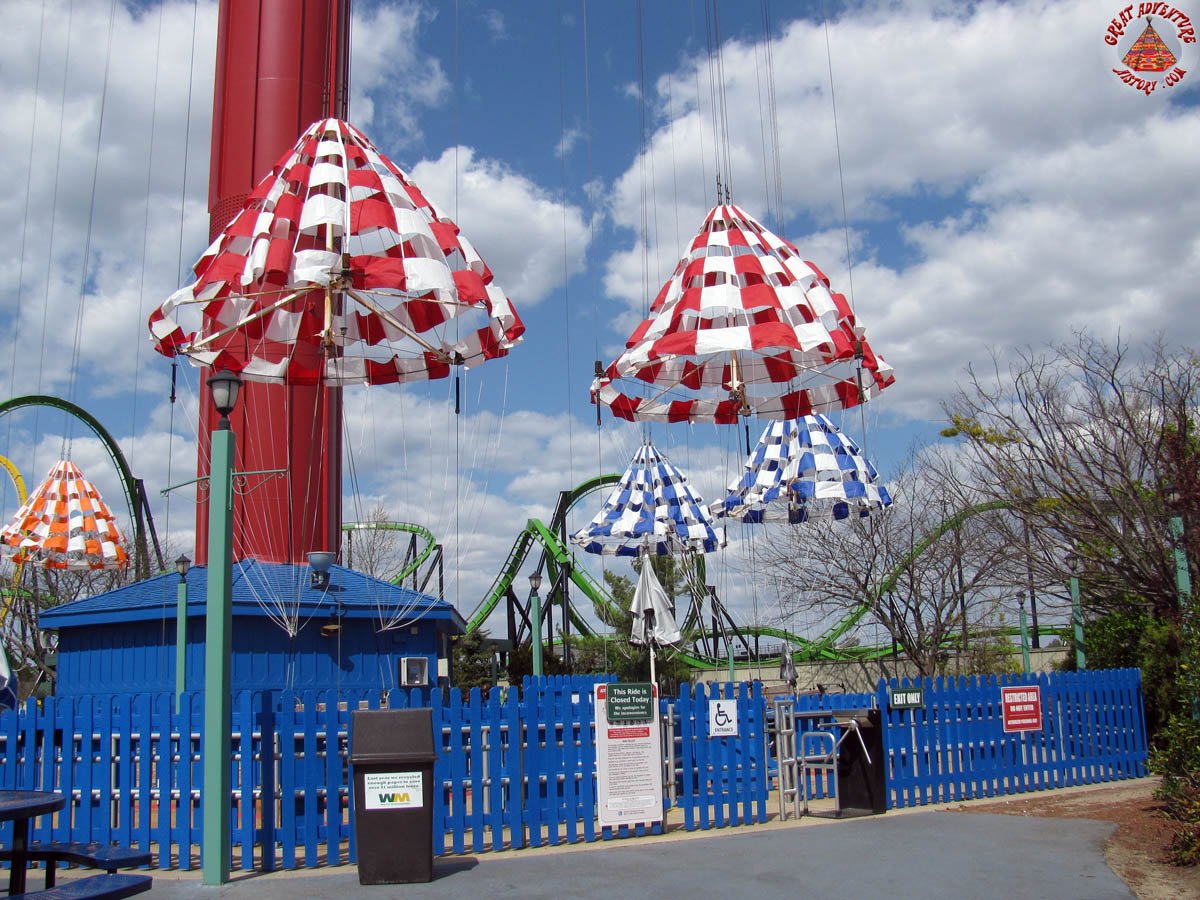
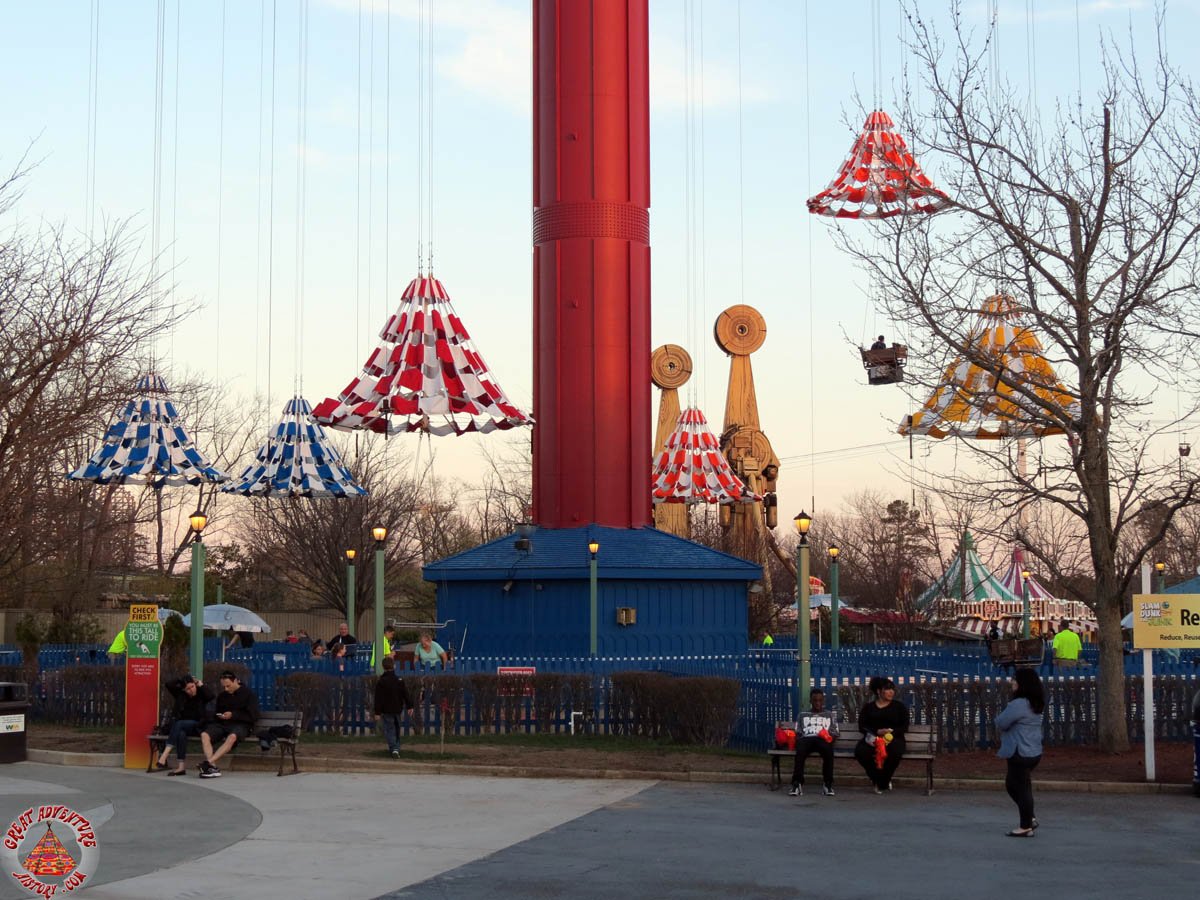
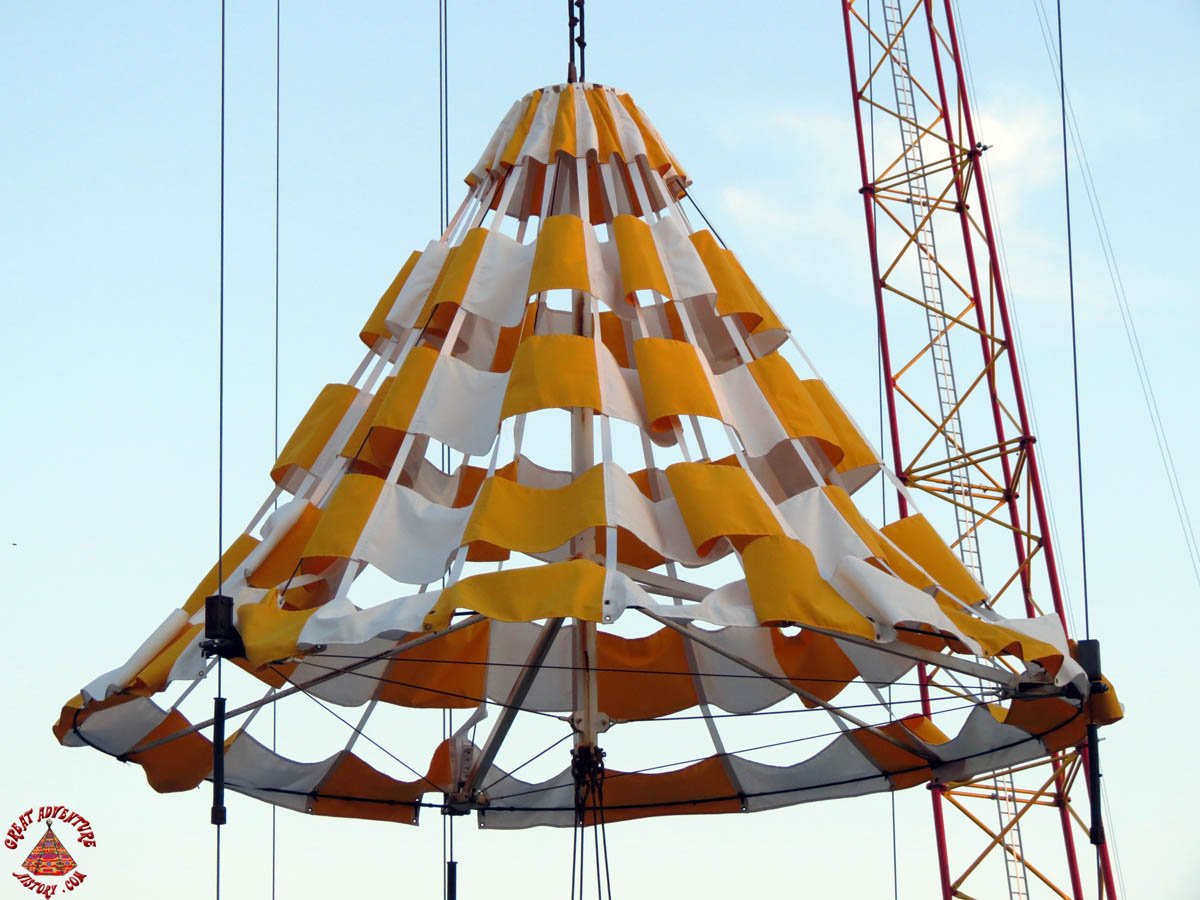
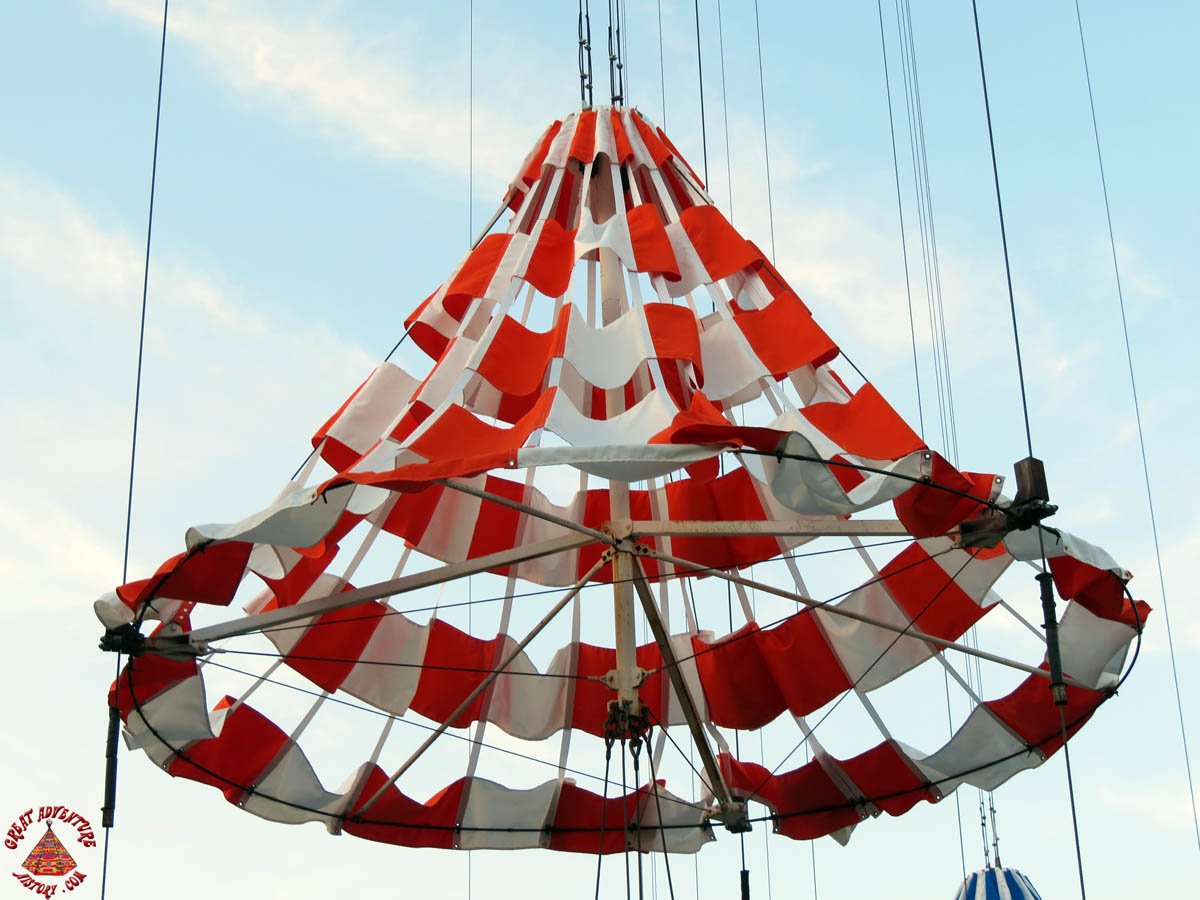
area. To further expand the ride's flashy new look, gone were the red, white, and blue parachutes first added shortly after the ride was renamed to its military theme. Replacing them were four pairs of bi-color chutes including yellow and white, blue and white, red and white, and orange and white, located clockwise from the entrance queue. |
 |
 |
 |
 |
 |
 |
 |
 |
 |
|
 |
 |
 |
 |
 |
 |
 |
 |
 |
 |
 |
 |
 |
 |
 |
 |
 |
 |
 |
 |
 |
 |
The new vibrant color scheme had a side-effect - it made the wooden fencing outlining the ride's queue look pale and weathered. In 2012, that was remedied by the fencing painted the same bright blue as the control room at the base of the tower. |
 |
 |
 |
 |
 |
 |
 |
 |
 |
 |
 |
 |
 |
 |
 |
 |
 |
 |
 |
 |
 |
 |
%20copy.jpg) |
 |
 |
 |
Overtime, the height of the ascent on the ride was reduced. When
first introduced, the parachutes would be taken all the way to the top
of the ride and come to a stop just below their corresponding support
arm were they would remain for a few seconds before sending its riders
back to Earth. In its latter years, the parachutes stopped short of the ride's top by about thirty feet. Even though it would be hard for riders to ascertain whether they are at the extreme top of the tower, it was evident to observers on the ground. |
 |
 |
 |
|
 |
 |
 |
 |
 |
 |
 |
 |
 |
 |
 |
 |
 |
 |
 |
 |
 |
 |
 |
 |
 |
 |
||
 |
 |
 |
 |
Holiday in the Park, Six Flags'
much anticipated winter festival, debuted at Great Adventure for the
first time in 2015. A major component of the event are the colorful
lights that cover the tallest trees and outline almost every building.
The parachute tower played a major role in helping spread holiday cheer
as it was transformed into one of the largest Christmas trees in the
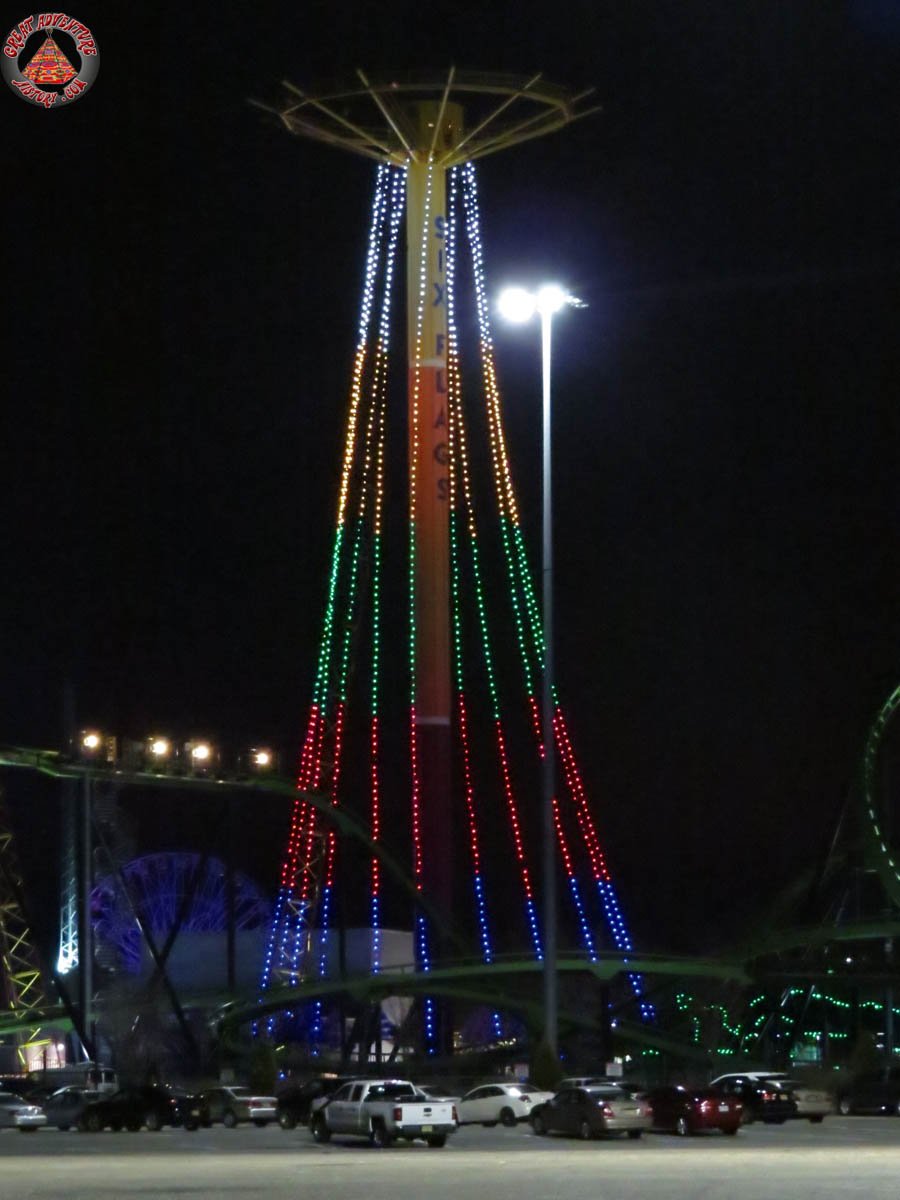
world. Rechristened Treetop Summit, the parachute ride had twelve heavy duty strings of lights, one for each support arm, attached from the central motor room at the top of the tower all the way to the outer circumference of the ride's base. Braided cables were looped around the support arms at the top and attached to huge concrete blocks brought in for the event. |
 |
 |
 |
 |
 |
 |
 |
 |
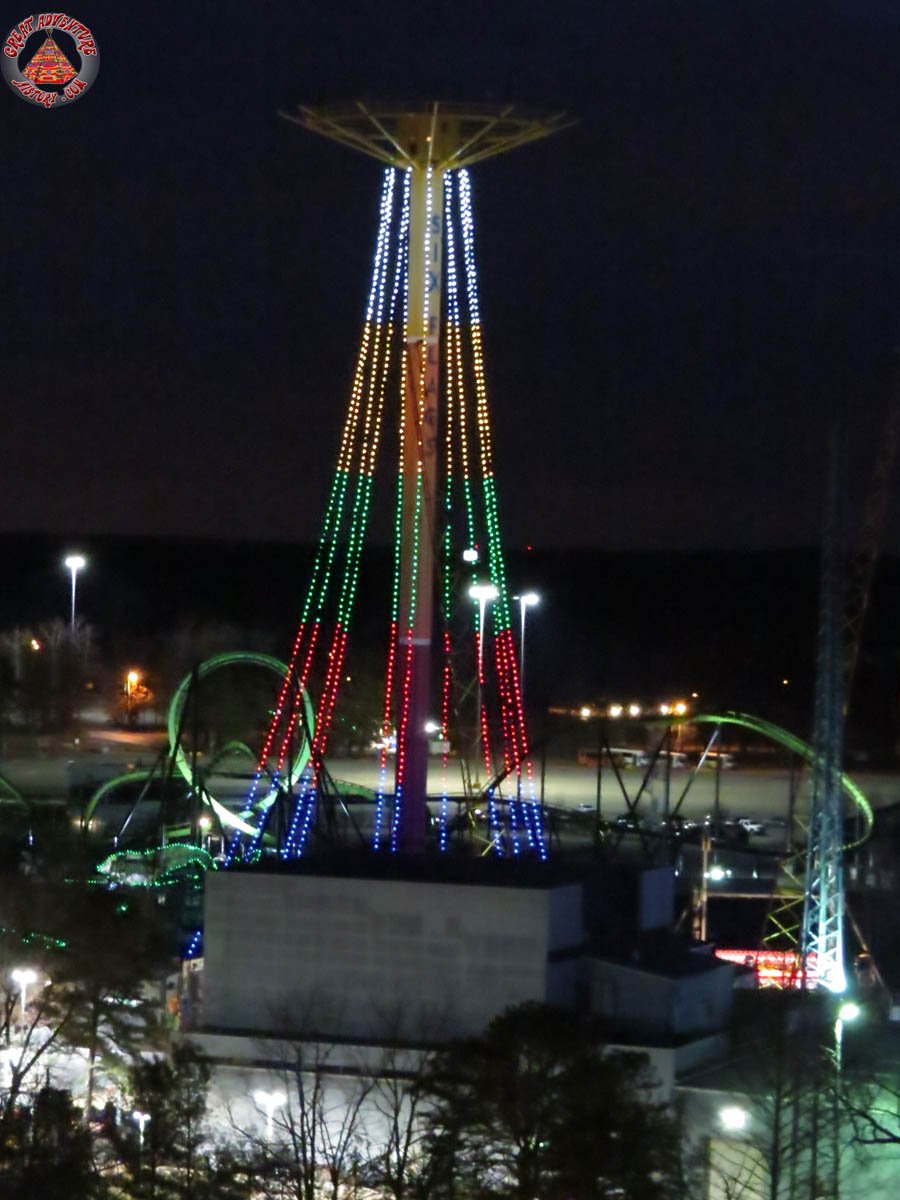
With a total of 1000 lights, each of the twelve string of lights
consisted of 125 one-watt globe bulbs, arranged by color in groups of
twenty five. The color grouping from top to bottom were white,
yellow, green, red, and blue. To enhance the glow of the huge
tree, the spotlights on the ride's tower were not illuminated for the
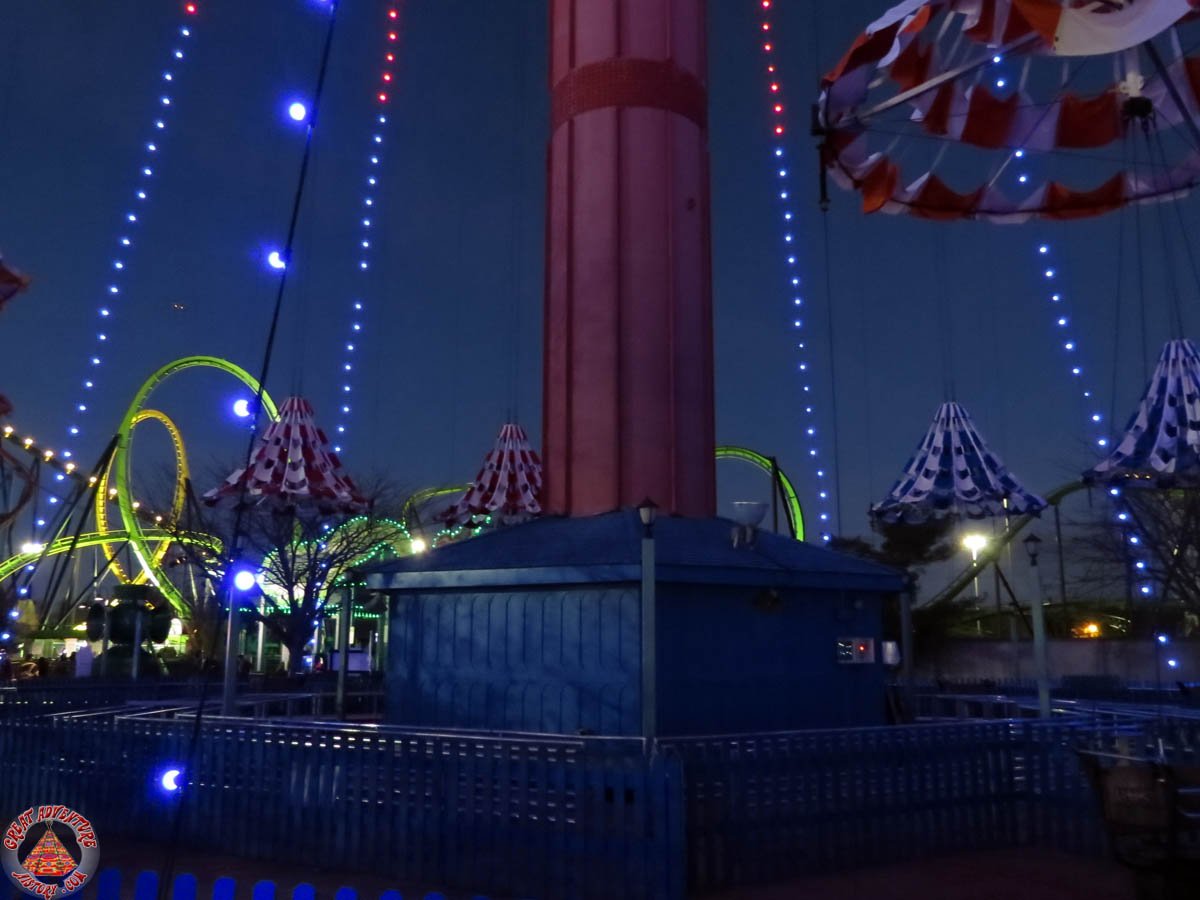
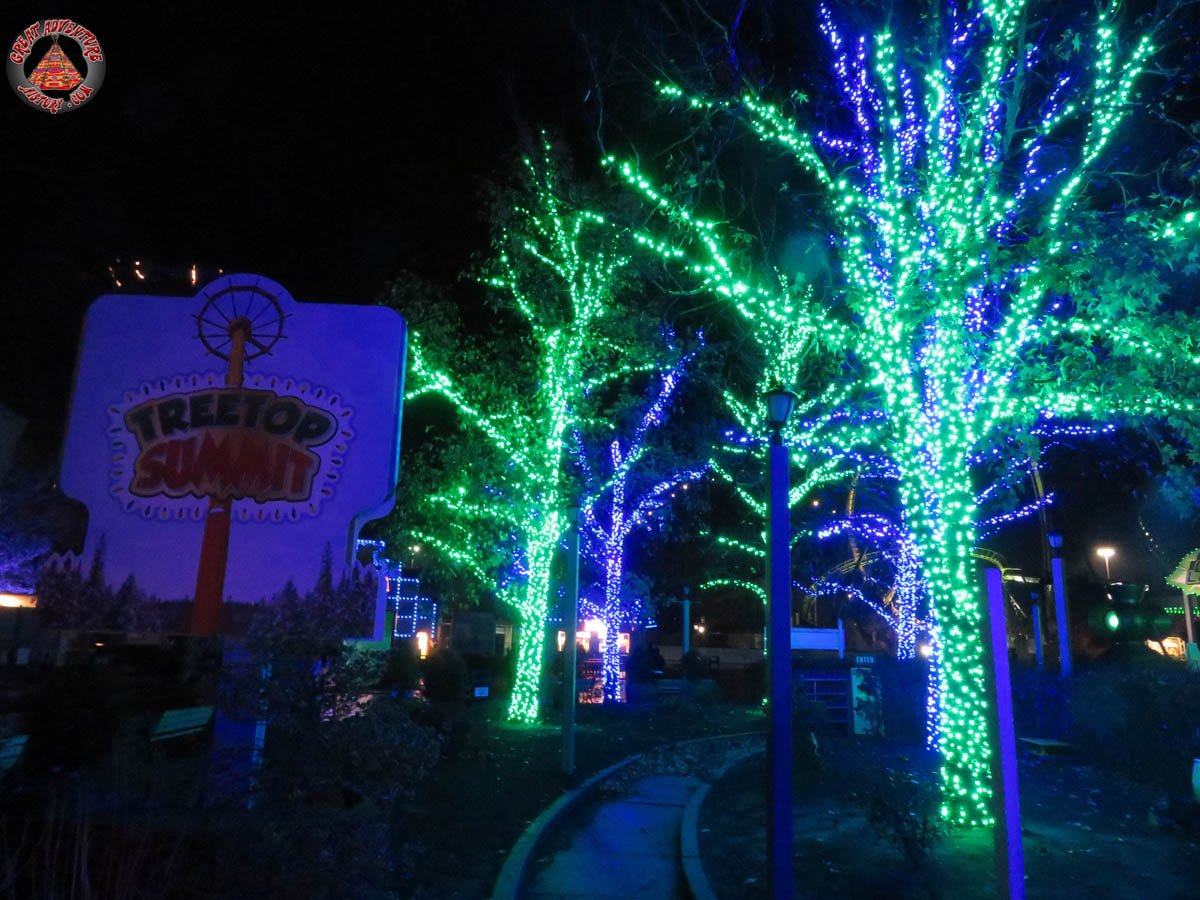
Holiday in the Park event. Standing at the base to the tower and looking towards the top the ride was an impressive sight especially when the strands of bulbs gently shifted in the breeze. All those lights gave off enough of a glow to illuminate a dual-sided sign featuring a drawing of the parachute tower and a festive Treetop Summit logo which temporarily covered the ride's entrance marker. |
 |
 |
 |
 |
 |
 |
 |
 |
 |
 |
 |
 |
 |
 |
 |
 |
 |
 |
 |
 |
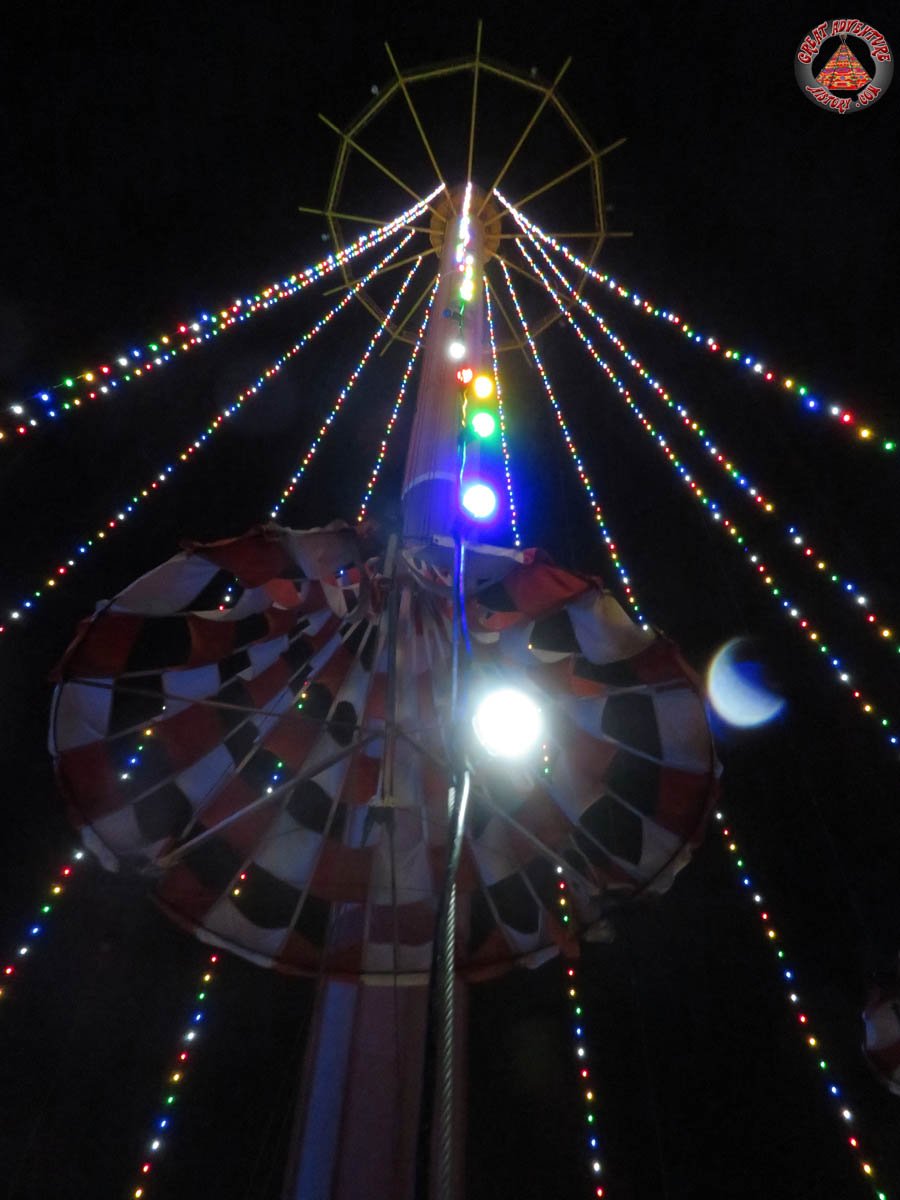
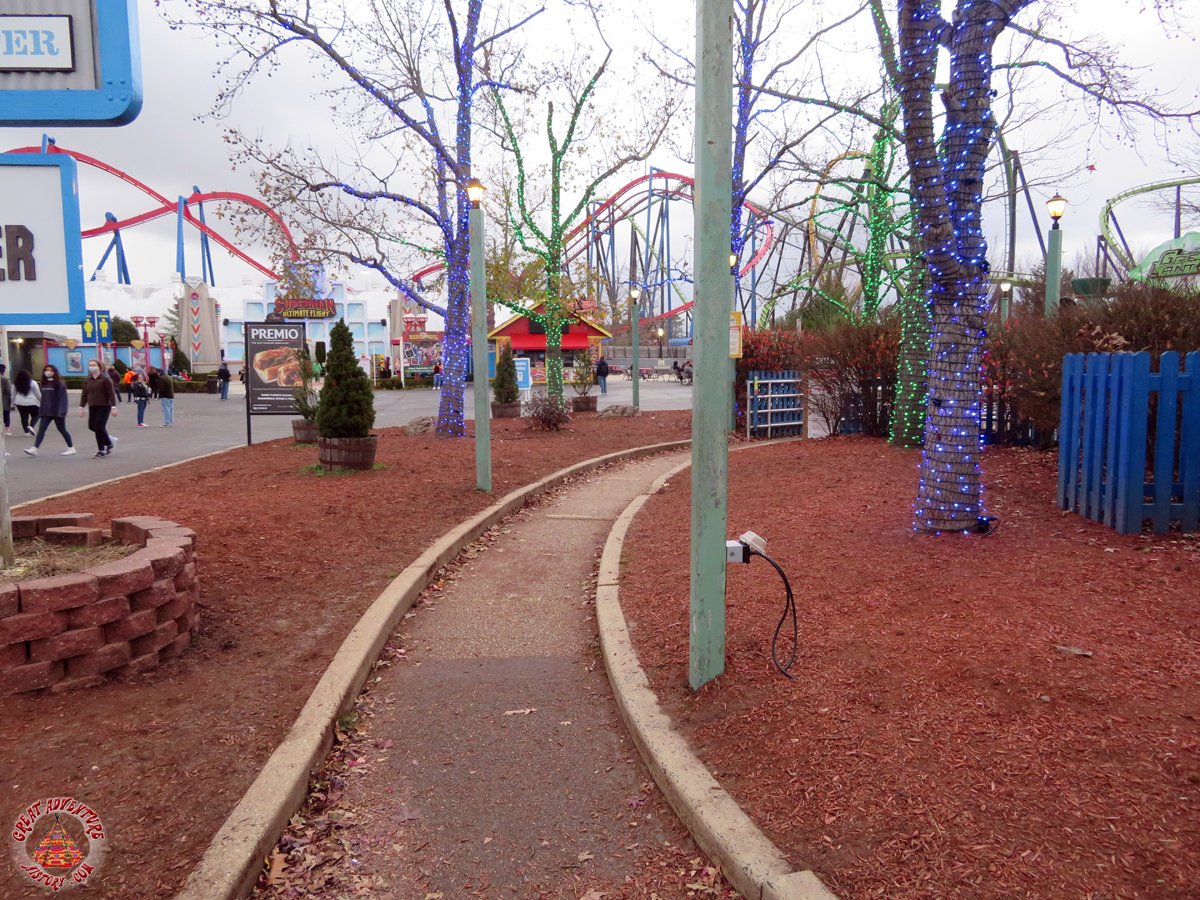
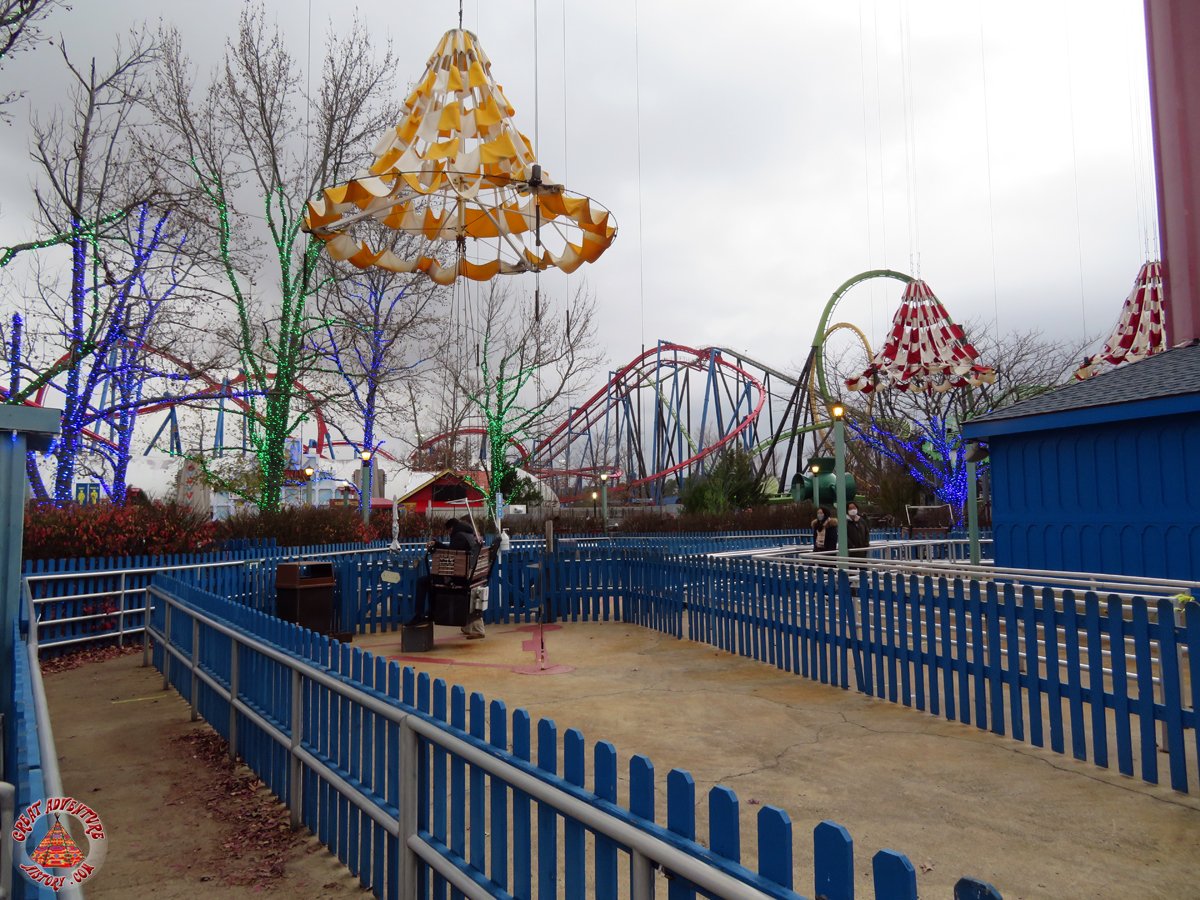
For Holiday in the Park's second and third seasons in 2016 and 2017, the
Treetop Summit light display returned but with a different look.
Instead of grouping the five bulb color on each strand, they were
alternated for the entire length featuring repeated patterns of blue,
green, yellow, red, and white. The new arrangement seemed to make the
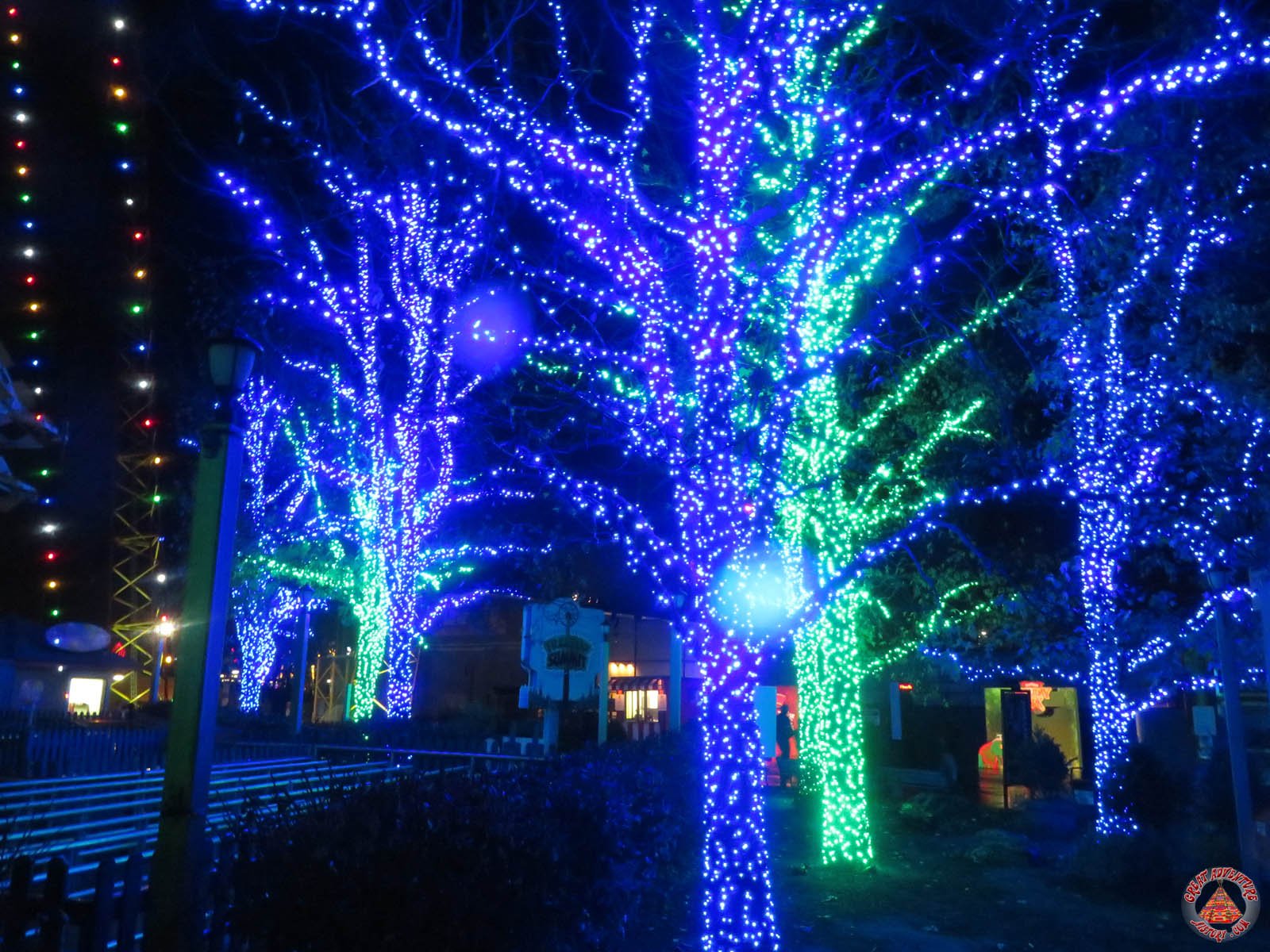
tower even taller than when the colors were grouped. In addition, miniature lights were added to the trees located between the parachute tower and the Green Lantern ride. Wrapped in bright green and blue LEDs, these tree lights added even more color and glow to the tower. |
 |
 |
 |
 |
 |
 |
 |
 |
 |
 |
 |
After the initial three year run of Holiday in the Park, Treetop Summit was discontinued and the parachute ride remained open during the winter event for the first time in 2018. Not only could riders experience parachuting in December but also take in all the wonderful lights of Holiday in the Park from an exceptional vantage point. |
 |
 |
 |
 |
 |
||
 |
 |
 |
 |
 |
 |
 |
Ever since gracing
Great Adventure's skyline when it was added in 1983, Parachuter's Perch
has been a park favorite for so many visitors. Its perfect
combination of unmatched views, and just enough of a thrill to put some
butterflies in your stomach, made the parachutes both unique and
enjoyable. While no longer the world's tallest ride, or even Great Adventure's for that matter, the parachutes having nothing to prove. You can tell its lofty heights will make it fun, and when seeing the less than substantial seats, you know it will be thrilling. Parachute's Perch offered the average person an opportunity to experience something that many would love to do, but most likely would not - parachuting. Not only could you do it, but by simply getting back in line, you could do it as much as you wanted to. Today, Parachuter's Perch (or Parachute Training Center: Edwards AFB) is the last major operating parachute drop ride in the United States and the tallest operating in the world. It has been an integral part of a visit to the park for generations and a solid component of the park's ride lineup in Great Adventure's history. |
 |
 |
 |
|
 |
||
 |
 |
 |
 |
||
 |
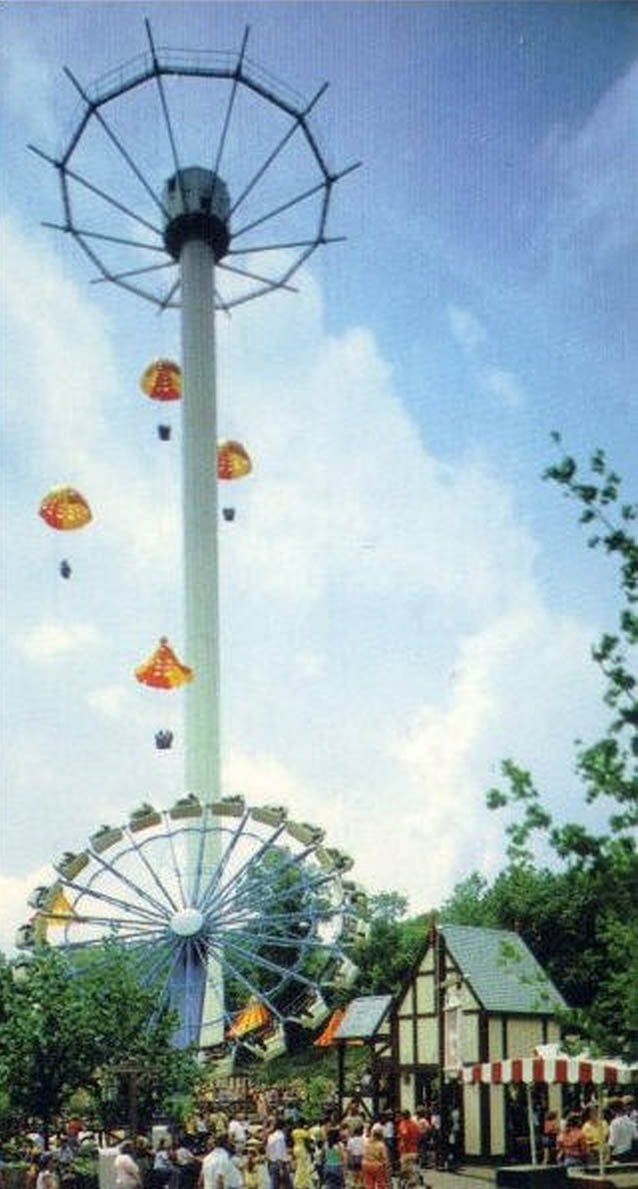
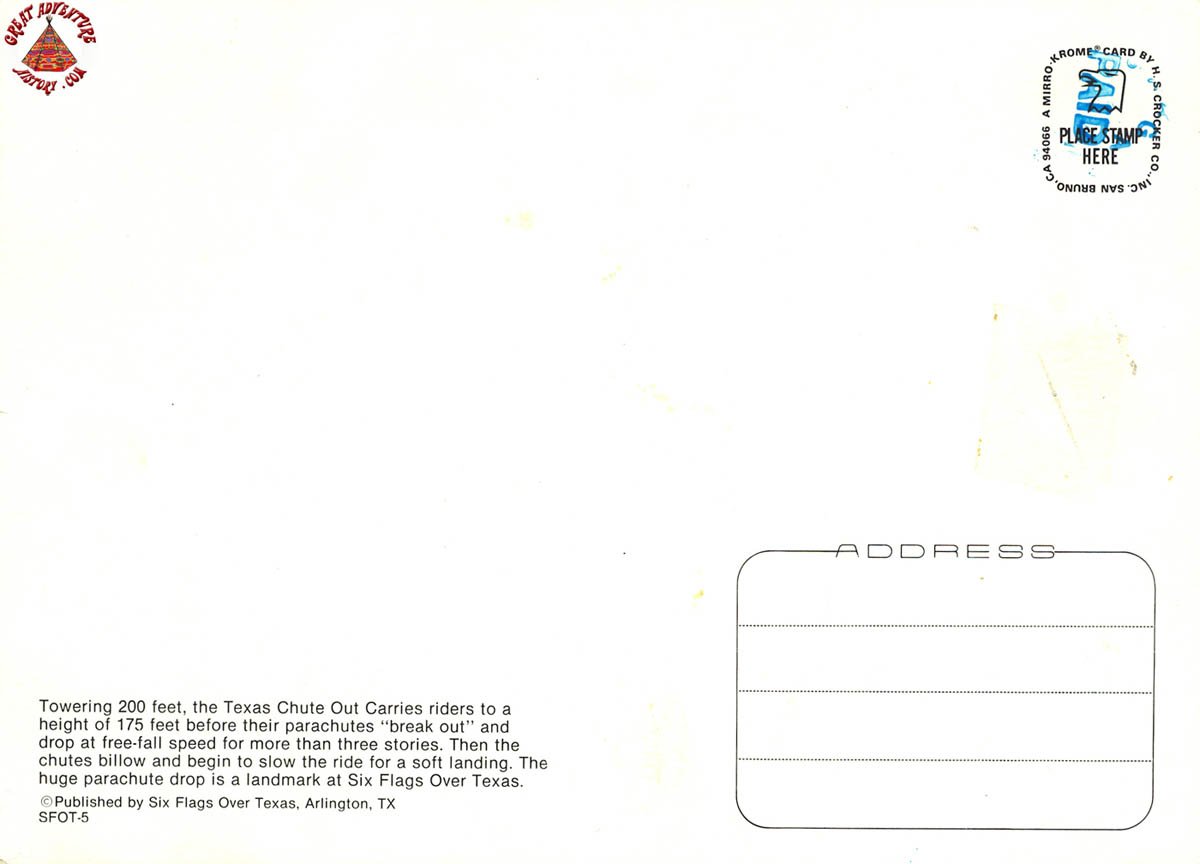
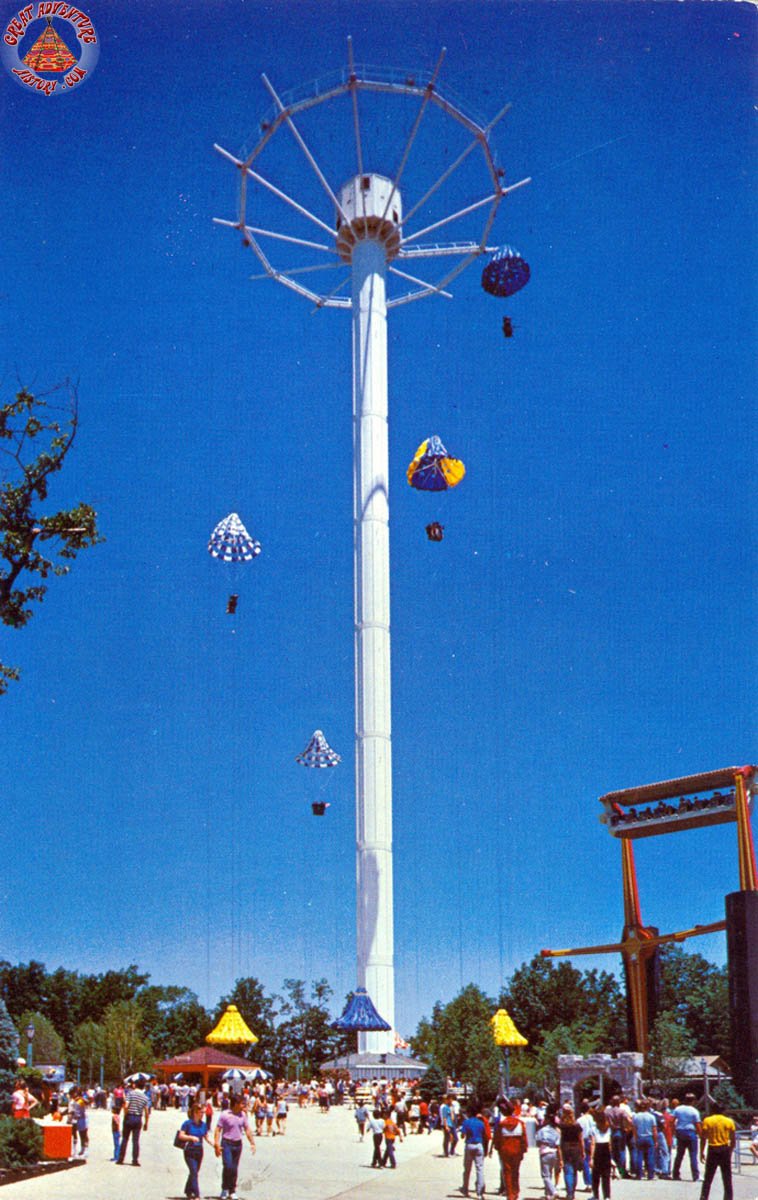
Despite the ride not being complete for the 1983 season opener, postcards were already available in the park for Parachuter's Perch with the Six Flags Over Texas version of the ride standing in for its taller sibling. |
 |
 |
 |
|
 |
 |
 |
 |
||
 |
||
 |
 |
 |
 |
 |
 |
 |
 |
 |
 |
 |
 |
 |
 |
 |
 |
 |
|
 |
||
 |
||
| Original Spotlight: December 9, 2008, Updated: December 12, 2020. GAH Reference#: RIDE-1983-001 | ||
 |
||
 |
 |
 |
 |
 |
 |
 |
||
 |
 |
 |